Securing SaaS Applications: Obsidian Security on Their Journey with Databricks and AWS
Summary
- Data-Driven Cybersecurity: Data intelligence and Databricks Data and AI platform enable SaaS security companies to create analytics and threat detection models.
- GRC Transformation: Governance, risk, and compliance teams use data intelligence to shift from purely risk elimination to calculated risk-taking that supports business growth.
- AI + Security: Generative AI combined with data intelligence transforms cybersecurity practices and creates new opportunities for innovation in threat detection.
Securing SaaS Applications: Obsidian Security on Their Journey with Databricks and AWS
Try Databricks today: https://dbricks.co/3EAWLK6
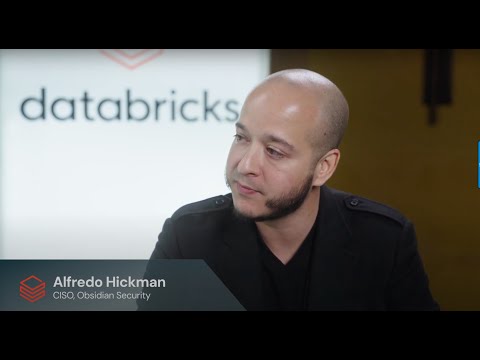
Alfredo Hickman, Chief Information Security Officer at Obsidian Security, discusses how Databricks and AWS power their mission to secure SaaS applications against advanced threats. Learn how data intelligence and generative AI are transforming cybersecurity practices and enabling new opportunities for innovation.
#Databricks #AWSreInvent #Cybersecurity #DataIntelligence #AIInnovation
Chapters
0:00Introduction to Obsidian0:41Foundation and strategy1:13Data intelligence and GRC2:28Generative AI and security3:51Future outlook and tips
FAQs
What is Obsidian Security?
Obsidian Security is a cybersecurity company focused on securing mission-critical SaaS applications like Salesforce, Okta, and Dropbox from advanced threats.
How does Databricks support Obsidian's mission?
Databricks provides the data foundation for Obsidian's product. It enables them to aggregate customer SaaS data, extract intelligence, and create analytics and detections for threat protection.
What is data intelligence in a security context?
This video explains that data intelligence means aggregating and collecting security data, then extracting actionable insights from that data—turning it from a cost center into strategic value.
How does GRC benefit from data intelligence?
By shifting from pure risk elimination to calculated risk-taking informed by data, GRC teams can better support business growth while maintaining appropriate security posture.
Full transcript
0:00 Introduction to Obsidian
We're here at the data breaks experience at AWS reinvent 2024 I'm joined by the Chief Information Security Officer at obsidian security welcome so great to have you thank you so much for having me and so what is Obsidian security what are you focused on these days yeah so obsidian security is a cyber security company that is focused on securing Mission essential SAS applications so when you think of cloud native applications your sales forces OCTA dropboxes of the world obsidian security is a comprehensive security solution that secures those threats from Advanced risks and threats how do AWS and datab Bricks fit into the strategy at obsidian security so obsidian was born on the AWS cloud and data bricks provides the data foundation for the obsidian product it is the um it is the foundation in which the obsidian product is built it allows us to create the kind of value from our customer SAS application data so that we can create an analytics and detections to help secure our customers environments Switching gears one thing I like to chat with exec about is how do you interpret data intelligence what does that mean for you yeah so data intelligence is something that is really important for the both for both of our organizations for us the aggregation and collection of data without extracting intelligence is really just a cost center right data is a resource and until we're able to collect that data and we're able to extract that intelligence those insights from that data it's really just costing us money in terms of storage Computing handling and the risk exposure to it so as you're bringing in all of that data how do you know when there's an opportunity for a new Revenue stream or maybe even a new product yeah this is this is one of the exciting transformational areas in security and in governance risk management and compliance in GRC because in in my field in security and GRC we tend to look at our role as a risk elimination role but I think as the um as the state of the practice is evolving what we're realizing is that in order for us to be able to support the business for the business to be successful we have to take well-calculated risks and in order for my function to support the business's growth and success we have to transform the way that we look at risk so something that we're doing at obsidian in the security and GRC practices is actually reassessing the way that we expose ourselves to risk to factor opportunity risk and positive risk gen and these techn ology areas um are great opportunities for us to look at the implications for new product services for new um implementations within the organization where we can leverage these Technologies to create new features in the products to create new products and to help our organization become more efficient and effective so with this gen opportunity what looks promising what's interesting to you and your teams gen llms are really good at being able to process large sets of data when we at a as obsidian go and collect data from our customer SAS applications and when we use the product internally to secure our own organization these volumes of data are more than any human could ever analyze process and deduce in in years past when we would do security investigations or threat hunting we would have to go and interrogate this data manually oftentimes assisted by technology but still using the human mind to do the first pass of analysis gen and these llm Technologies are well suited to be able to automate a lot of those first order security investigations to create the um the insights from that data and to be able to connect dots in ways that humans cannot so for me these Technologies become a Force multiplier that allow us to do more faster and more effectively that sounds like incredible value to provide your customers how will data bricks be on that Journey with you as one of your partners oh well data bricks is foundational to that I think as we continue to grow together as we continue to leverage the technology that data bricks is providing to us as our data platform it'll open up new channels for product development it'll give our teams of security analysts of security detections Engineers of AI and ml Engineers capabilities to create more effective detections more effective analytics and capabilities that we don't even know are are on the table yet so for other Business Leaders that are thinking about security what are some tips that you would provide them as they're looking at this data and AI future yeah so I think it's really important to understand kind of the uh the regulatory landscape this is one of those areas where it's not the most uh fun area for folks to understand but we have to understand the markets in which we operate the markets in which we wish to operate in and some of the uh the regulatory requirements and constraints that exist there and then secondly one of the trends that I've seen at obsidian this last year has been the influx of our customers both existing C customers and Prospects that are asking us and that are demanding of us to um to think about how we're governing the use of AI Technologies so getting ahead of that trust motion by being proactive in the way that we Implement governance of AI and the data that we are stewards of on behalf of our customers so being very proactive as much as possible
Learn more about the Databricks Data and AI platform.
The information provided herein is for general informational purposes only and may not reflect the most current product capabilities or configurations.