Pacers Sports and Entertainment and Databricks | Data + AI Summit
Summary
- Player performance analytics: The Pacers transformed how they analyze player performance using advanced data analytics on the Databricks Data and AI platform.
- Fan behavior insights: Advanced analytics reveal fan engagement patterns, season ticket propensity and revenue opportunities through comprehensive data access.
- Cost efficiency: The team achieved a 12,000x cost reduction compared to their previous platform while gaining more sophisticated analytics capabilities and real-time data access.
Pacers Sports and Entertainment and Databricks | Data + AI Summit
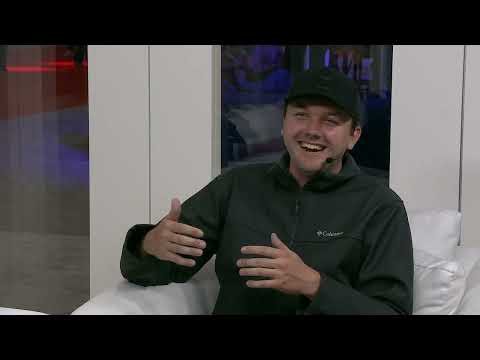
At this year’s Data + AI Summit, Databricks' Ari Kaplan and Rick Schultz had the pleasure of speaking with Jared Chavez, Manager of Data Engineering & Strategy at Pacers Sports & Entertainment.
Jared shared how the Pacers have transformed their data and AI capabilities with Databricks — analyzing player performance in new ways, uncovering fan behavior insights, building season ticket propensity models and democratizing data access across the organization. The result? An NBA Finals appearance and a 12,000x cost reduction compared to their previous platform.
Chapters
0:00Introduction to Pacers Sports1:11Business and fan analytics3:08Partnership and brand insights5:14Sports data and operations8:00Data engineering transformation10:18Democratizing data with AI13:55Future projects and outlook
FAQs
What analytics drove the Pacers to the NBA Finals?
The Pacers used advanced data analytics to analyze player performance in new ways and uncover fan behavior insights. By democratizing data access across the organization, teams could make data-driven decisions about player strategy, team composition and fan engagement that contributed to their successful NBA Finals appearance.
How did the Pacers reduce costs 12,000x?
By migrating to the Databricks Data and AI platform, the Pacers achieved dramatic cost reductions compared to their previous infrastructure. This enabled them to run more sophisticated analytics at scale while improving performance and operational efficiency.
What fan analytics does this video show?
The Pacers use analytics for season ticket propensity modeling, fan behavior analysis and engagement insights. By consolidating fan data and making it accessible to business teams, they can optimize ticket sales strategies and drive revenue growth through targeted marketing.
How does democratizing data access benefit sports organizations?
When data is accessible to business teams, marketing, operations and analytics teams can all make informed decisions without waiting for reports. The Pacers showed how real-time data access and self-serve analytics enable faster decision-making and better business outcomes.
Full transcript
0:00 Introduction to Pacers Sports
All right, we are so excited to have the Pacers Sports Group here. I am here with Rick Schultz, our CMO and Jared Chavez, manager of uh data engineering and strategy at Pacer. So, why don't we start off explain what the the big umbrella of Pacer Sports Group is. Yeah, it's uh ever growing. It feels like we are Pacer Sports Entertainment has the Indiana Pacers, obviously, it's our namesake. Indiana Fever, which has been on a rocket ship the past couple years, as well as uh formerly the Indiana Madance, now the Noblesville Boom.
They're relocating out to the suburbs in a new arena by the end of the year. And then we also have a wonderful foundation and Gamebridge Fieldhouse, which is currently doing what feels like endless numbers of events. I'm sure there's about 300 plus uh concretely a year on top of everything else going on. Well, thanks for joining us, and thanks again for being a Data Bricks customer. And I want to start by saying congratulations on having the Pacers in the NBA finals.
That's uh very hard for me to say as a lifelong Knicks fan. I'm still having nightmares. But uh but I am actually fascinated to also talk to you about the business side of the house and um all the things your organization does with um fan insights, fan analytics, sponsor analytics, and um really figuring out how you drive uh the revenue in the business. Absolutely. Yeah, it's uh it's changed a lot over the three years since we moved over to data bicks.
Uh currently I think the biggest swings we've really taken and will be taking this year is around ticketing. Hopefully now that we have all of our uh not just every customerf facing data point capturing around the business but also for ticketing especially getting multiple feeds in not just for events and all of our basketball teams but soon getting also real time hopefully subminute feeds so we can start assisting in pricing goals that we'll see how realistic we can get with them this year.
1:11 Business and fan analytics
It's going to be largely dependent on our ability to get down to what I'm hoping will be seat level pricing and keeping ourselves competitive with the secondary market, but also hopefully uh assisting with getting inventory moving a bit faster. On the business as a whole, I think the biggest impact honestly has been seeing the endto-end engagement of our fan base. So, SMS to email, SMS is brand new for us on the data capture.
We just pulled that in in January thanks to our wonderful vendor at Attentive getting that online for us. um as well as being able to plug that in with now retail and hopefully soon concessions once we get in arena capture hooked up but launching with uh one of your partners and a very close partner of ours Salesforce this year on their new data cloud CDP getting all of that into one easy place that's been transformative and hopefully will continue to be transformative not just for data capture but also ease of use we're able to have a onetoone copy of all of our data feeding from data bricks and vice versa into Salesforce so everything that was previously locked behind the CRM and marketing cloud now lives in the lakehouse.
Everything in the lakehouse now can live in Salesforce. And we're able to have our sales and marketing teams who aren't as technical, don't know how to code, able to leverage the same data as our analytics teams can programmatically. Talk a little bit more about the kind of um use cases that unlocks for the marketing team. And also you mentioned something about adding the um before the show when we were talking you mentioned something about adding um partner capture and how that actually also boosted the insights you're able to get in the Absolutely.
Yeah. I think the biggest change for us is obviously customer segmentation with how many brands we have and lookalike audiences ongoing effort to shore those up. We're working on a propensity project that I want to get our unified customer look built out not just in the CDP but also in the lakehouse as well. And hopefully with some uh some help with data bricks this year along this summer we're going to be starting on a full propensity matrix of not just independent revenue streams but all of them across the brands how they tie into customer activity across SMS retail so on and ticketing most importantly.
3:08 Partnership and brand insights
But on the partnership side I think that was really for us the first time data bricks really shined. Uh, we were able to work with Neielson, our television aggregator, as alongside Blinkfire, our social aggregator to get all of those feeds and data points into data bricks in one place, sync those up. And I'm not joking when I say that's probably saved 6 to 8 months of manual pulling between those systems across multiple departments, getting our brand partnership uh, brand and partnership reporting out there. what was previously taking about a week plus about 6 days for a larger brand now can be pulled in about 2 minutes and they can do it midmeating if they want.
So that's been transformative for reporting times. We're also beginning to look in with propensities and other things. What do brand affinities look like? Where we where might we have gaps in the fan base that maybe we're not addressing with partnerships? What brands do we have that overindex and maybe we're not doing as much with as we could inside and out of the arena as well. But I'd say that was really the first time data bricks shown for us.
Awesome. Awesome. Yeah. So, great to hear, you know, with the fan base. Uh we have people from 140 countries. Hopefully, a lot of you know about the Indianapolis Pacers, but also the Fever. Caitlyn Clark is like the hottest star in like female WNBA. So for both reasons being in the finals first time in 25 years and then the fever and everything else your fan base is growing your sponsorships are growing you're measuring that but you're also have use cases like on the sport side as well as the marketing and business side.
So how's that like with the Caitlyn Clark running on data bricks so to say? It's still very early days with Encore with the fever. Our wonderful analyst has been driving the front end using usage of that. We currently supplying what we hope is enough of the backend data for not just the WNBA but also international competitions. We grew from onc court movement tracking coordinate based systems to also the league's own APIs around playbyplay and so on.
5:14 Sports data and operations
We took a bit of a plunge with a FIA partner to see how much more we could push it. So now we have play-by-play capture and box scores, minimum box score capture on I believe it's 80 competitions around the world and we're working on bringing in coordinate capture of about another 120 by the looks of it. 300,000 games I believe is the goal by January. So in about all in probably about 20 years of basketball. I want to see how much further back we can push that for modeling sake. uh especially considering that have to redo the math with the 44 game season this year, but as of last year it took about five WNBA seasons to equal one NBA season's worth of data.
So the more we can get our hands on the better, but uh very early days on the Encore stuff. So so far largely just serving it and trying to capture as much as we can uh get our analyst up to speed, but also trying to empower him to get everyone up and comfortable using data routinely on the fever side. On the business side, I don't know if I have words for what has happened there. I was going to say the minute you drafted Caitlyn Clark, I got to imagine it became a more of a the Fever became a global brand.
Really? Uh yes, we I joined up 3 years ago. Fever have always had a bit of a soft spot with me. They were the first team I got to work with. I joined up in late March or early March, sorry. Um so we had I think just traded for Hallebertton and Pacers unfortunate season didn't work out. It looked like we had a glimpse and of course we did very well the following year but uh the fever that year I mean I think we were lucky to see 1,200 people in the building on a Friday night at times and you had some nights that would do exorbitantly well.
Aaliyah Boston came in prior to Caitlyn Clark we saw a nice rise come through the fever but Caitlyn came in and blew the doors off the building. I mean, we're, as I said, Saturday night, maybe a couple thousand people with the fever. Now, on 1:00 p. m. on a Wednesday, 18,000 standing room only. Uh, the fan base has boomed. Everything's been chaos, but good chaos to figure out how to grow this brand and keep up with it most importantly, but also make sure that we're still holding uh the show at a caliber we want to have.
And credit to our game ops team for figuring out how to maintain that and keep that rolling. Thankfully, I will say being in the NBA has kind of prepped you for this. This is more of a continuation. Uh the off season not really a thing anymore with the fever playing basketball, but these are great problems to have. Absolutely. It's super. So you and I have known each other for about 6 years now before I joined data bricks and really honored to have seen you and the company mature along your data journey.
So now you like you're doing everything from streaming data, structured data, unstructured data. And I wanted to talk talk on two things. One is like data engineering then the other is ML flow but one of my favorite stories is how you've reduced cost by transferring to data bricks. That's one of my favorite stories of all time for any customer. Yeah. So on two it's really two different fronts. The first major hack when I came in we were on a split siloed works uh warehousing situation.
8:00 Data engineering transformation
They didn't talk to each other. They were segmented throughout the business. Very oversized. um worked but difficult to integrate with. Tooling was always a bit of a mess trying to figure out how to plug various things into it. The first major project which I looking back cannot believe I said this 3 weeks into the job was I need to rip all of it out and start over. I don't know how many organizations you walk into and let that happen.
But uh fortunately we did make the call to go to data bricks. Took a bet on you guys back when it was still hive meta store. I think it was preity catalog. Uh worked out amazingly for us. But a one:one comparison, I wish I had measured it. Real realistically, by the time I had actually measured the cost difference, we were already 20 to 30 sources higher than the old warehouse. But even at that point, I think the case study said something around 57 58 times the amount of data in the ware in in the lakehouse in the previous warehouses, we had a 98% cost reduction.
Yeah. Wow. With exponentially more data inbounds. uh and on the machine learning side which I know is another very ridiculous number that doesn't sound real. We went from a contracted vendor and again bit oversized for the organization. Didn't fully know what we were trying to do with ML at that point but moving it over to data bricks at the time I think it was AutoML was the name I think it still is the name of the feature uh running through ML flow that dropped us from about $100,000 in ML expenses to I think $10 the first year and now we've blown that number out of proportion with how many more ML workflows we're starting to build out.
Um but the onetoone comparison was that extreme and what are some of the ML use cases uh that they're um that you're running on ML flow. Sure. So the I mean the early ones were renewals, ticketing predictions, attendance predictions, game demand, so on. That's what was originally migrated in. Basketball has a whole bunch of other workflows. I'm not going to speak for team on the Pacers side. They do a bunch of great work over there.
10:18 Democratizing data with AI
Um, but what we're starting to look into, aside from the propensity matrix I touched on, uh, with all of our customers, hopefully getting behavioral indexing around all of our brands, I'm hoping if we're fortunate and we can get everything working the way we want, is to get a real-time ticket pricing tool for our arena. And the lowest I think I've seen, and credit to the Detroit, the Detroit Lions, I think they're the team I'm that's accomplishment, they've gotten it down to row level.
And they might have gotten it further. I haven't talked to them in a bit, but last time they've gotten it down to row level. I want to see if we can get by the seat and not just having real-time predictive capabilities. Say this seat on the sagy market around this price point, we should move here, try and make as much of our inventory move as competitively as possible, but also one of our star players just got hurt. What does this look like?
How do we repric in real time to make sure that we're not losing a huge movement of inventory? our ticketing analytics director, uh, as well as under there. We're going to hopefully work with them very closely on this in the coming months. Bit ambitious of a project, but hopefully we can pull it off. And we've got some other things on the generative front that we're still spitballing. One thing I'm hoping we can do, especially that you guys just have clawed up and ready for us to hit whenever we want in data bricks is trying to democratize access to the infrastructure.
As I said with the marketing stuff, the CDP, it's been great. you can access things without having to program. What if you didn't need to use a tool at all is the next step for us. So I want to have something that hopefully not just our analysts will get mileage out of going into meetings but also our executives who are not technical can just ask and say hey how did we do in the arena last night that hopefully that generic if we can get it and it'll bring up their ticketing retail concession reports as well as activity around how many people connected to Wi-Fi how many people entered the arena what did our brand engagement look like pre and postgame how many surveys were sent out how many have been answered what's current sentiment game to game that's what the this season's project is.
Oh, that's cool. Yeah, your marketing team is going to love Genie. We use Genie uh in our marketing department at Data Bricks, which is about 200 people. And uh our marketing Genie uh allows me and other non-technical users, I mean, my SQL is pretty rusty at this point, but is like to ask any questions of the data. It's basically conversational analytics that understand your data. It's actually already trained and reasoned on our data.
So it kind of knows what we mean when we say like show me the best campaign we ran other than the data in AI world tour or whatever in the last like three quarters and you know it it spits out an answer in terms of you know pipeline in terms of attendance. It's uh it's just a gamecher for nontechnical marketing users um to be able to get quick answers. Yeah. And I know um we're we're talking the sports, but every single industry out there AIB genie and AIBI dashboards is that great democratization.
You know, data intelligence for all where CMO uses it, I use it, our analyst relation team uses it to answering questions, but for, you know, for the Pacers, it's trained on your own data in your own semantics, just using natural language. And you get the feedback loop. So every time subsequently people use it, it gets smarter and smarter. So it's great you get the data bricks foundation and then using the AIBI capabilities, it democratizes uh for incredible intelligent insights.
And so we have just a couple minutes left. Uh any any final thoughts from both of you? I'm curious what's the big next project you're most excited about? Well, aside from hopefully getting this infrastructurewide chat system built out, I would love to see I don't quite know how we'll do it yet, but with our campus expanding into multiple buildings, especially multiple venues, one of which is almost 40 minutes away, I believe.
13:55 Future projects and outlook
Would love to figure out if we can get just a customerf facing general service agent. I think I was at the Cosmopolitan in Vegas, and I've stayed there many times. It's a behemoth of a building to figure out where everything's at and their agent was able to navigate me around pretty well. I'd love to see if we can not only do that for navigation, but also inventories. So, if you're looking for a specific item from one of our brands, whether it's the Fever, the Boom, the Pacers, or if we have a concert in and they have their own merchandise, where is it tonight?
Where can you get it? What's it currently priced at? How much is left? Can we maybe even get a step further and say, "Reserve it for me." So, I can get into the arena, beat the lines a little bit, and check out either through a mobile experience, which I think we're still working on getting mobile set up through our apps hopefully, but at the same time, can I just eventually just reserve it, walk in, pay for it, walk out, not worry, and not sweat about whether or not I'm going to get it.
Um, would also love, especially knowing that most fans maybe come to one or two games a season. Concession's a bit tough with the three-level arena, especially when we have multiple arenas uh coming through and multiple venues happening in the future and a plaza on top of it. Where is it? What am I looking for? If I want pretzels, where is that? If I want hot dogs, where is that? Yeah. What level? I'm currently here.
My seats are here. What's my best track to figure out where I want to go tonight? Um that's where I'm hoping we can get this season. Well, you really have a range of fascinating use cases and uh I want to thank you for I'm glad you've had so much traction with adopting data bricks and I want to thank you for making time to um record this today. I really appreciate it and wish the Pacers the best of luck in the finals.
Thank you. Thanks for having me. Thank you for sharing your story and yeah, it's the finals week. You're here at Data Brick Summit. Thank you so much.
Learn more about the Databricks Data and AI platform.
The information provided herein is for general informational purposes only and may not reflect the most current product capabilities or configurations.