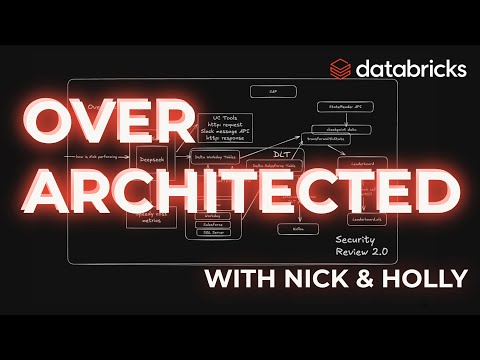
Over Architected with Nick & Holly: Databricks updates for March 2025
Summary
- DeepSeek Models: This video discusses DeepSeek, a new class of reasoning models that generate extra thinking tokens to provide more context for better outputs and answers.
- Model Distillation: Learn how reasoning capabilities from advanced models like DeepSeek can be distilled into smaller open-source models like Llama and Qwen for broader accessibility.
- March 2025 Releases: Covers the latest Databricks platform updates including data ingestion improvements, SAP integration, agentic tools, HTTP support, and observability features.
Over Architected with Nick & Holly: Databricks updates for March 2025
Databricks Release Notes: https://docs.databricks.com/aws/en/release-notes/product
Data & Security Framework: https://www.databricks.com/blog/introducing-databricks-ai-security-framework-dasf
R guide: https://www.databricks.com/resources/guide/r-developers-guide-databricks
Chapters
0:00Introduction0:38Deepseek and model serving3:39Data ingestion and SAP6:24Integrating data sources10:01Agentic tools and HTTP14:04Cluster by auto performance16:08Observability and costs17:37Transform with state21:00State store reader24:12Documentation and security27:34Streaming to Kafka29:10Architecture wrap-up33:56Conclusion
FAQs
What is DeepSeek and why is it significant?
This video introduces DeepSeek, a reasoning model that generates extra thinking tokens to improve context and answer quality, representing a new paradigm in model architecture.
What is model distillation?
This video explains that model distillation allows the reasoning capabilities from advanced models to be transferred into smaller models like Llama and Qwen, making advanced reasoning more accessible.
Best open-source data engineering tools 2026
The best open-source data engineering tools for 2026 include Apache Airflow for workflow orchestration, Apache Spark for large-scale data processing, Delta Lake for table storage with ACID guarantees, and Apache Iceberg for open table format interoperability. These tools have achieved maturity, broad adoption, and strong ecosystem support making them reliable choices for production data systems. When combined with Databricks, these open-source projects provide complete data platform capabilities without vendor lock-in.
How do enterprises use Claude, GPT, Gemini, and open-source models securely?
Enterprises can use Claude, GPT, Gemini, and open-source models securely by leveraging Databricks' platform with Unity AI Gateway for model governance, enabling consistent authentication and cost controls across multiple LLM providers. Rather than having teams integrate LLMs directly, Unity AI Gateway provides a managed interface that routes requests to appropriate models while enforcing rate limits, tracking usage, and maintaining audit trails. This approach allows enterprises to evaluate different models while maintaining security and preventing uncontrolled spending.
use open source SDP
Using open source SDP (Semantic Data Platform) components on Databricks enables organizations to build semantic layers for their data without vendor-specific implementations. By leveraging open standards and integrating with Databricks' governance layer, teams can create business semantics that work across tools while maintaining unified access controls and audit trails.
Full transcript
0:00 Introduction
It's beautiful harly look look what we've done so how do you feel about this app that we have created this monstrosity that's going to assess how well you're performing I think I should skip my review meeting hello hello and welcome to over architected with and together we are experts on AI and data engineering but separately not so skilled this is the podcast where we talk about new features in data bricks and then try to shoe haul them into one architecture to see if it's actually realistic and here are the latest releases from March in data bricks and do you want to start us off first with something you are excited about that's been released yes absolutely we had a new release in the open source world of a model called Deep seek um it's a few different models deep seek uh R1 it's kind of the most interesting one and there's been a lot written about it a lot said about it so um I really think about it in three ways um the first one is uh it's a paradigm thing second thing is it's a performance thing and the fin final is that it's an open source thing so the Paradigm a reasoning model these are kind of a new class of models that I mean the subtle difference is really that they overgeneration so they generate a bunch of extra tokens um and by generating a bunch of extra tokens um called thinking tokens it essentially fills up your context with more more data um and they do that so that they have more context to pull from when they do the final answer so it's just uh kind of the still the same thing um you may have noticed that if you you give like a vague prompt a small vague prompt then you know you don't get a very good result but if you do a long detailed prompt you get a much better result so it's essentially leveraging the model to make that very long prompt before it finally answers that's the Paradigm side the performance side is by doing that you get much better results um not in everything but in but in a lot of things so it's causing a lot of excitement um and kind of related to the performance piece is that uh the results of this model so the outputs of uh these new reasoning models can be distilled to older models so um a lot of the things that have been released are these distilled versions of deep seek into Llama Or into quen um into all these other open source models so that's kind of the big key thing so you can load up much smaller models that still have these reasoning capabilities because they're trained on the outputs of this larger deep siek model and then finally it's all open source and this is probably the biggest uh Factor so it kind of represents a moment in time where The open- Source models are catching up to um the big proprietary models out of the out of the big uh AI Labs so like your o's or whatever uh is being released by anthropic um so it's really exciting and U it's all available on data bricks you can you can deploy like other open source models you can deploy this on data brick I think this was the first time I really heard about distillation when it came to models and this idea of you could take uh you know the Deep seek model but then you could have like the distill version of like the Llama model so if there's like a particular flavor of models and I know there has been some comments about kind of Regulation and you know what who do you want to use and what do you want to use and all of that kind of jazz and I'm not qualified to talk about that um but that seems like a nice way to kind of satisfy that point being able to get that kind of reasoning side to it but then also get the performance and also make it smaller right yes yeah smaller that's a big key so you can get suddenly your like 7B llama model uh exhibits these reasoning capabilities um which I I don't like the word reasoning but that's the one that they use the models still don't reason they just produce tokens after token after token all right so uh the aim of this podcast is that we take these features and then we try and put them into one architecture diagram and since has wonderfully explained how this work I'm going to sayga stab but how I think I would go about implementing it so I'm going to start by I'm just going to like put model here uh deep seek um that's um go no so um we'd have a few other bits and pieces around this wouldn't we so we'd have um like a vector store maybe would we have that as well like if we wanted to make use of like that long context that is quite um good at dealing with do we have to have this no you don't have to which you could um maybe maybe just shove it into um um so like I said it's like a it's it's an open source model so like all other open source models it can be deployed on datab brick and we can use model serving for that so you could wrap deep seek in uh kind of another box and call that data bricks model serving um and then if you wanted to attach the vector store um you would do that through like a through a tool so it wouldn't be on the input side if that makes sense um but it depends how you draw the diagram so that's fine I think it was a good start there you go tell me tell me tell me a new feature and then let's see if I can shoehorn it into using this uh all right then data brakes on sap which is so exciting for those of you who have sap data you will know that this is a huge amount of data that's stored within your organization it's very valuable and you want to be able to analyze it I don't know why I'm really talking about it at the moment because um I didn't I wasn't able to get access to a test environment I haven't been able to test this out um and in terms of the details I did speak to the engineering team it sounds like we're not quite ready to talk about all of that in detail yet um but do make sure that you come back at a later month and hopefully I can talk to you about it in a bit more detail and how the implementation is going to look like but speaking of other Integrations that we've got now I did want to talk about Lake flow Connect Now incorporates Salesforce workday and SQL Server so if you have those as a data source that you want to do analytics on and you probably do because there's lots of valuable data in there you can now connect to those uh tools uh to be able to bring in all of that data and how I'd compare this to something like Federated query so a Federated query again you can connect to some of these tools but it's a lot more on a kind of a oneoff compared to L flow connect where you might be setting up like a proper ETL pipeline uh which is going to be pulling in data all day every day to be part of your your ETL that you're doing so with that in mind uh if that is clear enough could I challenge you to try and put it on our diagram absolutely I have wait the sap thing too but the L flow stuff well I mean the sap data has to come in somewhere right so I'm actually going to put it like it's going to come into the data bricks platform right so I I feel pretty pretty safe putting this just on the diagram how's that okay that's fine just like it exists something would say is that this is more like a fourth cloud provider rather than new data source per se um okay so it would be really helpful to actually know what this AP does anyways Lake flow um so it's called Lake flow right did I get that name right yes so this is the lake flow that been um around for a while um this is the ingest part of it so this is like leg flow connect um and you can connect to various data sources you know you've been able to connect to quite a lot of vanilla um ones that you've had but now you can yeah set up like a big chunky ETL pipeline to bring in all the data remind me again so I have workday Salesforce what was the other one a SQL Server which is g to get a lot of love yeah that one's big uh those are all kind of big workday is a little interesting um I don't know much about workday everyone has work day don't we have work day I don't know we do I just didn't I gu yeah I guess it's a source of data um all right so we have these three providers as part of the lak flow service I'm just going to do that and I think this one's a little bit straightforward um in the sense that okay we can pull in this data and maybe we can apply that to the context of uh some query in the sense of this model uhhuh there's something is there something a little fancier we could do do uh how is performing yeah yeah that's how we're going to do this and I I'm sure you see where I'm going with this sorry my uh all those sales you CL and that's going to we're going to ingest right using lak flow Y into I'm just I'm assuming lak flow into some Delta table so uh some Delta workday workday tables and we will uh do that how's that perfect the model will take uh we'll it'll query some stuff in the workday table that come from Lake flow and we'll find out how is doing how's his what's his score is that even an in work day that's okay uh like so Salesforce data would have like how many sales you're closing uh how many customers you interact with uh and then something like workday I don't know says you're an employee says you I don't know whether you got a bonus last time okay so it'll answer that yeah yeah cool oh how much if you're on like longterm sick then obviously you can't sell a lot so yeah all right I think it's time to shoot horn in another AI feature a feature yes this one's this this one's cool so it's it's um it's an AI feature but it's actually um uh it's actually not an AI feature so there's been a new SQL function released bear with me there's been a new SQL function released um called HTTP request um so it's like a built-in SQL function um as the name suggests you can provide like a method a URI um some some body some Json data whatever whatever the end point Point might take wherever you're sending the request to um um and that's like that's a new SQL function feature now that's that's stage one stage two is we have uh in unity catalog we've hosted tools so you can register a SQL function as a tool so what you can do is in you see you can register this HTTP request function that let's say uh I don't know hits some endpoint and then because you can do those two things you can connect the tool to an agent right to the llm so now your llm essentially can use that HTP request function to send requests to some external services and so that's really the new feature so you can connect AI agents to external Services via that mechanism so okay I did a terrible job I got you no no no I I think I think I know where the problem is here okay so you make an HTP request could you like go does this have be to like a service or could it go to a website um well I guess in my view a website is a service but when you I mean when you when you go to a website you're sending an HP request yeah I know but like there's so many other things that incorporate that aren't just websites so it's like you could be sending it too yeah like an API I I think it's it's mostly for apis so like let's say you know some service slack slack has a rest API right has some rest API for a bot let's say um hint hint we can make some really horrible spy wear out of this I don't know we could uh we could make the uh tool from hell where we take on model serving and then what we also do with the data uh we can just like message people randomly throughout the day in slack um and see how they respond and our on how our how is next performing more uh so so this would be sorry it's like message and we'd be using this with uh UC tools and this would be the um HTTP uh request uh and then we could use that to um SL message uh API and we could poll you randomly throughout the day to be like which emoji present how you feel right now uh and then we could incorporate that into like how is performing um and how you're doing yeah I I made a terrible mistake by making that the SLE query but now now we're we're in De so we got to just roll it that's fine I like it I like it okay but that's like a legitimate thing and then could you get the response back of um like this is what the Emoji response was uh yes yes so it can be like a One Way thing or if the HTP request returns something um that's relevant that could be um a part of the model's chat history um and as a result kind of in its context and then um further some like it could be like a get request for some data right it could also be something like that so okay it's it's arbitrary actually you remember last time we talked about um python functions right like so it's so this is kind of a spe a more specific function if any so makes things easier okay I like it hit me with your feature what's next all so this is a nice easy one and that is cluster by Auto if you know your tables are quite large and that you should be doing some performance tuning on them you probably should be doing some clustering on them but hey maybe they're new maybe you haven't quite figured out how they're going to be queried yet let's say you've got a brand new integration with Lake flow and you're not really sure quite how to optimize your workday data you can use cluster by Auto uh to be able to allow um Delta to pick what it thinks is going to be the best uh column to Cluster your dat to buy okay perfect cluster by Auto that one this one you made real easy for me I appreciate that thank you we already have a Delta table uh we have no idea what's going to be in these workday tables because actually we legitimately don't know um so that's perfect for us cluster by Auto all those tables yeah so maybe uh we if we put the other end uh where the lake flow stuff is and then like we could make the tables with that as the definition on creation you can apply it afterwards but like no put down so it's a yeah perfect beautiful oh I see what you're say okay you so it's in the definition of the table yes it is it doesn't have to be defined up front but like that is one way that you could do it and easier way um I think this is like a nice halfway house because sometimes you can spend forever trying to find exactly what is the right column to use um knowing that you've got to use something with cluster by Auto you can just set it and forget it and if it's you know probably going to do the job that you need that's great if you finding it's not quite what you're after um then it you know you can go and manually Define this and again this is going to do it based off of the data that you have so it's smart it's aware of the kind of data that's there and also the queries that I used against the table too awesome good feature uh yes good for the lazy people like me all right uh do we have another AI feature we do have another AI feature um this one's this one's a little more subtle a little bit more uh on the operations and observability side so not really a feature um but uh nonetheless pretty useful for model serving the billing metrics used to be at a granularity of being updated uh per hour so you so that's pretty that's pretty crappy especially if you did something really intense in in that hour and you didn't find out until an hour later so um the new feature is that the interval for the actual updating of the billing information is down to five minutes now so for observability cost tracking very very useful not exactly I mean you don't have to do anything it's not a really like a new feature you have to enable or a use case but uh obviously extremely useful for cost management Speedy cost metrics are going to come out uh going to come out of our our modal serving now is that fair to say yeah absolutely and then um I guess in terms of you know just thinking with my uh kind of like admin hat on that's really nice and then you can set up some alerting if you wanted so that if you had someone spend something completely outrageous uh you could get an alert like from slack or teams or whever uh to then be like hey this model is really expensive please stop is you have more from me yeah what's next so I know that you have a bit of a p for streaming and I have two very exciting streaming updates for you so the first exciting one that I have is transforms with state so if you have ever done anything with um stateful streaming so Maps groups with state or flat maps group with State you all know how incredibly difficult and tricky they are to use uh they can require quite a lot of time to set up to Think Through how to design um and they can be quite inflexible transforms with state is the new version of map groups with State and it allows you to do uh a bunch of things so things like it allows you to specify a time to live within the state so how long you should hold on to this information um you can have easier and faster eviction from your state as well you can have composite types so you can have not just a map now but also values and lists um you can do things like operator chaining so that's a limitation that's been removed and you can also do schema Evolution as well so we can now do fairly complex inflight um structure streaming with states which is nice nice I mean that I that's an awesome one I I cheated a little bit so I definitely am familiar with that one but now the question is how to put it into here I think actually it's pretty convenient because Lake flow uh indest basically implies I mean it may not be streaming semantics but it basically supplies new data coming in so it's kind has like a a kind new data being appended all the time VI to it um so maybe we could read let's say we we have this workday table maybe we also have um like another another table that's like the Salesforce data or something so let's say this is the Delta Salesforce you're going to kill me of course that this is below but that's okay Delta s Delta Salesforce taable and I'm going to draw first and then if you're unhappy with my placement you can tell me you make me sound actually yeah I can just play this here here we go baby um and then so we have these two tables they're both changing and then let's do like a like a join between these two tables so let's just assume these are always being appended to and we want to we want to see like let's say you have like uh your sales team and then like the sales they make or something like that right and you want to create like a leaderboard or something I don't know I just I'm not in sales so I I imagine that's like a thing you do um and we do our custom what is it transform with State streaming job and we sync that to you know our like uh leaderboard let's just call leaderboard theader report four all right how's that I think that makes sense hang on I've completely then we go lost two there we go okay then yeah that's cool so yeah so I'm gonna make it even crazier just so it's all over you know we're trying to these features fine it makes you think even if you have to think to figure it out it it stays more in your brain I like it let's okay sure okay um I also have a new streaming feature F that you didn't ask for but I think it's going to help you with this particular section okay and that is um we have a uh a new state store reader which is now in G and it does not just the state but also the metadata so previously you would have to bring uh or design make your own um state store reader um to be able to do that but there's like quite a lot that can go wrong whereas now you can just do select start from uh read _ state store and then like point it to your checkpoint location so you can see what is going on within your state and one of the things I really like about it is some of the options so one of the options is that you can specify whether you want the data from the left join or the right of the join so where you're bringing your two tables together we also have a new state reader which we could also use as well does sorry does that make sense my explanation it does it does make sense it does make sense it's it's an amazing feature I I ran into this um in previous years it was one of my big pain points with SP streaming honestly um you like you said you would have to implement your own State externally um if you wanted to like query it externally as well um and there's a lot of use cases where you might be aggregating State and you want and you know you're evicting it on some interval and you want access to it before the eviction you want to actually debug and see what's going on um any number of use cases and you were kind of stuck there was basically no way to do it um so I think it's an amazing feature so let's pretend our leaderboard is for 24 hours of sales so we're gonna like it's like daily it's like a daily sales thing and so every every 24 hours we you know aggregate 2 24 hours worth of sales data and then finally evict it um once it's aggregated as that final uh value which is obviously uh a very contrived use case but nonetheless that gives us that gives us some State here and then you know we have a Ed Case where we're like oh you know it's halfway through the day and we want to know you know how how much has sold so um and then the state reader API would help us query that state um kind of in within the interval what do you think yeah I really like it uh and then if you wanted to go back in time uh and you still had the checkpoint data from that you could see what was going on I personally love the idea of using it to debug uh I get the impression that when we talk I make some really juny code and for you it just works first time every time but that's not my experience so um this for me is like big debugging feature for me to be able to read the state and be like hey why is my join not working hey why my aggregation not adding up to what I thought they would do um to guess who's messed up their checkpointing or whatever and something else that's not nice as well is with the reader um it doesn't just have to be the data itself but you can also do the partitions as well which is nice so you can get the meta data um for it as well which is which is super nice okay moving swiftly on please tell me about a UI feature very recently we released two white papers so um well we released more than two but two caught my eye um the first one is the r user guide for data bricks R meaning like the programming language R which sometimes is not clear yeah exactly um so if you've had the unfortunate experience of using R before um then uh that's just that's that's my personal Vendetta um I I I have had some R experience and I was very glad to stop using it but in any case um if you have to use r or you actually like R uh there's a great new user guide available for the datab bricks platform um it talks about how to where and how to use it on the datab bricks platform form broadly um particularly how to parall parall parall parallel parallelize parallelize yeah you can cut that one out um uh your operations using Arc uh since it is uh not parallel by default um so that's that's a great it's it's pretty long uh very in- depth great guide um so that's the first one and the second white paper is the dasf data and security framework heree 2.
24:12 Documentation and security
0 um and that's a white paper that um goes into detail about security broadly speaking on the datab bricks platform so it um it covers kind of all the features on the platform and how to think about them in relation to each other when you're using them what kind of um kind of vectors and security uh things open up as a result of combining these different things so if like you're using model serving and Delta table so let's say those are the two I'm using um what questions like what what what comes up what are the potential security things that I need to fill or address um in order to securely deploy something and so this guide kind of gives you that Matrix of this and this these are the questions you should answer um and then follow that to actually address the whatever security concerns might be so it's an incredibly useful guide I personally uh would maybe try I don't know if you've heard of Google like notebook LM thing and so you just dump that PDF in there and say generate a podcast and just listen to it on your ride you know into the office oh it's pretty cool dat and security look at us with fresh ears um don't listen to that podcast until you finish this one like And subscribe so I love that security uh framework guide that we have for me security is always one of those issues where like security people just kind of like ask questions out of the blue I don't really understand where it's come from um so you know you'll be talking about processing be like oh but what about like IP whitelisting for the blah blah blah blah blah and they like the questions just keep on coming and this is an incredibly comprehensive guide but not just for helping you answer securi questions about what they think is the right thing it's also had a lot of really really smart data brick Security Experts tell you what the best practice is on okay then here are the things that you should set up if like this is your first ever big cloud deployment from you know the things that you might not have considered because you might not have used data bricks before how to best uh manage your platform to increase the security Link in the description yes to both of them yes uh how do we add these to our diagram um what are some of the things that we could put in here well I think the security the dasf 2.
27:34 Streaming to Kafka
0 you could do actually similar to what we did last time where we just bracketed the entire architecture I mean it applies to everything it really does I mean it's very it's very comprehensive it has it includes the entire platform so you know all right so what if I move all of this and just put it in a Security review beautiful Security review 2. 0 we can update it and uh do very well in our performance review okay I mean that's it for me those are the features I have are you still do you still have something for me to add to this yes I do um so I I have another streaming option for you actually oh come on he loves streaming what's not like if we're using Delta live tables we can now write and stream to Kafka as a sync now so previously you would normally read in from Kafka You' use Delta live tables do some ETL join it with some other data blahy blah blah uh and then you'd like write it out to Gold tables and that would kind of be the end of it and then you'd hope that the kind of use case kind of used those gold tables that were static but now with being able to write to uh KFA and have as a sync uh you can now do all of that ETL but then just kind of keep the pipeline moving and keep it on streaming even though you've maybe done some complex ETL that you wouldn't have been able to do with cfra alone so we can we can sync out of a DLT pipeline um I guess we don't have a DLT pipeline here at least not so I guess my question is this might get hairy but does like DT support things like transform with State can I just put another box around that like this is a d because I said no is much more geared to round the um uh stateless streaming so think of it as a much more simplified way to use streaming so maybe you do that complicated Transformer State outside of Delta live tables but you still have a stream going you can then do some basic um Delta life tables streaming that stateful um and it is available in SQL U whereas transform with state is not SQL but it is is Java and it is also Scala as well so uh not a complete lineup there but there are things that you could do in it they do have a lot of uh performance games actually and so in the same way that we've got cluster by Auto which is a nice like easy lazy way to do your performance tuning Delta live tables is that for me for streaming if I've got something fairly simple that needs doing doing Delta live tables and I'm probably going to get better performance than if I try and like hand crank it myself okay here's my suggestion uh feel free to V it cuz it's going like really ugly um I'm going to say that these two tables are also part of a DLT pipline okay that joins them does a simple join so this one this is one of our uses of this data um we do this aggregation and 24-hour leaderboard but we also want this data um as part of a DT Pipeline and then this DT pipeline syncs to um some like kofka Brokers or something whatever some external oh no I have everywhere um and this like to some message CU so this is like our external thing um and then this can be consumed by other teams in our organizations how's that they're the silly teams that don't have data bricks right uh right there are other legitimate reasons to Mo kfka I maybe they wanted to go to an you you said it that wasn't that wasn't me so I can add that this is also a DT pipline this isn't the prettiest but will will you accept this uh yes I don't I don't think I have a choice to not do but I I like it like it could work like I I don't dislike it it's cool I think it's cool it shows it shows that we can use these Source tables uh for multiple jobs right so we can have a DLT thing that's around them but we can also read from them and do this custom transform um for a little bit more fancy aggregate stuff all right then and then I have one final final final Final data engineering one for you they say data engineering it's not really um and that is that you can now explore everything to excel uh well okay this one's just obvious then of course I want this leader board as an example uh yeah I feel like I've also really botched this uh explanation because you've always been able to write your data out as a CSV and put that like on an S3 bucket and that's that's always been something thing uh that you can do uh whereas now when you get the results within a notebook and you do select star from something and you get like a thousand records of the blah blah blah blah blah um you can now export that to excel excellent there we go leaderboard XLS I don't even know is that the right uh extension I think yeah maybe I don't know uh sure why not beautiful it's beautiful look look what we've done so how do you feel about this app that we have created this monstrosity that's going to assess how well you're I think like we know we've got some smart AI uh that's doing it I'm a what away we've put no monitoring in it so we don't know whether it's going to come out with gibberish but it's smart so it should be at least half decent um it's going to be using real data based on your performance your actual performance um it's going to do it quickly so it's going to be timely in terms of the information that you're getting uh and you'll be able to compare yourself against your peers which may or may not be uh Pro oh and we'll do it all securely as well so uh all of your data will stay where it's meant to uh and we'll be less vulnerable to any external parties that shouldn't have access to this wonderful groundbreaking data that's the big part that's the that's the big point so what are we raing at out of 10 I I feel like the use case itself is slightly dystopian but in terms of an architecture I feel like it's terrible it's like a six I could make the argument it's a 10 this one actually works like it just I like you said the use use case itself I don't know about the use case but the technically what we're looking at here it I don't even think that we actually really shoehorned everything this is a realistic uh this would be a realistic thing that you would see in a in a workspace I think you know we're adjusting data from lak flow we have these tables we have two different pipelines that draw from those tables we have a model that also draws from those tables um that model can speak to external Services slack in this kit like it's I I'll say I'll say eight okay then you know what I am going to revise it up because I do think you're right um but I'm not going to go as far as eight I think I'm going to go seven because we do have sap just randomly there not really getting a lot really hope that we have more as we as we learn more about uh sap or sap because I'm I admittedly don't know anything about it um so I'm excited to learn more about that one and see see how it fits into all this stuff I I did think it was a data source you say it's like a whole platform um so let's yeah that's probably going to be a big one for our future videos all right so that is our favorite features for March thank you very much for watching if you enjoyed this please give it a like if there's any features that you're interested in please leave us a comment and maybe we'll get to it next time see you next month
Learn more about the Databricks Data and AI platform.
The information provided herein is for general informational purposes only and may not reflect the most current product capabilities or configurations.