How Mastercard standardizes on Lakebase to power agentic operations
Summary
- Unified agent foundation: Lakebase creates a shared foundation where Mastercard brings differentiated insights, governance, and isolation for AI agents.
- Virtual C-Suite for SMBs: Mastercard's virtual CFO agent uses Lakebase to help small business owners make executive-level decisions on cash flow.
- Secure multi-tenancy: Lakebase enables secure multi-tenant isolation for thousands of issuer banks on a single platform with separate data views.
How Mastercard standardizes on Lakebase to power agentic operations
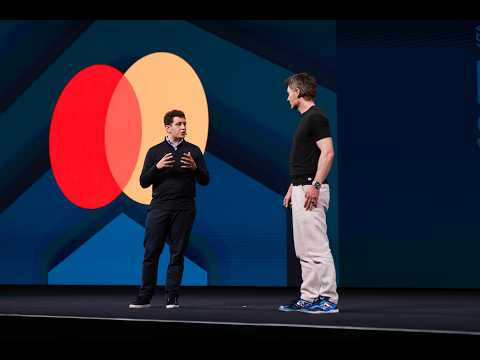
Federico Cohen Freue, EVP, Data & AI Operations at Mastercard, spoke at Data + AI Summit 2026 about how the financial services leader uses Databricks Lakebase to feed context to AI agents, including for its Virtual C-Suite, a new AI-driven service that helps small businesses operate with executive-level decisioning.
Learn more about how Mastercard uses Databricks: https://www.databricks.com/your-ai/customers/mastercard
Presenters:
Federico Cohen Freue, EVP, Data & AI Operations, Mastercard
Nikita Shamgunov, VP, Engineering, Databricks
FAQs
What is Mastercard's Virtual C-Suite?
Virtual C-Suite is a suite of AI agents designed to help small business owners make executive-level decisions. The first agent is the virtual CFO, which aids cash flow and working capital decisions.
How does Lakebase help with multi-tenant isolation at Mastercard?
Lakebase enables Mastercard to operate thousands of issuer banks on a single platform with secure, bank-level data separation, ensuring each tenant has isolated views.
Why does Mastercard consolidate 80 different services into one platform?
By consolidating services onto one agentic platform, Mastercard can create AI agents that reason in real-time with shared context from a unified data foundation.
How does Lakebase share data between AI agents?
When one agent takes action or generates insights on Lakebase, that data becomes instantly available to the next agent, providing shared understanding and coordination.
Full transcript
Please welcome from MasterCard. >> How are you doing? Thank you for having me. >> Doing good. Uh excited to have you. So, MasterCard um aims to have data and services account for over half of its revenue. To get there, you consolidated um 80 different services as the one agentic platform. So, what didn't work in the past and what's working now? >> Well, it it's a great question. And maybe just to level set, just to give a sense of the dimension that we're operating in, we're operating in about 200 uh over 200 countries.
We have billions of cardholders, and we process more than 150 billion transactions every year. And so, at the scale that we have to operate, bringing together our services was very critical. Now, Lake Base helped us accelerate that by creating a shared foundation where we can bring in differentiated insights, our governance, and isolation when we need it to basically bring together uh agents that can reason in real time, but more importantly, can work together with that shared context in that architecture. >> So, you've built a a reusable architecture um here using uh Unity Catalog and Lake Base to help with the creation of a virtual C-suite.
How does standardizing on Lake Base help? >> Well, standardizing on Lake Base has been pretty critical. Uh for example, in March, we announced a new solution called virtual C-suite. It's designed to help small businesses operate with executive-level decisioning. Think about the average small business owner. They're very busy. It is very difficult for them to take decisions on cash flow, on forecasting. And so, what we've done is we've created a suite of agents that will help each as a digital executive aiding in a number of digital responsibilities.
The first one we're starting with is the virtual CFO. It brings and helps make decisions on cash flow, on payments, and how to make working capital, all which are make or break decisions. And so, we use Lake Base to create a foundation that allows us to take in insights from their data, from their performance, bring it all together, and the benefit is because we're using Lake Base, we're able to have that shared understanding.
So, as one agent takes action or generates insights, it becomes instantly available for the next one. >> So, let's talk about multi-tenancy. With thousands of issuer banks on a single platform, um multi-tenant isolation is a high-stakes challenge. How did you use Lake Base to approach a secure, bank-level data separation while enabling AI-driven insights that can continuously learn and improve over time? >> It's a great question.
So, there is another solution that we've been working on that's coming soon called uh performance pools. And for some of these solutions, we have to support thousands of issuing banks all in a shared platform. Now, think about the challenge that we have to have. For us, data isolation isn't optional. It's foundational to the trust that our clients have with us, uh and it helps us manage things like data residency and other requirements that we have.
And so, this capability that is coming soon that helps us bring always-on insights into action to measurement and continuous loop requires us to keep our issuing data isolated and separate for protecting each of our clients, but at the same time, we have to have the ability to consolidate insights in a secure and transparent and anonymized way so to draw it. Lake Base allowed us to basically create this solution by establishing a single foundation that then can apply to thousands of issuers at once.
And so, for us, it's enabled us to have that trust and that embedded foundation within that we can create for one client and then expand and scale horizontally to all of them. >> Your team went from concept to scale-ready MVP demo in 7 weeks. Uh my mind is kind of blown. I've never seen anything like it. Um and for a company with Mastercard's regulatory bar, this is kind of wild. Um so how did keeping um agent memory, model serving, governance inside of a single platform allow you to move fast without sacrificing trust? >> We we're incredibly proud of the speed that we've been able to achieve.
But part of the key piece is that we are uncompromising in our approach to how we manage and govern our AI and our data. And so what we were able to do with Lakehouse was to build all of the foundations from the start. So when we start developing a new MVP, what we what we have the ability to do is embed that governance, the guardrails that we need, and a number of the other isolation and foundations that we need to have in place from the get-go.
By building this in with the Lakehouse architecture, that allowed us to move much faster than usual because all of those trust components become non-negotiable. So instead of supposed to accelerate by cutting corners, we accelerated by building the foundation from the start into something that frankly now we can reuse every time we build additional agents. >> So looking ahead, what becomes possible as your agents get more autonomous?
What are you looking forward to building uh on top of Databricks platform? >> Well, uh I'll go back to something you said at the start. Um we aspire to have our services power more and more of Mastercard. Well, what that means in an agentic world is that over time we're going to have an increasing set of agents that our clients in the ecosystem uses, but also it means that they have to be trusted and that they have to have that shared foundation within.
And so as we start moving from agents that not only provide insights and information, but can help you take action, help drive the ecosystem. That shared foundation is what's going to help them learn from each other and drive their power even further. So, when you think about some of the things I mentioned, like the virtual C-suite, like performance pulse, like capabilities we're driving in a gentle commerce, bringing that level of trust for us as the currency of innovation, and we believe it's going to let us scale much further thanks to that shared components that we'll be able to build in. >> Thank you for being an incredible customer, Fed. >> Thank you for having us.
Thank you, everybody.
Learn more about the Databricks Data and AI platform.
The information provided herein is for general informational purposes only and may not reflect the most current product capabilities or configurations.