How MasterCard Improved Customer Support Time with AI-Powered Automation
Summary
- GenAI customer support: MasterCard built an AI-powered assistant that accelerates customer onboarding, reduces ticket resolution time, and continuously improves via human-in-the-loop feedback.
- Scalable GenAI platform: Mosaic AI provides the governance and security framework for deploying generative AI applications at enterprise scale without compromising on compliance.
- Rapid experimentation: Lean Startup methodology enables large enterprises to evaluate emerging technologies, build MVPs, and validate use cases with customers before full-scale deployment.
How MasterCard Improved Customer Support Time with AI-Powered Automation
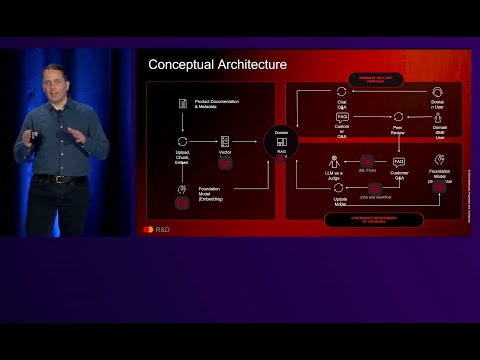
MasterCard is revolutionizing customer support with generative AI. In this video, Peter Nolan, VP of Software Engineering, reveals how his team built an AI-powered assistant that speeds up customer onboarding, reduces ticket resolution times, and continuously improves with human-in-the-loop feedback. Learn how they leverage Databricks Mosaic AI to create a scalable, secure GenAI platform. Watch now to see how AI is transforming enterprise support systems.
Chapters
0:00Introduction and R&D vision2:04Use case and problem statement3:07Platform design goals4:08Conceptual architecture9:43Live demonstration13:01Admin and feedback workflow
FAQs
How does AI improve customer onboarding at MasterCard?
MasterCard's AI assistant automates complex configuration workflows, reducing onboarding time and manual effort. By providing guided support and answering questions in real-time, the assistant improves customer experience and reduces pressure on support teams.
What is Mosaic AI and why do enterprises need it?
Mosaic AI provides a secure, governed platform for building and deploying generative AI applications. It addresses enterprise requirements for data security, model governance, and compliance—critical for regulated industries like financial services.
How does human-in-the-loop improve AI assistants?
Human-in-the-loop feedback allows support teams to review and correct AI responses, continuously training the model to improve accuracy and relevance. This creates a virtuous cycle where the assistant learns from real customer interactions.
How can enterprises experiment with GenAI safely?
Lean Startup methodology enables rapid prototyping, MVP validation with real customers, and iterative improvement. By controlling infrastructure access and following established security practices, enterprises can evaluate emerging technology without risking production systems.
Full transcript
0:00 Introduction and R&D vision
Hello everybody um I said from MasterCard uh good partner with the data brecks team um I'm based in Dublin Ireland from in our European techup I lead our software engineering team in the R&D division um today is my 12th anniversary of MasterCard uh I only bring thank you I literally got a notification this morning through our HR System going happy happy anniversary um so 12 years is a long time to be in a company um but I literally have the best job of MasterCard the team I work in uh we're responsible for evaluating emerging Technologies like gen which is super exciting we were jumped on it as soon as it got launched was nearly two just over two years ago uh we do look other Technologies we're looking at Quantum so really interested in what's happening this week with uh with AWS and what they're doing in that area privacy and etc etc so the geni Super Hot Topic this year for us um what we do is uh whoops jumping on the slides yeah so we do a lot of research obviously but the best part of the job is actually taking that research and applying it to product development so we're not just stuck in the lab playing with toys we actually work with teams across MasterCard who might have a new idea like the one we're going to present uh around how to apply that technology to one of their business solutions so we actually build the solution in a kind of a Lean Startup methodology rapidly bring it to the customers and test with them at an MVP level um how do we do that in a large company as you can imagine MasterCard security is top of the pops for us so platforms and services something my team actually run ourselves we have our own CL Cloud platform um we manage ourselves we actually have our own instance of data brecks what that allows us to do is deploy these applications rapidly and securely to MasterCard standards but also to experiment at that early stage and inform the rest of the company on our learnings so gen AI obviously like a lot of um companies out there were looking at one of our first use cases after doing lots of experimentation the first one we have was that customer service agent and we had a really good use case where we have a team that helps customers with their on boardings to some of our products which can be quite complex a lot of configurations um and takes a lot of time to on board and work through the different settings so we have a dedicated team that manages these customers why was a really good use case is because it's measured really you know that team just they get the you know the support request in they're measuring the time that we answer the the customers sometimes the agent just doesn't have the knowledge so they're going back to the subject matter experts uh could even going back to the engineering team that's a ticketed process and of course you know tickets there's slas and suddenly a simple question that could have been answered very quickly if you had the knowledge is turning into a multi-day process not a great experience for our customers so we said let's build our first production application and we didn't want to do this just a oneoff let's build it we've all built out the prototypes I think we talked about it earlier you can get up very quickly with some of the rag systems that have an agent but that wasn't going to be what we wanted we need to build something that was more of a platform um we had about 50 products just in the boarding use case but there's lots of other use cases bubbling up our MasterCard that we wanted to be able to service with the single solution um we also as I said we're Hands-On we want to learn these Technologies so let's build something from the ground up and really understand how do we build these things in production what's the stlc for Gen app how do you integrate it into our development processes how do we test how do we roll back all of these typical software engineering questions and lastly we want to a common theme today is we wanted to make sure that what we built has a is quality so how do we then automate the improvements to the model that we've created how do we uh bring those subject matter experts into the into the project with us to help us create this system and keep improving the accuracy of the model so what did we build so nice conceptual architecture nice and high level for the talk um on the left side we have we call Our Kind of our model Factory one of the decisions we made was to have multiple models per domain domain is you know a collection of uh knowledge the knowledge is coming from lots of unstructured data there's emails there's a ticketing systems some q&as back and forth between the agents there's all our our documents some in PDF some on web portals so a quite of a diverse set of information that need to be pulled in into uh a model domain multiple reasons for that one of the biggest reasons was that um in MasterCard terminology overlap so a token in our MDES product which is the thing that powers Apple pay Google pay and your phone is very different to a token that's run in on an e-commerce website so we need to be able to split the domain knowledge into different bundles also for you know for the development life cyle we have different teams working on different models so it's much easier to split that up so we needed a way to build that and that's what we're using with our data bricks we're using the model serving that was just mentioned uh and the vector index for our our rag uh data um now we have a nice model that's great it's uh we we have our own API layer that's talking down into the datab brex model serving API and our own UI so our agents are using the system but how do we improve us and that's where we have the similar human in the loop system uh so through our UI agents can uh interact with the system but we're they're parts of this pilot so we're asking them to help us improve things so through the UI they've a simple thumbs up thumbs down uh they also have the ability to edit a question so if they think the answer coming from the model is you know incorrect or maybe missing information or sometimes even just two verose we need a more concise answer they can edit that in the UI and save us those edited answers are the ones that have graded go into a backend system this is where the subject matter experts come in they then log into the same same UI and they have a job to go through all the graded questions and have a a second pair of eyes on them uh they can also edit them they can you know manipulate the answer and then once they've verified it it's then stored again and used for training does so now we have a a human in the loop grading all the questions and creating a nice uh set of data that we can feed back into the model um a lot of automation kicks in and we're crazing the new model and deploying us but how do we know that model is actually better so that comes in into the llm as a judge so we're using a very similar system where the judge is then asking the model a bunch of questions so at the beginning of the project we had hundreds and hundreds of questions from our customers and we roped in lots of smmes uh to go and answer those questions for us so we have a nice kind of golden set of evaluation data we use the llm llm as a judge to ask the model a question and through a prompt we're evaluating whether the response was good and the response could be good where it's it's answer the question but maybe it's coming back with an unprofessional tone so then we downgrade those answers so we score the response between a a one and five metric um then we then once it's graded we get an overall score for that model and then through automation again we're going saying okay is a new model the score higher than the previous one if it is then we swap them out and promote the new model to production so that creates that continuous flywheel and we've started with I think we were in the low 60% our score from our evaluation from the judge and we're now up into the high 80 so we're really seeing that Improvement this is since July when we launched to around now that we've been able to bring the quality of the model back up um there's a talk there mentioned there of the uh fine tuning API so that's something we're experimenting with now it's trying to optimize what we have so we have a couple of things we've looked at we're using the fine-tuning API to exactly that to use a smaller Foundation model and make sure or see if we can then tune this to have the same efficacy score that we're getting from the rag model and we're actually seeing amazing results so really excited to start building that into the system we're also doing just some simple optimization so we're using the vector index for what it does which is good similarity searches and where through the agents they will they will pick a question that's it's perfect so it's a verified question it gets flagged so rather than going back to the rag model to generate the answer we're actually just pulling it directly out of a cache in the vector store so that's a really good optimization that we're seeing all of this is wrapped in typical software engineering practices so we're using G and git flow and Jenkins integrated into the the data brick system through their CLI to actually automate a lot of these flows back and forth so for example if someone tweaks the system prompt just like any code it's a PR request you get code reviewed the review gets accepted jenin kicks in uh and calls into the data bricks system data bricks pulls down files from G and the automation kicks in and a new model is built and the testing flywheel kicks in so this is really you know we found amazing results the team who are using us love us it's a tool for them to get through the day faster that they're not spending all day doing queries and tickets so they have a lot of other things to do so being able to speed up that process has been amazing for the agents now I was double dared to do a um a live demo right here is our landing page um as you can see it's it's pretty I think it looks pretty good um we treating this as a product for our customers even though they're internal at the moment we do plan to bring this uh external to our customers to use but right now it's an interal product but we're still treating us as a product and getting a lot of feature requests from the users um let's sign in fingers crossed God excellent so here we are very familiar interface um you know there's a pass forming with chat gbt and others um the home screen has some kind of standard kind of prompts we're in training mode with the agents so they're they're getting familiar with the tool so they can see kind of some examples here um this is built for specific workflow so I'm going to do a very quick run through a workflow so an agent will get a ticket in uh they'll start a new chat um they're going to pick a product from the list so we've got three products live at the moment and this is at my stage environment so it's our production is going to be assigned to a ticket so they're going to be working on a ticket that they'll be familiar with these numbers so we don't need to have extra contacts here the agent will know the ticket that're going they work with so I'll try see if he's alive um and we'll start the chat excellent so nice simple interface uh I mentioned earlier in in the talk uh mdz that's one of our products so why don't I ask the system what is MDES what is mes okay can I beat 30 seconds I can excellent so here's an ample an an answer very concise MD is the MasterCard digital enablement system I should have asked if anyone knew what it meant um and it's not a physical card it's a virtual card kept in our mobile device so we have a few features to show you here the first one is that we have the a link to the the data that was pulled out of the vector index to see what collection of data came up with the answer um so that's very useful for the agents and then also they can click on us and this is a really big feature that we didn't even think they' necessarily like but uh they're able to just follow the thread into the documentation and they're building up their own knowledge so this one actually came from our public developer portal so a part of our our Factory there building the models actually um scraped this website for that information and pulled it into into the vector store so that's nice neat um another one to show you is this is where our human in the loop system starts we have I said a simple thumbs up and simple thumbs down and then the ability to edit the question inside the UI so I won't leave I won't add this this is a nice concise answer but as you can see you could edit us and submit the update um so here we go this is the interface it's nice and simple there's few kind of extra features on the side but it really is just keeping it tight to what the user needs now a different Persona this is the so the subject matter expert they can come in and I have this role to the admin portal their job is to there some reports and things there which is quite nice can see how the system is performing and how many answers are been uh graded but their job here now is to go through some of these these questions that have been uh submitted so I'll start reviewing this is like kind of wacka can just kind of keep going in and uh answer these questions it's quite catar Arc um so here's a question here can see some uh some information some metadata I can actually see the chat history and this is important because a lot of them are like this it's not kind of question get the answer they're the agent doesn't know the answers they're trying to interrogate the system to get to an answer so asme I can see the what was the original question what was the back and forth and I can say okay is the final answer the concise answer to this question if it is then I can actually accept it and it now is marked for training data and then you can see it just slides onto the next question and it's back and forth um so once it's done training data I think we we run it nightly um get all the verified answers and the flywheel starts to improve the model and that is my
Learn more about the Databricks Data and AI platform.
The information provided herein is for general informational purposes only and may not reflect the most current product capabilities or configurations.