DoD Chief Data and AI Office Speaking at Databricks DAIS Government Forum 2024
Summary
- Government-scale data infrastructure: Advana, the Department of Defense's data platform, addresses massive logistics, supply chain, financial, and asset tracking challenges across all military services.
- Federated data ecosystem: DoD built a scalable platform by starting with infrastructure and cloud foundations, adding governance teams, then federating capabilities to customers across the organization.
- AI-driven decision support: The Databricks Data and AI platform enables the DoD to integrate and govern data across services, providing quality data and tools that support critical military decision-making at scale.
DoD Chief Data and AI Office Speaking at Databricks DAIS Government Forum 2024
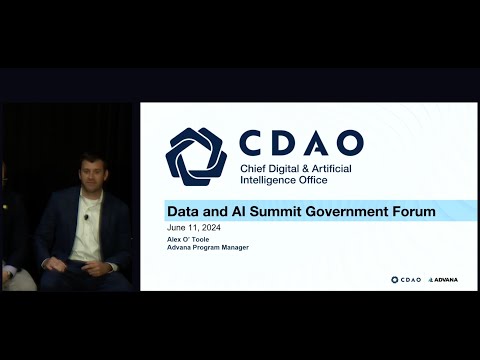
Data leaders from the U.S. Department of Defense (DoD) speak at the Databricks Data and AI Summit 2024 about their success with the Data Intelligence Platform at Advana.
Chapters
0:00Introduction to Advana11:01Community and scaling12:20Impactful use cases18:04Future operating model21:39Data mesh metrics22:25Data and AI ecosystem23:28Question and answer session31:55Closing remarks
FAQs
What is Advana at the Department of Defense?
Advana is the DoD's data platform program managed by the Chief Data and AI Office. It brings together infrastructure, cloud teams, data governance, cataloging, and quality teams to support data-driven decision-making across all military services.
What data challenges does the DoD address with Advana?
The DoD faces massive logistics and supply chain challenges, financial and asset tracking requirements, and medical equipment management across all services. Advana consolidates data to provide visibility across these complex domains.
How does the DoD's federated model work?
The DoD started by building infrastructure and cloud foundations, added governance and cataloging teams, then federated the platform so that DoD customers can build analytics on top of shared infrastructure and data.
How does the Databricks Data and AI platform support Advana?
The Databricks Data and AI platform provides the foundation for Advana's unified data governance and quality assurance. It enables the DoD to manage complex data, ensure compliance, and support mission-critical analytics.
Full transcript
0:00 Introduction to Advana
Hi everyone I'm uh OU uh I lead the I am the advana program manager and I lead our infrastructure and platforms division at cdao uh first off thank you all for uh having us speak here and uh I lead up our data and AI tools and services uh division within the cdao um this is actually my third time being here third or fourth at this point um always an awesome event hopefully everybody's enjoying it as much as we are um I think we're going to immediately jump into like why the complexity of the dod um or or how complex it is and why it's uh such a challenge for us to solve at the scale that we're working at uh and then we're going to jump back to uh the kind of the journey and the evolution of advana and uh where it's going here in the near future um so this slide didn't really it didn't really occur to me how uh how adversarial this might seem um until we were in our uh product uh Advisory Board yesterday and I think there was representation from probably 90% of these companies there um but uh this is a really uh quick way to actually explain just why the mission of the Department of Defense is uh so complex and so big um as you can see uh the these numbers kind of speak for themselves but um we have huge uh Logistics and supply chain challenges we have huge uh financial and asset tracking challenges across all of our services uh obviously with covid we saw some of the challenges with uh medical and uh medical equipment there um but this is a great slide to kind of level set um the problems that we're facing within the Department of Defense yeah so so what we did essentially to solve this problem is or or what we did was a create essentially create a platform uh of aenna to start bringing data together uh we started actually with the infrastructure and Cloud teams to start building a foundation start putting guardrails start bringing in tools uh for us to integrate and bring in data together uh and then we started adding in the data governance teams uh the cataloging teams quality teams uh to start pushing out quality data to DOD um and providing some of those scaffolding tools and uh or or tool sets for us to give people a head start so we weren't maintaining or building multiple data science platforms and then we started essentially federating that out to our customers um so uh where we aren't the only ones building anymore it is a lot of our customers uh either building where we still build the Marquee products for the joint uh war fighter but then we have essentially our customers from the community spaces which are our uh essentially many instances of advana uh for Navy or for air force uh we have all the combatant commands all of our uh our business areas Building Products inside of ADV and sharing those among each other and breaking down some of those silos um and totaling over essentially uh bringing in over 500 data sets uh creating 300 over 300 product lines and uh and serving over 100,000 users inside of the department right now that was a big milestone for us yeah uh to do that we've brought in a number of tools uh right now we're on the data bricks PVC version uh obviously evaluating E2 and the migration there which uh will be coming ideally uh quickly uh but but laring using it largely for uh ETL processing uh a lot of uh machine learning algorithms being built um uh data Federation data Federation we have a unique challenge in the Department of Defense uh where we also operate across three different classification environments so we have to have uh cross domain Solutions in place to be able to move data back and forth uh to the necessary classification level as well and so when we take a look now that we kind of explain a of where where we started from we started as a single platform really designed around audit bringing in financial data aggregating financial data standardizing it and preparing for the audit so we moved into where we are now of supporting combatant command starting to move into that self-service and supporting multi-domain operations uh and starting to uh really Empower Federated Builders and moving away from the White Glove uh self-service and then we look towards the future of really beginning a full true self-service model really beginning to build through giops and reusable code of starting to push out the platform to customers and providing the data layer or Enterprise data service uh and so that's what we're going to talk about more today of essentially where we are today some of the values we've seen uh over the last year and then really the future of where we're going oh wow yeah so uh quite a long timeline here of our history um I think dating back to some policy back uh from probably before I was born actually but but ultimately uh what what we uh set out to initially solve uh to point is uh this massive problem that the Department of Defense and other federal agencies uh have a challenge with which is simply uh tying the financial transactions back to uh the line items on your financial statements really uh it's it's actually a requirement for any um any uh public entity um to be publicly traded um but that requirement didn't really hit the federal government until uh I think in the 90s at some point um and so uh because we have uh well over 30 different accounting systems and uh 50 different feeder systems into the uh into those accounting systems within the Department of Defense that was a huge challenge for us um but it was actually where we showed a lot of initial success uh in uh developing a semantic layer to sit on top of all of that data and bringing it into uh a centralized data uh Warehouse data Lake um and then uh starting to do some of those reconciliations um and so uh that has been a that had been a huge success for us at that point in time um that quickly translated uh into great if you can do this for financial data can you tell us where all our people are can you tell us the status of our tanks and airplanes and where they're at what what the uh current Mission capable rates are for any particular unit um things like that became uh immediate uh requirements uh uh from the deputy secretary of defense and the chairman and uh and at that point in time I think was uh when we also started to uh support covid tracking which uh we're going to jump into some of the other use cases so I won't go into too much detail uh there just yet well we we'll save that for the end um but there was a a quite a journey here um and uh we actually were initially aligned to com controller uh which is our our financial organization within the Department of Defense uh we uh started to support these uh Business Health metrics for the deputy secretary to get away from uh PowerPoint presentations uh of uh the current status of these various uh business areas in the department and uh move towards automated uh dashboards based on on the underlying Source system data um and uh that was massively successful um in fact uh two years ago uh we were uh realigned with a couple of other organizations to the chief digital and artificial intelligence office uh to ultimately accelerate some of our efforts um so that's that's really where we are today yeah and what's what's helped us get here uh or or get to where we are is a couple of our foundation pillars and pillars that we're maintaining um over the next few years but but Staples around uh making sure that anything in ADV is government owned government secured that we do have essentially government representation in the loop and that we aren't uh just sending it off to any one vendor or any one contractor um that we're we're are working with customers and adding in capabilities that they're requesting uh through our our monthly uh iteration meetings with them uh working at more of a scaled agile framework so as new things coming on we can pivot quickly and meet the requirements um as required and then really building that open architecture um and making sure that we are anything we are building is open to the government is open to be shared across the government any data products are are available for Federation and shared within any product uh not just one uh one or two tools and then uh really making sure we're providing that lineage through the like through our foundation of audit and the lineage of making sure we're providing a single source of Truth for any data set for any dashboard being uh developed and built and then uh really making sure that we're adding in tool sets for the war fighter uh so we're not building in uh just AI tools or just coding tools that we're adding in uh full full Suite capability that we're adding in uh Auto a AI ml that we're bringing in um tools that are more designed for an analyst and things like that so as we kind of continue going forward a big focus is us is expanding the uh the capabilities of every every analyst which is also somewhat of a recruiting strategy for us as well if you think about it um you know the folks that actually have the expertise to do these things don't want to work in Legacy technology uh shocker I know um so by bringing in these uh newer like industry um accepted capab abilities uh we're also uh able to show the newer generation uh that a career in in federal service isn't so bad um we actually get to do uh some fun stuff we were just in Germany last week um and we're here at data bricks today so um yeah it's uh for us it's uh been massively successful just not not just from like uh an architecture and like how we do business uh change but also from a cultural shift within the department yeah and so two of our customers as we mentioned we had Community spaces working with us and Community spaces deploying and building so too we wanted to especially highlight of the value that we're seeing of moving outside of us providing White Glove service and starting to Federate that out to the customers uh which we have 10 as of now but two highlighting is Jupiter which is the Navy's uh exanti of ad uh where they have uh almost uh I believe it's uh 10,000 uh developers and customers um working inside the platform day-to-day uh building applications I think there are over 300 products now or uh being built in there using over 100 data sources from Navy that's been ingested and standardizing to even doing close to real-time replication of their Erp system and bringing that into advant for near realtime uh status of funds and what they have and then our Air Force Community uh are are the blade A4 team uh working to really modernize and bring up some of their systems uh developing uh and migrating uh essentially some of the architecture or systems that we have uh and bringing them to a more uh modern and open architecture skip ahead a littleit yeah there we go uh and then there's four uh big use cases we wanted to share bring out uh of where advant has been working and going over over the last couple of years uh so so the first one uh is our improper pay so started in the audit obviously uh but but really analyzing all of dod's transactions uh identifying risky or or or potentially uh improper charges uh flagging those for the analyst over at dest and then being able to recoup those costs so over the last two years uh being able to rec or recoup almost $13 billion uh worth the money uh is a is a big Flagship for our financial team if that were taxes we'd actually get a cut of that yeah uh no that's a massive I'm I'm actually just excited we can even share share these with you this year I know in the past uh while we were working these day in and day out there was a little bit of sensitivity to actually even sharing them to the General audience here so uh this is awesome yeah and next uh obvious co uh when everyone shut down uh we did not uh we we kept working uh we had military members that still had to be reporting to duty still had to be moving uh in and out of their locations uh so uh we had we stood up essentially a covid tasking Workforce bring in all the logistics data all the PPP data all the supply chain data all of our HR and Personnel dat to start tracking uh uh user our our members and our our service members throughout um throughout our Enterprise and making sure we were advising properly of where we needed to uh Implement additional restrictions or or where we could return to work yeah no that one didn't prevent us from going into work unfortunately but um it was uh it was a great use case uh for us because it was really uh really pushed us outside of that Financial uh business area um to move into Logistics and supporting the war fighter um so it was really one of our first uh one of our first use cases where we got outside of our comfort zone a little bit and uh showed some some massive success based on the underlying architecture we had in place yeah and then the next one was really our first uh one of our first times into real operational uh working with our members uh more closely but really the Afghan Neo of bringing in uh uh essentially uh emails and PDFs of uh of uh essentially our partners and uh that were requesting assistance uh being able to help uh advise and and make sure we were connecting uh those uh th those uh Partners to the right people uh being able to do uh pass information along for Logistics and for Supply so as we started uh moving them out of Afghanistan we were able to make sure the bases had the necessary Supply that we needed uh the co shots so the ppbe it all tied together but making sure we were able to start evaluating and pre-staging supplies uh there was was a big one for our Logistics and Afghan uh support teams yeah and that one was uh particularly challenging because uh getting out of Afghanistan was uh all military flights um but then uh once those flights landed in in other countries uh we then used contracted flights uh through commercial Airlines and so legitimately at one point uh we were watching some of our our service members track these flights from flight tracker on an Excel spreadsheet and uh providing the status of when and where they landed uh to the chairman and uh we're like hold on we we can actually automate this for you guys why are we doing this uh we can tell you exactly when those flights landed put it in a dashboard we can actually track the flights in real time um and uh and then get the Manifest of who's on those flights uh and bounce those against uh particularly if if those uh folks are coming back State Side bounce those against terrorist watch lists uh and other things uh to make sure that uh we weren't introducing any any additional risk uh State Side so um that was a huge challenge for us yeah and the last one um is the Ukrainian crisis of being able to one have all the logistics data have all the Readiness data uh being able to see inside of our supply chain uh to advise essentially where we have uh Munitions or where we have capabilities that can be transferred and really being able to aggregate those recommend those um up to be transferred and then the financial tracking behind it to actually report back to what we are transferring the cost of it to replace uh and what's needed uh for our partners there uh to continue fighting uh I think is a big one for us yeah and this one in particular I think has uh pushed us even further um into some complexities that we didn't have to deal with in some of these other use cases where we are now working with uh Nations that are not part of NATO uh not formal uh allies or Partners um and so th that introduces some some additional risk as it pertains to the data that we share um but additional challenges in terms of how they access the data that they can see yeah so as as we kind of build off our experiences and where we go uh with the uh with what we've learned where the data we brought in is really now beginning that pivot of ADV and changing the way that we do business operations in the traditional uh we we've usually been the we're bringing in the data we're providing the tool set and we're we're essentially building algorithms or we're building dashboards on top of it in a in a very White Glove service where we're bringing in contractors and developing or our community spaces are bringing in contractors and developing on the platform uh as we've matured and as we've gotten to a point where we started to hit kind of critical mass it's been a time for us to really examine and and re-evaluate the platform in its direction uh and really we've come to the conclusion and after working with a lot of our partners that building a more open framework uh and building one where we release some of the control out to the services and out to our comat and commands and partners is really important for us uh so over the last essentially year our team's been working uh very hard at building essentially a software p uh pipeline a container hardening uh pipeline a model hardening pipeline uh a essentially an infrastructure pipeline uh so we can allow essentially development on I 2 uh from essentially any partner uh that then can integrate their tools or their services into the platform and then deploy out out through uh essentially I 5 I 6 and I 7 from the low side uh using just our core team to facilitate the deployments On The Higher Side um this is and then we are also working with some of the more open our other Platforms in DOD uh and some outside of DOD to start integrating in so instead of us like forcing or having data migrate to us being able to serve them the data directly so the Investments you've already made or the Departments already made in platforms can continue and we can just serve the dat in a standard way uh with DOD with standard attributes with standard governance models but really started to accelerate some of the development and how we're doing it is is we started at essentially the infrastructure level uh we we started with the clouds of building uh essentially abstracting the networks abstracting the clouds and extracting the domains uh so we built what we called as the platform Factory uh and we've started to ex ract and allow those pipelines and create essentially a standard advana uh core and then building the Enterprise data services so really concentrating I think we put out a lot on uh open data Frameworks and data mesh Concepts but really working to create those API gateways create the governance models to start ingesting and pushing data and federating data out uh to the other systems uh and then taking all of the infrastructure that we showed in the original slide and all the tools and building essentially a common advant that's a push button deploy so it can be deployed out with all of the governance models with all the security controls uh at will and then where we started to allow customers it sandboxes to deploy their web applications their custom uh tools their their cost products uh and any models being able to deploy into the into the uh essentially the factory integrating in building out their tools and then pushing those through the uh environment without the assistance of our team but making it much more of a service model in a Marketplace so we can expand the offerings and tool sets inside of the app platform right so I think we have uh two slides left um and I don't want to spend all the time on them if there are questions in the room uh because we only have eight minutes so uh these are just some quick facts about uh the amount of data and the data processing we're we're doing uh in the platform and some other key metrics um it's probably a bit old at this point um but a massive amount of data um a ton that's being pushed through a cross domain uh even more actually being uh Federated outside of the platform than is actually coming in at this point uh which is kind of a a myth that we hear quite often in the department um but uh if you want to go to the next slide this uh just kind of drives home the point of where we're uh heading uh on the data an AI front in alignment with this new 1.
21:39 Data mesh metrics
2 operating model um for our data uh in in particular uh very much the same approach to deploying software uh have have a a pipeline that can actually uh Federate out the ability to um make data connections bring your data in uh ETL it make it available through an API endpoint uh and serve it uh uh in a model if if needed or inference it in a model if needed um so that's that's really where we're headed uh with the data and AI portion of the text deack um and with that we have seven minutes so I'm sure you guys have questions got one over here and then we'll go to you next previous slides um you had a stag diagram that talked about Mission stag could you please elaborate what comprises that mission stack please right there yeah yeah so in inside of uh essentially what we build are if you look at the mission stack uh that is going to be largely uh essentially our core product so if you look at uh data bricks being part of the engine and driving that uh you look at some of the bi tools of click and Tableau uh but it's also going to include a lot of the governance tools uh of am muta uh of calbra uh of tools that we would deploy kind of more close closer to you uh that we would control um essentially the operations and governance of the platform in a common way uh that you would build on top of and integrate your tool sets into talk about um how how'd you get uh everyone to share their data we can we can all relate in when in government how difficult that is right did you have a command on high that says Thou shalt share or how did that work oh man those were some of the most stressful days of my career um so uh I think about three or four years ago now um the deputy secretary of defense came out with a memo called the creating data Advantage memo um which actually directed uh the entire department to start sharing their data not just with advana uh although it also identified Advan as the authoritative uh data platform for the Department um but uh really what that kind of started was uh when we when we started the business Health metrics um and measuring like the actual health of the Department's operations uh all of it was fed off of spreadsheets because it was going into PowerPoints by the time it got in front of the deputy secretary or any other leader uh it was probably 30 days old and then they had a question which went back through like a thousand hours of Staffing uh and only for that data to come back up and be stale again uh by the time they answer that question for the deputy um so we started with about a list a list of about 200 different data sources that were feeding those uh business decisions um and my task was to get access to every single one of them and uh and if I was having challenges whether it was cultural uh policy or um or resourcing uh or otherwise uh that went on a list that the deputy secretary would review every single uh week and uh and that uh at that point I think um started to remove a lot of blockers for us which was great um but also created a massive workload for me and my team which was fairly small at that point in time um and then uh really I think after we got through maybe like the first 50 people stopped fighting us and they realized the value of it and uh it really did shift the entire culture of the department I back so you have more than 500 data sources across domains one of the slides said how did you solve the semantic problems right because you'll have things that have the same name in different domains but they're different things within one domain you'll have something that's the same thing in the real world but it's defined seven different ways and seven different data sets yeah so I assume you have some kind of semantic layer or incredibly good data catalog with bu class like what do you use and how did you make it um to be quite honest we're we still aren't uh as successful as we'd like to be in that area and I I meant to say this up front um we have 550 data sources now but there's actually over 4,000 Business Systems in the Department of Defense uh and that's not even including like our weapons platform so um we've only cracked a small portion of the overall uh Department um but the semantic layer I mean the first example I have is uh what we did for audit right um because we were getting data from uh Oracle databases Cobalt mainframes sap uh data sources all all in different languages sap is actually in German we found that out through the process um and we had to map those to that semantic layer uh which was specific to uh financial data that point in time and the data that was necessary to actually do the reconciliations to the financial statements uh so we started building the business logic uh on top of every single one of those systems to translate the data into a format that actually allowed us to aggregate all 50 to 80 of those systems into a single place um but we haven't done that for uh for all of our Logistics just yet we' we've started all of our Logistics and supply chain systems we just kind of started an effort on that uh we haven't done it for all of our Personnel systems um uh that it's an incredibly uh hard problem to solve hi I'm with ACI um question followup from the data sources so if we were to bring in commercial data sources what would that D how would that directive work with it because the commercial data sources from what we're finding are all saying well if we're all going to connect into advana then how is that going to work if we're selling to these 15 different people now but you're going to connect in yeah um I I don't want to like dance around it I mean the government and the dod in particular buys a lot of the same data sources over and over and over again and we don't even realize it um because Air Force isn't talking to Army uh for instance and uh that is one of the challenges that uh Advan was set out to solve on the infrastructure side so uh it's it's obviously something that we want to try to solve uh on the commercially available data side um in in that environment but um we haven't just yet I mean we we bring in a ton of commercially available data and obviously it's vendor to vendor it varies on uh how broadly we can actually share that data I think this will be the last one per time uh this is really awesome quos to all of you uh couple questions really fast really fast answers number one do you consider data Fabric and how will you compare it uh compare it with uh uh data meshes and second are you considering jna for the self-service part yeah uh data Fabric and data mesh I I think like there uh they're they're incredibly um uh important uh the Air Force has a data fabric which is which consists of like six different platforms I believe six or seven at this point um I view them as complimentary to one another really um the data fabric uh really just being a a a bunch of systems that make up a portion of that data mesh um but I don't know I think everybody's definition changes on on those two particular items and I think they're incredibly useful terms to actually move the Department of Defense into where it needs to go in terms of data sharing and Federation um but I'm not necessarily tied to them as uh as Concepts yeah and as far as the uh llms and Jer of AI uh like so we do have uh obviously pipelines now to bring in foundational models bring them in and sandbox them off inside of the environment and we have started allowing essentially the self-service users to experiment uh to learn and to train and find tune these for uh certain use cases um I think we're still a little ways away from releasing these into production and allowing these to go until we can really verify the accuracy uh and traceability inside these models I think we're going to be a little bit away but but we are certainly open to uh letting users experiment letting our customers start learning by doing uh just holding off from making decisions off of them thanks everyone
Learn more about the Databricks Data and AI platform.
The information provided herein is for general informational purposes only and may not reflect the most current product capabilities or configurations.