Databricks + Microsoft: Live Data, Unified Governance, and the Future of AI Agents
Summary
- Azure integration: Azure Databricks unifies live data, governance, and AI agents across the Microsoft ecosystem with native Entra identity management.
- AI agents deployment: Databricks Agents integrate directly into Teams, Copilot Studio, and Microsoft 365 for multi-agent orchestration with live data access.
- Zero-copy governance: Unity Catalog enables secure, governed access to data between Databricks and OneLake without data duplication.
Databricks + Microsoft: Live Data, Unified Governance, and the Future of AI Agents
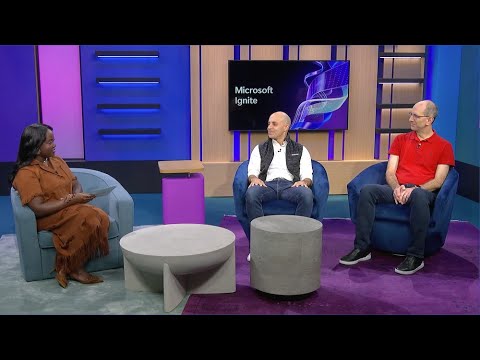
Hear from Ali Ghodsi, CEO of Databricks, and Scott Guthrie, EVP of Cloud + AI at Microsoft, as they showcase how Azure Databricks is powering the next generation of data intelligence and AI across the Microsoft ecosystem.
This conversation highlights how enterprises use Azure Databricks as the governed foundation for analytics and AI on Azure including:
- Zero-copy data access between Unity Catalog and Microsoft OneLake
- Deep, native integration with Microsoft Entra for secure identity and governance
- How Genie and Agent Bricks deliver governed, analyst-grade insights from structured and unstructured data
- Multi-agent orchestration with traceability, debugging, and live data
- How Databricks Agents integrate directly into Teams, Copilot Studio, and Agent 365
Azure Databricks is the unified platform that brings live data, governance, and AI Agents together so organizations can unlock real business value across the entire Microsoft ecosystem. Explore how Databricks and Microsoft are helping customers unify their data, modernize analytics, and operationalize AI at scale.
Chapters
0:00Introduction to Databricks0:14Data platforms and AI0:55Partnership overview1:43Customer success and AI2:47Azure Databricks integration4:26New integration announcements6:16Genie data interaction demo8:35Knowledge assistant demo9:30Multi-agent systems demo11:04Teams integration and outlook12:25Closing remarks and next steps
FAQs
How does Azure Databricks integrate with Microsoft Teams and Copilot?
Databricks Agents integrate directly into Teams, Copilot Studio, and Agent 365, allowing users to access data-driven insights through familiar Microsoft applications. The integration includes multi-agent orchestration with traceability and debugging capabilities for secure, governed access.
What is zero-copy data access between Unity Catalog and OneLake?
Zero-copy access allows Databricks to query data in Microsoft OneLake without physically copying it, reducing data redundancy and storage costs. This is enabled through deep native integration with Microsoft's data platform and Unity Catalog governance.
How do Genie and Agent Bricks improve analytics on Azure?
Genie delivers analyst-grade insights from structured and unstructured data with self-service capabilities. Agent Bricks enable multi-agent systems with live data access, allowing organizations to automate complex business processes at scale.
Why is governance important in AI agent deployment?
Governance ensures that AI agents operate within security and compliance boundaries, with traceability and debugging capabilities. Unity Catalog provides a unified model for controlling access across data, models, dashboards, and files—critical for enterprise AI applications.
Full transcript
0:00 Introduction to Databricks
Hey everyone, I'm here with, EVP of Cloud and AI at Microsoft and Ali Ghodsi, CEO of Databricks. So, tell us a little bit about what Databricks is. Yeah, so what Databricks helps you do is take data that you have inside of an organization, structured, unstructured, >> Yeah. organize it all in open formats, then put governance on it so you can secure and lock it down. And then on top of that, you can do all kinds of things ranging from just analytics to all the way to building agents and AI.
0:14 Data platforms and AI
And it's All of this is integrated into the whole Azure ecosystem. So, it's integrated with every product that you have inside of Azure. So, um that's kind of what it what it does. >> that. I love that. And Scott, you know, going off of what has said, what is the relationship between Databricks and Microsoft? How do you work together and for how long? Well, we've been partners for well over 8 years uh that we've actually had a a first-party service, meaning it's Microsoft-branded Azure Databricks.
Uh I was just catching up with before this event in terms of I remember an event we did in New York. Uh we're trying to figure out was it 2016 or 2017 where we first showed it to the world and it's been a fantastic partnership. We've got more than 20,000 uh enterprises around the world that are using it today on Azure. Um and uh yeah, it's it's really been uh fantastic for both companies and then more importantly for our customers because it really enables that open flexible way to kind of leverage your data and use your data more.
0:55 Partnership overview
Right. And I'm going to hang there a little bit because the importance for customers in this partnership and why it's lasted for so long. Can you walk us through a little bit of what that's been like? Well, I think the thing that you know, both both Databricks and Microsoft are very focused on is how do we make our customers successful. >> Right. And um you know, data is at the heart of every business. And uh you know, how do we let let customers securely store their data?
1:43 Customer success and AI
How do they actually unify more of their data assets in one place? And ultimately be able to get BI value out. So, our Power BI integration together is one key area. How do you do reports and query analytics? And then ultimately in this era of AI, how do you actually train AI models? And then ultimately, how do you surface AI agents? And a lot of the work that we've done across um Microsoft Copilot and Azure 365 Copilot and for example, uh Databricks Genie uh is about, you know, integrating the agents so that, you know, you can have one seamless experience in the context of AI across your entire data estate.
Yeah. And it's so important, you know, put the customer at the center, which is what you both have been doing and this partnership has been doing. So, tell us more about how Azure Databricks works with Microsoft and Azure ecosystems. How is it beneficial to the customer? Yeah, so the way it works is that Azure Databricks, first of all, integrates with Entra. So, all of the identities that you have in Entra flow right through Azure Databricks.
2:47 Azure Databricks integration
And then of course, all of the data is stored in open formats. And what we're really excited about here now is that any data that you have in Databricks that you've organized with Unity Catalog, you've set up your governance, your security, you can now mirror data that you have in OneLake into Unity Catalog and access it without any data migration. It's zero copy. Uh and you'll be able to do the same thing in the other direction as well.
And it Any data that you had stored in ADLS in Azure Databricks will be able to also with zero copy uh mirror and make it available also in OneLake. So, the integration works really, really well. Then of course, it's also integrated with the whole AI stack. So, things like Agent 365, things like Foundry, uh things like Copilot Studio. So, it's seamlessly integrated into all of these things. Even Power Apps uh is a very, very popular integration between Azure Databricks.
People love building these Power Apps. You know, it's no code, low code and you can build especially these days, you can vibe code anything you like. Uh but at the core of it is again that data that's so important to the enterprises and then making sure that you've actually locked it down so that you ensure privacy. >> Right. Right. And I think for a lot of customers, actually all of our customers, security is important, a unified platform is important.
So, tell us a little bit about what's new for the Azure Databricks around data analytics and what big news are you sharing? Well, I think the biggest news probably this week uh between the two companies is the integration we're doing across uh our uh OneLake uh offering at Microsoft and Unity Catalog, which is Databricks's offering. And yeah, as mentioned just before, that ability to kind of seamlessly integrate the data together without needing to copy it, you know, really enables organizations to leverage the data that they have.
4:26 New integration announcements
You know, uh every time you have to copy, there's some latency in the copying. Uh it There's extra cost in the copying. And you know, at the end of the day, if if you can actually seamlessly integrate into your lakehouse um data from all of your existing systems of record and across all your different analytics systems, you can leverage that data and get more value out of it faster, cheaper, and better. And so, like that's a huge announcement for us in terms of that integration again across OneLake and across Unity Catalog.
Uh and that really unlocks the entire Databricks and Microsoft ecosystem in one unified, governed way. And then I think the other big announcement is around the work we're doing around agents. And so, um that ability again with all the announcements we're doing this week around Microsoft 365 Copilot, um uh Agent 365 and all the work we're doing around governance, uh now will work with uh Databricks Genie, uh which is Databricks's AI agent.
And that ability to kind of have agents composed with agents Yeah. to solve real-world problems, I think is what every organization is looking for. And it really unlocks a tremendous amount of value. Yeah. And I think what I'm hearing from you two is that you all are listening to the customer. You're giving the customer what they want, also what they need, right? Which is super important. So, talk to me a little bit about how this all comes together, right?
6:16 Genie data interaction demo
What is the product experiences that customers can have from this? And then what can you show us here? Yeah, I mean, honestly, more than me talking about it, maybe we just uh look at the demo. >> Take us through, yeah. Yeah, so um okay. So, if if uh if we next look at the screen here, uh so what we're looking at here is Unity Catalog, which is a central place where you set up all the governance of Azure Databricks. So, you know, you can have all your data there, uh all of your models, um all of your unstructured data.
But what we're doing now here is that we've actually set up, you can see here we're clicking on OneLake. And OneLake is now seamlessly available, zero copy mirrored in uh and you can see it in Unity Catalog. We also have uh SAP uh Azure Databricks here. So, we can see actually data that we have from SAP. Could be ERP data that you have and it's uh stored here. Uh so, okay. So, we've set up all our data in Unity Catalog.
We've governed it. We have access to OneLake data. We have access to SAP data. So, next, um uh let's start uh asking some questions from this data. >> Okay. Okay. So, uh what we're going to do next uh is that we're going to go in and this is Genie. So, Genie lets you now select tables that you have in Unity Catalog. So, it could be in OneLake, it could be uh in SAP. And you can start asking questions in English from the data.
So, I'm going to just going to select one of these that's there. And we're going to ask a question about this VAT receipts here. Uh but what's really interesting about it is it now actually will construct queries for you as if it was an analyst and it will give you the answers without hallucinating. So, you can see here, uh it's giving you the dollar amounts. Now, the great thing is you can always bring in a subject matter expert that can look at the query if you want.
And they can edit the query and they can make sure that query that there are no errors in it. And if they fix it, it'll remember it and it'll get smarter over time. Right. Uh you can of course click here, you can see it's actually extracted all these English descriptions about all the information that you have in Unity Catalog. Uh so, it's used generative AI to describe that. Uh and you can of course go and add your own instructions in English if you want to make the room smarter. >> Smart.
Okay. So, you can add more sort of uh things that, you know, you think can guide it better. >> Yeah. We like smarter. Yeah. So, that's So, that's that's uh Genie. And now we we have we have Genie there. We can ask questions about it in English. But what if we also have a bunch of unstructured data? So, here we're going to build an agent next uh in um Agent Bricks. So, this is a knowledge assistant that's running on OneLake, you can see.
8:35 Knowledge assistant demo
And um inside of it, we can set it up and configure it so that it has access to these CFO notes and some financial documents. And we can debug it here on the right. So, you can see how it would be if we ask it in English questions, um it can now actually go and uh interrogate that unstructured data. Uh it thinks through it, it comes up with a plan, and then of course give you the answers. But the nice thing about the answers that it gives you is that you can actually get receipts.
You can actually see where did it get exactly this information from? And you can start iterating on that quality. So, we can see here, it's extracted information from these PDFs. Um and the best part of this is that you can actually now give it instructions uh to tune it uh so that it gets uh smarter over time. Right. Okay. So, that's just Now, we have these We have, you know, two ways of asking questions. Let's say you want to put together multi-agent systems.
So, let's say we want to string together uh multiple of these agents. So, this is a multi-agent supervisor that we're looking at here. So, um we have our unstructured data, we have our structured data. At the bottom also, we're giving the access to just search. So, we're giving it MCP server that it can actually just go off to and do web search on. Uh so, now you have an agent uh that can both interrogate the structured data, you know, generating SQL queries for you automatically, non-structured data.
9:30 Multi-agent systems demo
And if there's something it doesn't know, it can actually go off to the web and search the web for that information. So, let's give it a try. So, we ask a question again in English. But now the multi-agent supervisor will figure out a strategy and see where it can best find this information out of these three sort of agents that we've given it. So, you can see here, this shows you actually the queries that it's going to make.
So, that we can actually debug them again and making sure that they're doing it the right way. And if the answers are not what we want, we can actually go ahead and look at how we actually receive those. So, let's look at the traces. And you can see the details of the traces, all the agents that were called, all the invocations. You can actually debug them and make sure that they're doing it the right way. You can look at the timeline here on the x-axis you can see how long it took.
And if there's something that took too long, you can fix that and make the agent just, you know, perfect for that use case that you have. So, that's how this works. But what I'm really excited about is here, when we put it all together inside Microsoft next. So, what we've done now is we take Genie, we put it inside Copilot Studio, and we actually integrate it into Teams. So, we should be able to now ask all of these agents directly in Teams the questions that we have.
11:04 Teams integration and outlook
And it'll actually go through again, governed by Unity Catalog, ensuring the correctness that we just iterated through. And it can do that for you. But the best part of that, all of this is available right now. But what's coming next is that you'll be able to actually take these agents and put them in Agent 365. In that way you can have digital co-workers inside Office that you can actually talk to. And they're routing your questions to the right agent for the right job.
And it'll just be available there for you, seamlessly integrated into our Azure ecosystem, part of my Microsoft 365. And I love that what all that you demoed is available for the customer right now. And you demoed, you know, a lot there. So, tell me what's the one takeaway that you want the customer to walk away from this right now. Yeah, that you know, it's really important that you can govern and secure your data. Once you've done that, you can build these agents and they're seamlessly integrated into the whole Azure ecosystem.
Whether it's Entra or it's Agent 365 or Foundry or Copilot Studio or Power Apps, it's just integrated into that whole ecosystem and therefore you don't need to think about how do we make this work. It's just seamless. And to you, tell us a little bit about how this partnership enables customers to leverage all their data investments. Well, I think yeah, I think as mentioned, I think one of the things that's most powerful is the fact that it really enables you to integrate with everything, both in terms of what's consuming the data, but then also where you pull the data from.
12:25 Closing remarks and next steps
So, for example, SAP Data Bricks integration that showed, you know, allows you to kind of, you know, take your SAP instance running on Azure and seamlessly be able to access the data. And it's, you know, importantly, it's not a copy of the data. You're accessing the live data. And so, you know, if if accounts receivable changes in the next minute, it's reflected. And that ability to kind of have that data be live and then integrated with your your employees through M365, having digital agents that work with your employees through our Agent 365, all integrated with a single common security model that you can govern around and reason around, you know, really enables organizations to leverage all their data, but also do it that much, much faster and be able to really integrate AI and drive business outcomes with it, which is what everyone's looking for.
Yeah. And I think what's brilliant about this and also powerful is that this partnership provides customers with seamless access to their live data. And I think that's really, really incredible. And so, thank you both for joining me. Where can customers go to learn more? Well, there's actually two sessions. I think one at 1:00 and one at 2:00 p. m. Both on Azure Data Bricks. So, check those out and please attend those.
Yes. Thank you both for joining us. Thanks for having us. Thank you.
Learn more about the Databricks Data and AI platform.
The information provided herein is for general informational purposes only and may not reflect the most current product capabilities or configurations.