How Databricks + AWS Help Enterprises Take GenAI to Production
Summary
- GenAI production governance: Craig Wiley discusses how Databricks and AWS partnership helps enterprises move beyond proofs-of-concept to production-ready, governed generative AI deployments.
- Agent Bricks evaluation: Agent Bricks provides evaluation, governance and cost optimization capabilities essential for building and scaling trustworthy agents across critical business workflows.
- Enterprise-scale AI adoption: This video covers why production AI requires governance and evaluation, responsible agent deployment and cost considerations for enterprise adoption.
How Databricks + AWS Help Enterprises Take GenAI to Production
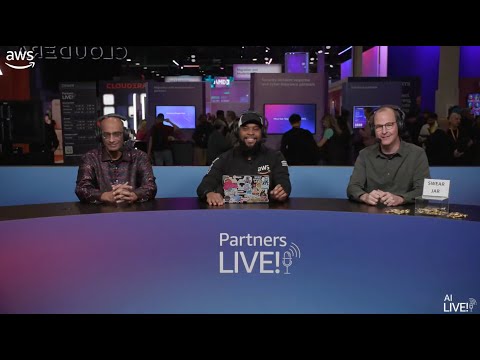
In this conversation filmed live at AWS re:Invent 2025, Craig Wiley, Sr. Director of Product for AI/ML at Databricks, explains how the Databricks + AWS partnership helps enterprises move beyond POCs and into real, governed, high-stakes deployments. He also highlights how Agent Bricks gives teams the evaluation, governance, and cost optimization needed to build and scale trustworthy agents across critical workflows on AWS.
Topics covered include:
- Why demos are easy, but production requires governance and evaluation
- How Databricks + AWS support enterprise-scale GenAI adoption
- What Agent Bricks enables for app developers and high-risk use cases
- How cost optimization and model choice factor into deploying agents responsibly
Chapters
0:00Introduction to Databricks1:13Databricks and AWS synergy3:10Bridging gaps in AI adoption5:17Governance and evaluation7:55Productizing agentic systems10:31Advanced use cases12:26Democratizing AI development14:21Enterprise platform value16:05Future outlook of AI
FAQs
Why do production GenAI deployments require governance?
Production GenAI systems operate on critical business workflows and decisions, requiring evaluation frameworks, cost controls, regulatory compliance and accountability mechanisms not needed for demonstrations.
What is Agent Bricks and what problems does it solve?
Agent Bricks provides evaluation, governance and cost optimization capabilities for building trustworthy AI agents, enabling teams to deploy agents safely and cost-effectively across high-stakes applications.
How does the Databricks and AWS partnership support GenAI?
The partnership combines Databricks' end-to-end data platform with AWS's infrastructure and services, providing integrated solutions for data preparation, AI development, governance and deployment at scale.
What factors should organizations consider for agent deployment?
Organizations should evaluate model choice based on task requirements, implement governance frameworks for oversight, establish cost controls to prevent budget overruns and ensure compliance with regulations.
Full transcript
0:00 Introduction to Databricks
Uh. I run uh product management for uh AI at uh at Data Bricks and uh really excited to be here. I will say for the AWS fans out there uh you know my my AWS connection is I was actually the founder of SageMaker as well. So uh so that was >> Well, welcome welcome welcome to the show. So I know there are a lot of people people out there in the audience that don't know who data bricks is. Can we talk take a few minutes to talk about what data bricks does? >> Yeah.
Yeah. Absolutely. So data bricks is a is an endto-end data platform all that starts kind of with you know data ingestion up through data pipelines into kind of data warehousing and then ultimately into kind of BI and and AI and machine learning and really gives you kind of a a premium experience across that entire that entire journey and giving you kind of you know unified governance across that entire journey and unified observability across that journey and really giving kind of the that end to end data product that uh that so many companies have been looking for. >> Wow.
Super interesting. >>, the same stars in my eyes when I see you the hat when I saw the Rolling Stones and MC Jagger back in the day because you founded um SageMaker. I've used SageMaker for I don't know, God knows how long, but it's a great product and thanks for doing it. The I will say, excuse me, sorry. The data bricks AI uh AWS partnership has been rock solid from day one and here's the deal it's been growing significantly by leaps and bounds particularly not just from the standpoint of integrations and service integrations more importantly from the standpoint of getting to resolve some very pressing customer issues across a wide range of verticals right so I mean this is a partnership that's turbocharged that's high octane and we're just getting started if you can believe it abs Absolutely.
1:13 Databricks and AWS synergy
I mean certainly, you know, we we partner with all the clouds, but really we see tremendous excitement from from our AWS customers who who are, you know, and I say that they're our AWS customers, right? They are uh they're first and foremost AWS customers who are using data bricks on top of AWS to provide that kind of premium end-to-end data data journey and data experience. and it really has I you know to your you know I think right back at you with the fact that AWS has been a tremendous partner and really a phenomenal when it comes to you know hey you know the world's been changing fast over the last couple of years with Genai and so having a partner who's super responsive as we try and build new capabilities for our customers sometimes we need new capabilities kind of at the lowest level of the platform and this is an area where really AWS is unrival in their in their ability to support us. >> You guys are like integrated into just almost everything.
I mean, when I talk to like developers that are just the first time we're doing AWS all the way up to people who are like in the enterprise and actually like using your tool. Um, so let's talk a little bit how does the partnership with AWS kind of break down the wall and help with that enterprise adoption with AI? >> Yeah. Right. Well, I mean, first of all, so many companies are on AWS already, right? And so so really if you're going to be an enterprise player, I don't think you can do it without being without being a part of AWS to some extent, right?
3:10 Bridging gaps in AI adoption
And so and so really exciting for us to be able to take advantage of the fact that data gravity and the fact that so many of these 100 and Fortune 500 companies have already established themselves on on AWS and then and then we can just be a bonus that they can bring in on top of on top of that some of those AWS capabilities to help kind of you know really accelerate some of their their data and AI objectives. >> That's right. and that those objectives are very important, right?
But here's here's I I don't mean to throw a curveball, but I will because it's >> The I I don't need to do a plug for Asian brakes. I love it, by the way. But you can do a much better job than I can. Yeah, >> I will tell you one of the challenges that a lot of our customers talk about on a regular basis is look, >> it's one thing for us to be able to develop agents and agent orchestrations and all the rest of stuff, particularly with a lot of the hardware and the software that goes to the back end.
It's one thing to be able to show a proof of concept or a demo in a show like this, but it's another thing entirely if you were to speak to a healthcare services provider and say, "Hey, look, I'm here to be able to do agent orchestration to be able to deliver a good patient healthcare outcomes." Or if you speak to financial services, say, "Hey, look, fraud detection is is really at the top or manufacturing, whatever you pick your use case, right?"
What is your sense of how a great tool or a great capability more importantly like agent bricks has used to bridge that gap between the promise that you see in a proof of concept and going to production to say hey look we're able to do things at scale for all kinds of verticals and partners >> you know it's it's a really good question I you know proof of concepts actually I think in the last 20 12 to 24 months have actually been a headwind in many ways and the reason the reason I say this is that is that Gen AI is so it's so easy to create a great demo sitting on top of Genai and the and the challenge so so you know I we create great demos AWS everybody creates great demos on top of on top of Genai the challenge is not can you create the demo but how do you go from there into production and when I say production I don't just mean hey a little personal productivity hack for my team and I I I really want to know how do you get into the path of risk how do you get to a place where you can deploy externally to customers in a in a reputational risk environment or internally into maybe a workflow that maybe has some amount of financial risk and you know when you decide that Genai is going to be more than just a personal productivity hack and is going to go into those paths of risk you know to your point a new toolkit is needed you you you no longer those tools that you use to build the demos they don't work like the way you want them to when who actually want to get into production and get to a place where where you're managing that risk. >> Yeah.
5:17 Governance and evaluation
So just to double click on that. So say with risk. So enterprise enterprises want to have these things around governance. They want to have security. Can you talk a little bit about how that kind of fits into like these solutions and what that looks like is is like an a huge scale deployment. >> I mean when when we think about AI, we really think about just two two primary concepts. One is governance. It's can I control it?
Can I make sure that I know exactly what it's capable of doing and that I know, you know, what it has access to and what the user of it is has access can and really included in governance is that concept of observability and monitoring, right? So, can I control it is really what I mean there. And then the second piece is evaluation, right? Does it produce the outputs that I want it to? And I I I call this the CFO test, which is if you wanted to deploy an agent into production, what's going to happen?
Your CFO is going to come to you and they're going to say, "Well, what's the worst that can happen?" Well, do you have control over this thing? And you're going to say, "Oh, yeah. Here's here's all the things it can do. Here's the things it can't. Here's how I'm controlling that with governance." And then the second thing they're going to do is say, "Does it work?" >> Right? And that's evaluation. And so really you know once you have those two listen which orchestration framework you use which model you use these are implementation details >> and to be honest that they're questioning about cost is that >> absolutely yeah yeah no cost is cost is always a piece and one of the things you know you you had mentioned agent bricks which is our our kind of our latest product for helping folks build agents and one of the things that agent bricks does now which we're really proud of is is once you've got that agent up and running and it's it's working the way you want it to, you hit the optimize button. >> Ah, I see. >> And we we go and first of all we drive down cost and then we actually give you a choice of hey, do you want to use model A which might be expensive but and slow and uh but but is accur is really accurate or do you want to use model B or C which might be a little faster, a little cheaper and maybe a little less accurate.
7:55 Productizing agentic systems
You know, depending on your use case, you might be willing to trade off a little bit on those dimensions. There are many kinds of double clicks that um I can do based on what asked and your response to that. But before I get into the double click of the double click, I just want to quickly apologize because inadverently um and I'm sure the data bricks and AWS brand police are going to kill me at some point in time which is okay. massive product.
It's a very important product. I will correct myself. Anybody who wants to shoot me after this, >> you have to go in a square jar. >> Yeah. hammer is a tool or a product, but either way, it's useful. >> No, it's not a tool. A tool is a prone to hack to your point. >> My we've seen millions of dollars of enterprise investment in Genai and most companies are struggling to point to the returns. That's right. And our hypothesis is it's because they haven't gotten to the place where they can deploy these into those higher ROI use cases because they don't trust them yet. >> That's right. >> And so how do we build that trust?
It's governance and it's evaluation. >> That's right. >> There is to the point of the double click, right? There is a huge um one of the customers I was speaking to yesterday talked to me about reputational impact. You talked about CFOs and CFOs coming and saying look man look you can't be spending all this all this money because you know what I I I have a certain budget and I have to optimize. But the other thing is if you don't do it the right way in terms of scaling it out to large numbers of customers.
Imagine going to a customer and saying hey I'm going to decline your credit card application because I think you're a fraudster. I mean to a high netw worth individual if you said something like that's that's going to >> I mean that's that you know we call it reputational risk. It's just because we don't know how to measure the financial risk there. It's still financial risk. >> That's right. Your CFO I'm sure is concerned about Go ahead. >> Yeah.
10:31 Advanced use cases
No, you're you're exactly right. You know I I think that is is how can we help organizations figure out how to drive that trust, how to drive that use that trust and usefulness. That's right. so that they can get the value of these things in those higher maybe higher risk but higher reward use cases. >> That's right. That's right. What is an example that you can provide or um without naming customers or whatever. >> What are some of your model use cases that you see all the time particularly with agent bricks and all the other >> tools products that you have as part of Jet Bricks? you you know I think like everyone we we kind of classically see the customer service use cases and kind of like a lot of the classic chat use cases but really what's what's been interesting to me over the last six months is we're starting to see uh you know what for a better purpose I'll call kind of you know I think uh said we're about to enter the fast fashion era for SAS right that show up we're starting to see companies say, "Hey, I've got this vendor who who I'm not in love with, and I don't think it would be that hard for me to code up something similar to this, maybe to use some vibe coding to get it started, and then once I've got it started, build a couple agents behind the scenes to really operate that system."
And so, we're starting to see that glimpse of, you know, I think, you know, many of the of our top leaders have kind of identified this as probably where the real enterprise value is going to come in the near term. And I'm really excited that with this ability to really drive evaluation and drive the performance and trust in these systems, we're able to start seeing us unlock some of these more more advanced and more difficult use cases. >> Wow, that's super cool. >> That automatically gets us to the point of, and I hate to use this overused word, democratization. >> There we go.
There we go. >> You knew it was going to come at some point in time. It has to come. But it's very close to the point you were making right which is now if you're in a position to be able to simply code up to use your uh vernacular and create agents groups of agents create the orchestration framework and of course you know you have to have governance and what does it mean for large enterprises like data bricks who have actually spent years and years doing research and development and now we're opening up the floodgates say hey you too can develop a bunch of agents You know, it's interesting one of the things.
12:26 Democratizing AI development
So, agent bricks is a is an entirely languagebased system, right? You you don't code. You just talk to it about kind of what you want the agent to do and then you and then you continue to give it feedback. And you know, the primary persona we come in and see in building these things are app devs, right? They're they're application developers who need a who want an agent to help superpower their application. And so they come in to build and you know listen they can piece together you know if I give them an SDK and code they can piece together a pretty good system but to your point we've got researchers with te with years of experience staying really ab breast of the latest and greatest capabilities which means that if you're using agent bricks when you build a rag system you're not just getting a vanilla rag system you're getting literally kind of the latest you know in the last four to six weeks what's the what have the publication said you're getting that as your rag system.
And so, you know, and I I think, you know, really exciting to see how AWS customers can use data bricks not only to orchestrate and run things in data bricks or on data bicks, but really starting to look out into their entire AWS ecosystem. How can we interact these things? That's right. >> With the rest of what I'm doing on top of AWS. >> That's right. And that and look, that makes a big difference, right? the where I see the uh the handoff point is that you're providing a set of solutions and a platform for people to do coding up and creating their own agency but ultimately you need a robust platform with all the bells and whistles in terms of governance security in in terms of guard rails and all the rest of yeah it cost cost management absolutely right because CFO I mean the dudes the dude's looking at my name in the in the spreadsheet and saying you know when when am I going to get rid of this guy because you know he's too expensive or whatever the case might be right I think my point is I think a platform a solid robust platform like data bricks actually delivers on the huge enterprise capability that our customers need >> so I think you know it's a >> yeah no and we're really excited by the momentum we've got on on the plat on the AWS platform and really excited by kind of the continued interest we see of folks you know now that we've got now that data bicks is offering Not only Claude but also OpenAI and Gemini on AWS, >> we see customers who who previously were talking to us about other clouds, >> right?
14:21 Enterprise platform value
AWS customers who were coming to us saying, "I don't know if I need to be on Google right?" And so that's really been a a great way for us to kind of help drive that continued success. >> That's right. was making the point earlier, right? Uh to me as we were talking, look, democratization in terms of model availability is a big deal. >> Oh, yeah. >> And we provide that uh from with any model any model they want right there on AWS. >> That's right.
That's right. >> So with that said, you know, these are technologies that we have. Now I'm going to ask this question to both of you guys. First, I'm start with you and I'm ask you what is the future look like for these technologies? >> I would say it's the million dollar question, but but it's not the million. It's probably not even the billion. It's probably the trillion dollar question here, right? Is is what does the future of this look like?
16:05 Future outlook of AI
And I, you know, to be perfectly honest, I think anyone who right now can look out beyond six months and tell what the world's going to look like is probably, you know, they're better at this than I am. certainly kind of that you know uh certainly we're really excited about helping these companies build these highquality agents that they can get into production and then I think we're really going to start seeing where this starts to take off once they're com you know once this becomes you know kind of the lingua frana you know I I think back to uh you know when GitHub copilot first launched everyone kind of looked at it and was like ah the autocomplete's okay now all of our engineers are using some kind of coding assistant or autocomplete capability.
And I think, you know, the idea that we're going to see the same thing with agents of, hey, we look at them in 2025 and we go, oh yeah, they they're cool. I I I can see where where the opportunity is coming. But, you know, as we go into 2026 and 2027, I think the world, you know, really enterprise software as we know it is going to be transformed by this technology. >> All right. To you, sir, where you where you? >> I I fully agree with you.
I will approach that question from a different angle, from the customer angle, right? Um there are very many exciting things that are happening with uh you know our our one of our leadership principles as we talked about um is always about working backwards from what the customer wants customer obsession. So from that standpoint um and I will speak specifically to this partnership between data bricks and AWS the future I can see on that front I will say is very bright for two reasons.
Number one, it is very important for a number of our customers across very very important verticals and all the verticals important to depend on a set of capabilities that can actually deliver on their very major use cases. I mean you know big company retail companies depend on customers customer satisfaction customer retention. So from the standpoint I think you know it's very robust. The second thing is what what both of you brought up which is people are making it easy for development to happen across a wide constituency of users and I think from that standpoint the numbers of people who are using these technologies is increased and therefore the partnership with it is going to get stronger and stronger and stronger. >> Absolutely.
That's my prediction. Absolutely. >> Well said. So thank you so much for being here. I'm looking to have you on in the future to see if you were absolutely right. >> There you go. >> And we're super excited. So stay tuned. We'll be back with our next >> Thank you very
Learn more about the Databricks Data and AI platform.
The information provided herein is for general informational purposes only and may not reflect the most current product capabilities or configurations.