Databricks Apps at Data + AI Summit with Justin DeBrabant
Summary
- App development simplified: Databricks Apps provides fast, secure web app development directly within Databricks with built-in infrastructure.
- 2,500+ customers deployed: Over 2.5k organizations are already building applications on Databricks Apps since its November 2024 launch.
- Foundation for AI apps: Databricks provides analytics, AI, and database pillars for modern data intelligence applications built on top.
Databricks Apps at Data + AI Summit with Justin DeBrabant
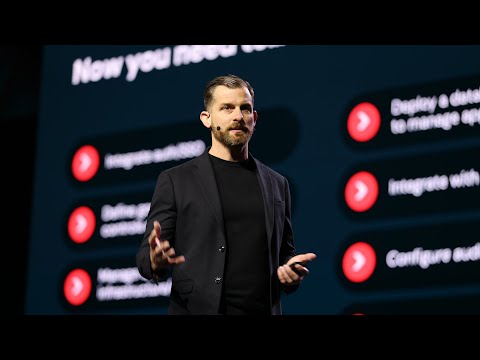
Justin DeBrabant, Director of Product Management, Databricks, walks through the vision behind Databricks Apps and what's new in the GA version. Over 2.5k customers are already using Databricks Apps
1:30 Justin DeBrabant
See a summary of the product announcements from Data + AI Summit:
Register to watch the livestream or on demand after the event:
Chapters
FAQs
What are Databricks Apps?
Databricks Apps is a platform for building and deploying web applications directly within Databricks with built-in infrastructure, data security, and seamless integration with Databricks SQL, Model Serving, and Unity Catalog.
How many customers are using Databricks Apps?
Over 2.5k customers have adopted Databricks Apps since its launch in November 2024, using it to build their own applications with integrated data and AI capabilities.
What is the foundation for modern data intelligence applications?
According to this video, the foundation includes three pillars: analytics (Databricks' foundation from day one), AI (layered on top), and database (provided through Lakehouse).
What integration options do Databricks Apps provide?
Databricks Apps seamlessly integrates with Databricks SQL, Model Serving, and Unity Catalog, allowing developers to focus on building generative AI applications while leveraging platform capabilities.
Full transcript
0:00 Ali Ghodsi
So, all right, so we got you know, remember the three kind of pillars of all of future AI applications. You know, we have the data analytics, we have the AI, and then we have the database. So, we're kind of on the database leg here. And so, at Databricks we discussed how are we going to help people democratize access to the data they have in Databricks. Is there a way in which we can help them authenticate and get the access controls and as easily as possible get access to that data directly.
So, you know, a couple of years ago there was a discussion that we wanted to really democratize things in Databricks with what we called Databricks apps. Okay? And we had a big discussion internally and there's always debates at Databricks, you know, how should we prioritize things? And I was kind of a skeptic. I said it takes a long time. Writing these apps is going to take a very, very long time. You know, it's you know, how much resources are we going to put on this?
And we actually made a bet internally and I said that you know, I I think that in the first year, you know, maybe we'll have some hundred of organizations using this. Click. And I was totally wrong. So, we launched this in November 2024, so Databricks apps and we have over 2,500 customers actually building their own applications, you know, by coding them, building them. And the beauty of it is that it just integrates directly with Databricks.
So, to find out a little bit more you know, why I was wrong and what Databricks apps is about, I'm super excited to welcome on stage Justin De Brabant from Databricks to tell us about Databricks apps. Let's give him a round of applause. Thank you. Wow, it is good to be here. And let's let's see if we can convince all of you why apps is the way to democratize data and AI in your organizations. You can see that a believer and he was a bit of a skeptic.
1:30 Justin DeBrabant
He's not lying. So, let's get into it. So, as said, um we have the foundation for modern data intelligence applications. We've always had the analytics. That's been the foundation of Databricks from day one. Um we layered that with AI, and now through Lakehouse, we have the database as well. We have the foundation, and now it's about what goes on top. So, great. Everybody's there out there has probably done some sort of vibe coding.
It's easy to build a front-end application now. I can just vibe code up my app and deploy it. Well, the hardest part is actually connecting these apps to the data and AI in a secure and governed way. So, it's the productionalizing of these applications next to your data and AI that is really challenging. And anybody who's done this knows there's some aspect of all of these that you have to do. You have to integrate with your auth and SSO.
You have to define governance and access controls, manage the infrastructure containers, integrate into your VPC, so all the networking stack you need to deal with, deploy a database to manage state or connect operational data, integrate with observability tools, configure auto and access logs. Everything that goes into productionalizing is actually the really, really difficult part. And that's why we are super excited to announce the general availability of Databricks Apps.
Databricks Apps makes it easy to build secure and governed data intelligence applications deployed directly in Databricks and governed through Unity Catalog. And really, this is about a broader architectural shift of moving the app to the data and AI versus moving the data and AI to the app. This is really, really critically important, and we think this is the architecture of the future. So, let's get into it. Why Databricks Apps?
One, it's powered by the Databricks Data and AI platform. Everything in Databricks becomes a building block that can power these data intelligence applications. You have out-of-the-box auth and SSO. So, you can bring your own Databricks identity to the app and not need to reauthenticate and reintegrate. And as of today, we're announcing a one-click integration with Lakehouse. So, you can easily deploy your data intelligence app with a database backend.
You can use that for app state. You can use that for agent state. You can use that for operational data. It's easy to deploy and integrate. Secure and governed. Apps is hosted in Databricks managed containers and infrastructure. You don't need to spin up and manage your own stack. Everything is governed through Unity Catalog. So, you can bring your own permissions to the application and access your data as you would as an individual user, even down to the individual resource level.
And finally, we have out-of-the-box auth and access logs for enterprise auditability. Open ecosystem. This is something that Databricks talks about a lot. We believe in openness. We believe in open source. We believe in open frameworks. We took that same philosophy with Databricks Apps. We supported out of the gate all the popular Python frameworks. Streamlit, Gradio, Dash, Shiny, Fast API, Flask, whatever you wanted to build in, we support that.
And as of today, we now are announcing support for JavaScript as well through Node and React. So, it's not Yes. A lot of JavaScript developers. I love it. So, now you you choose your own framework. You can choose your own language. You can build the app wherever you want to build it and then deploy it as a Databricks app. And in addition, we support 20 plus pre-installed open source packages, so you have everything you need to build the best data intelligence app already deployed.
Learn more about the Databricks Data and AI platform.
The information provided herein is for general informational purposes only and may not reflect the most current product capabilities or configurations.