Chegg Eng SVP on Data-Driven Approach to Student Success with Databricks and AWS
Summary
- Student data integration: Databricks serves as the foundation for Chegg's data platform, enabling understanding of student academic journeys.
- EdTech innovation focus: Chegg focuses on helping students leverage generative AI while building academic-specific AI capabilities on top of models.
- Data governance and collaboration: Databricks lakehouse enables breaking data silos and focusing on business value and student outcomes.
Chegg Eng SVP on Data-Driven Approach to Student Success with Databricks and AWS
Try Databricks today: https://dbricks.co/3EAWLK6
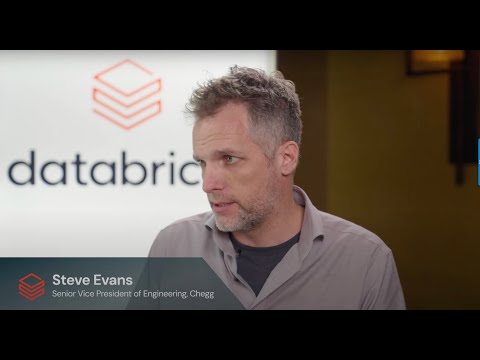
Steve Evans, SVP of Engineering at Chegg, discusses how Databricks powers their data platform to support students on their academic journey. Learn how Chegg uses data intelligence and generative AI to enhance learning experiences and drive innovation in education technology.
#Databricks #AWSreInvent #EdTech #AIInnovation.
Chapters
0:00Introduction to Chegg1:11Data-driven student support1:55Breaking down data silos3:18Strategic approach to AI5:06The role of data governance
FAQs
How does Chegg use data to support student success?
Databricks serves as Chegg's data platform, providing a unified foundation to understand students' academic journeys and enable data-driven decisions on supporting learning.
What role does generative AI play at Chegg?
Chegg is leveraging generative AI to help students learn, building academic-specific AI capabilities on top of GenAI models to create tools tailored to student needs.
Why did Chegg move away from textbook rentals?
Textbooks aren't the primary business anymore. Chegg now offers digital services including writing support, tutoring, and academic assistance with generative AI.
What is the key to Chegg's data strategy?
Chegg's key to success is focusing on business value and student outcomes rather than technical integration, using Databricks lakehouse to break data silos.
Full transcript
0:00 Introduction to Chegg
Welcome to the Databricks experience at the Grand Lux Cafe in the Venetian. We're here at AWS re:Invent 2024 and I'm joined by SVP of Engineering at Chegg. Welcome. Thank you. So, by way of introduction, could you share a little bit more about Chegg and your role? Yeah, so Chegg's the world's leading EdTech. We help college students on their academic journey. Originally, a lot of us know us, we did textbook rentals. Um basically, you rent a textbook from us instead of buying it.
Um textbooks aren't don't really exist as much anymore. Um and so, we moved away from textbooks and we offer a suite of digital services online that help students uh from whether it's writing uh papers or um answering, you know, helping them study on various STEM-related subjects. With the advent of generative generative AI, it's been a little disruptive to the business. Um and so, we've been really focused on how do we How do we help students leverage generative AI in their academic journey and and how to learn using generative AI and building um academic-specific capabilities on top of that.
1:11 Data-driven student support
So, what role can Databricks play to help Chegg on trying to take some of those big bets and big swings? Databricks is the bread and butter of our data platform. Um it I mean, it's very hard to imagine an ecosystem where it's not there. The data we have and understanding how our students, you know, live their lives, study, um go through their academic journey is just critical to us. Um we're focused heavily on how do we help the student, not how do we build technology.
And so, having a partner like Databricks really gives us that platform, literally in this case, to build on top of and really stand on the shoulders of all the really great innovative work that's happening in the data space from Databricks. Allows us to focus on the student and really drive value on that side. What do you see your role as a leader to help break down some of those silos having collaboration be available to your teams and really get value out of the data that you want to have?
1:55 Breaking down data silos
Uh first of all, Databricks in the in the lakehouse has been really key for us to bring all of our data together. Um but not only like I think it's really important that on things like this that we stay really focused on the business value. So, we can bring data together for the sake of making the technical part of it easier, but the reality is is unless we're driving business value, it's just a chore that we have to do.
And so, while we've brought the if you think about an individual silo of data and you bring it into the lakehouse and you centralize it, the world gets better for that silo, right? The tooling gets better, the speed of the performance gets better, um the ability to drive data quality, etc. gets better. So, I think first of all, it's really important that as you start this journey of bringing data together that you you think about why does this silo want to participate, right?
And then, as the silos come together, then that's where you drive your true value of not only are you able to drive better insights, being being able to cross-reference that data. For example, in our world, you might have a student on one product um also engaged with another and now you can cross-reference what that what that activity looks like and where they're starting to fall off or not. So Steve, what are your tips when you're looking at AI projects to know if the investment of your teams and your time and your resources are actually going to pay off before starting with implementation?
Yeah. I mean, I think first of all, uh buy before you build. Um I you know, when when generative AI kind of became this household name, there's a lot of talk about like I want to be an AI engineer. And the reality is is that AI is just another tool in the tool belt. When uh when the iPhone launched the App Store, everyone didn't go out and say, "I want to build a new phone." They wanted to build apps inside of the App Store, right?
3:18 Strategic approach to AI
We want to take a lot of at bats. We want to take a lot of swings. And most of them are going to pan out. And that's that's how product development life cycle works. And we shouldn't That doesn't change just because of these fancy new terms we're using, right? Um I think the reality is is rag gets us 90% of the way there 90% of the time. And and between that and buying things off the shelves, we get really far with a lot of our projects.
Another thing that when I think about like the product development side, um I think being really focused on how am I adding value for in our case the student rather you know, whatever your customer base is. How am I adding value on what the the person can do themselves outside of what's available out in the market. I think it's been really easy to say like for legal to put out a policy that says don't use AI and pretend that all's okay.
The reality is we all know that uh our best employees uh are very innovative in how they get their jobs done. And kind of closing off that like oh, you can't use this thing isn't going to set you up for success in the long term. But really getting in front of that and giving the tools to your employees so that they can be really innovative and successful is like that's what you're paying them for. Related to that data sensitivity, we think a lot about governance.
We hear the importance of governance. How do you translate governance into activities for your team? You know, governance is one of those things that is tremendously important and tremendously unpopular. Uh very few people wake up in the morning and get get excited about data governance. Um but earlier I was talking about how as we bring the data together and break down those silos, we lower the cost of entry for to democratize analysis of the data.
5:06 The role of data governance
I think data governance produces the same result. If I have highly skilled data analysts, they can handle data that's not quite consistent. They can handle data where you might have multiple fields that of address and they just happen to know that address here means email address and address here means shipping address, etc. , right? But if you really want to democratize your data insights and bring it down to the people that make the day-to-day decisions around the around the actions that the data drives, having that consistent framework of terminology of what does um you know, various attributes that go across across the silos are consistent, that the data has is of high quality, that we're handling, you know, for example, we're removing bot traffic from a lot of the like gold tier data that we want to use.
Again, highly skilled data analysts can deal with that, but how many people do you want to teach to filter out bot traffic when they're doing their analysis?
Learn more about the Databricks Data and AI platform.
The information provided herein is for general informational purposes only and may not reflect the most current product capabilities or configurations.