Benchmarking LLMs for Enterprise AI | Data Brew | Episode 45
Summary
- Domain-specific vs. general intelligence: Even the smartest general-purpose LLMs need company-specific knowledge (jargon, data, preferences). Domain-specific benchmarking evaluates whether models excel at enterprise tasks.
- DIBS suite for enterprises: The Databricks Intelligence Benchmarking Suite evaluates LLMs on real-world applications like RAG (Retrieval-Augmented Generation), text-to-JSON conversion, and function calling.
- Practical model selection: DIBS helps organizations choose between open-source and closed-source LLMs by benchmarking on actual workloads, considering cost, latency, and performance trade-offs.
Benchmarking LLMs for Enterprise AI | Data Brew | Episode 45
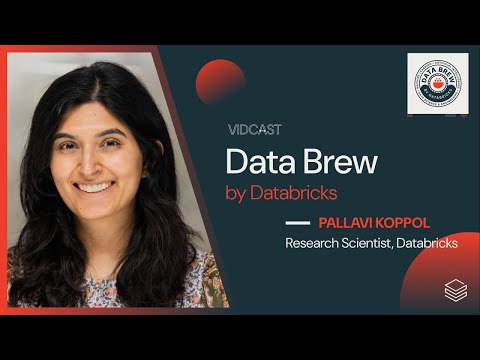
In this episode, Pallavi Koppol, Research Scientist at Databricks, explores the importance of domain-specific intelligence in large language models (LLMs). She discusses how enterprises need models tailored to their unique jargon, data, and tasks rather than relying solely on general benchmarks.
Highlights include:
- Why benchmarking LLMs for domain-specific tasks is critical for enterprise AI.
- An introduction to the Databricks Intelligence Benchmarking Suite (DIBS).
- Evaluating models on real-world applications like RAG, text-to-JSON, and function calling.
- The evolving landscape of open-source vs. closed-source LLMs.
- How industry and academia can collaborate to improve AI benchmarking.
Connect with Pallavi Koppol
Chapters
0:00Introduction to data brew0:40The value of domain knowledge2:40Key categories for benchmarking3:51Understanding the DIBS suite5:35Modifying and building evals9:35Benchmark scale and data leakage12:35Synthetic data and validation14:36Model selection and prompting17:31Agents and model performance20:12Tradeoffs of cost and latency21:53Procurement and data design25:09Enterprise adoption strategies27:58Collaboration and conclusion
FAQs
Why is domain-specific intelligence important for enterprises?
General LLM benchmarks don't reflect real enterprise tasks. Even highly capable models need company-specific knowledge about data, jargon, and business processes to perform well in production.
What is DIBS and how does it help?
The Databricks Intelligence Benchmarking Suite evaluates LLMs on real-world enterprise applications like RAG, text-to-JSON conversion, and function calling to predict actual production performance.
What tasks does DIBS evaluate?
DIBS benchmarks models on retrieval-augmented generation (finding relevant context), structured data extraction (text-to-JSON), function calling (choosing right tools), and other enterprise-critical tasks.
How should enterprises choose between open and closed-source LLMs?
Use DIBS to benchmark candidate models on your actual workloads, then evaluate trade-offs in cost, latency, and performance to select the best fit for your enterprise context and budget.
Full transcript
0:00 Introduction to data brew
Welcome to data Brew by data bricks with denian the series allows us to explore various topics in the data and AI community and whether we're talk about data engineering or data science we're going to interview subject matter experts to dive deeper into these topics and while we're enjoying our morning Brew I'm a de principal developer advocate here at datab brickson one half of datab brew and hello I'm wenig director of our machine learning practice at data bricks and the other half of datab brew and today I'm thrilled to introduce pavi Capo a research scientist at data bricks working on domain specific intelligence and benchmarks for llms welcome pavi thanks for having me so I know there's a lot of talk about general intelligence and AGI but why should people care about domain specific intelligence yeah so you're right I think recently for a while now I think right people have been evaluating llms on these like really General benchmarks and talking about this idea of like AGI or like general intelligence like how well can models perform overall um and what I like to say is that like imagine you meet like the smartest person in the world and then you bring them onto your company there's still going to be like company specific uh like Trade Secrets uh like lingo jargon um how you like to manipulate data preferences all those things that they're going to need to learn even if they know like everything else in the world right because that stuff is kind of proprietary um and so that's where domain intelligence comes in so you can have a really good model but will it be good at the things you need it to do in your context and so how do we think about then benchmarking like all of these benchmarks out there are for very general intelligence but trying to complete a sentence is not the same task as trying to generate SQL as a financial analyst so how do we think about transitioning from General benchmarks to domain specific benchmarks yeah so in general like I think the best kind of Benchmark is always like we always want a benchmark to be as close a proxy for like real world usage as possible um so definitely you know for those customers um or cases where you are able to just be like hey I have a log of interactions you know it's not sensitive and maybe I can just like replay on that and see how well my model performed there that's kind of like I would say ideal by some standards but obviously that's not always the case for like security reasons sensitivity reasons um just not having enough data so then we start to think about how can we create examples that are most reflective of the real world setting and how people are actually going to interact with these models or how systems are going to interact with them if people aren't going to be involved got it so I'm curious then I mean what you're saying makes a lot of sense this idea that the academic benchmarks themselves don't are not representative of what customers are typically going to work with and we all know that the benchmarks themselves are often sorry the models themselves are often designed specifically to make sure they do really well with those benchmarks but then can you describe a little a bit more about like what like what type of categories that we're typically dealing with when it comes to this idea of domain intelligence yeah so recently we've been looking at a few there's there's a vast number but the few that we looked at um most in- depth recently are things like uh rag tasks so like retrieval augmented generation those often have to do with like particular company corporate right like documents specific to the company and then like data extraction so a lot of like text to J text to yl um and then uh also a lot of like tool use like function calling type stuff where companies might have their own particular set of functions they want to use to achieve different tasks so those are the ones that we've been looking at most closely there's others um that we're just not talking about quite yet but could you dive a bit deeper into the data breaks intelligence benchmarking Suite uh I know you and a number of other folks from datab bricks recently published a Blog about this but for all of the listeners on the podcast if you could dive a bit deeper into how exactly those three categories that you just described the rag the unstructured uh the unstructured to structured uh text generation as well as function or tool usage uh come into play with dibs yeah for sure so basically dibs or the domain intelligence bench marking spe came about because we were doing a lot of like you know training models coming up with different model recipes for fine tuning um things that we you know want to be useful to our customers um and we were using kind of just these like General academic benchmarks in large part and we kind of sat down and we're like hey if we really want to be as useful to our customers as possible we need to be developing against benchmarks that are reflective of what those customers care about so we kind of went through a talked to several folks um on the product side customers and figured out that three major areas that we could focus on and kind of get some um movement in were we're exactly those through the rag uh unstructured to structured and uh the tool use so the way we kind of went about doing that was we had some benchmarks like there's some function calling benchmarks that we had already been using um and figuring out like how can we extend or modify these to be more analogous to what our customers are doing right so like really taking inspiration from like the use cases we were seeing and either modifying existing bench marks um creating new ones from scratch where we didn't have things before um yeah just trying to be as rigorous as possible in our process right actually that's perfect so can you like again the what's great is that a lot of this is is on the benchmarking domain intelligence blog that was po anyways but for those that are listening to podcast can you provide some examples of what like things that you're modifying for example I look I'm just literally looking at the Block right now which is like for bfcl full Universe there's a modification to that for function call like for example yes B Yeah so basically the original dfcl um and a lot of the function calling um uh evals that were existing had much smaller I would say like function cataloges than we see our customers having sometimes our customers will come in and be like I have like so many functions and so then finding the right one becomes like a lot harder right because there's like 10,000 in there so it's easy to get lost and that's not really reflected as well in the academic benchmarks um also because what we saw customers trying to do was be like well maybe I can just shove all of these functions into the model's context window and maybe that'll just solve my problem right and we were like well is that true like let's find out what happens if we have a really large uh Corpus of functions um and that's the approach we try to take and it was actually really interesting right we find that first of all if you want to do that um at least at the time of publishing this blog post your only bets would be to use a Gemini models because none of the other model providers have models with context Windows large enough uh to support that's that large set of functions but also even if you did want to do that right we found that using a rag is actually slightly better because it limits your function scope a little bit reduces those distractors makes it more likely you're going to be able to choose the correct function so there's some interesting findings that you don't really get um just by using the academic benchmarks that I think are relevant to our customers I I I actually just to follow up exact way to said about thousands of potentially thousands of functions in for something like bfcl I'm just curious how many functions are people typically working with versus sorry for the academic Benchmark versus like the type that you're typically seeing what customers actually use yeah so there's already a few different versions but some will be like oh here's like four functions can you choose like the correct function from that sube of four um yeah so yeah from tens to thousands versus four slight difference got it okay that definitely not in your favor that's completely fair and then uh I'm just curious so that's an example of you modifying existing uh um Benchmark that's cool but then what are some examples of benchmarks that you actually had to create from scratch then yeah so for example for the unstructured to structured use case that's not really something that's well represented in the academic setting like there's some variants that are like analoges but not really anything of the task that we were seeing where someone's like here's like a document or like paragraphs and I just want like I have like a a schema like a schema in this case um that I'm presenting sometimes in a strictly structured format sometimes just describing a natural language and I want to excuse me extract like the relevant information into that schema um so that one we actually created from scratch and by from scratch what I mean is we partnered with um like a data annotator annotation company like a data vendor um to kind of see like what types of um content I guess we wanted like in in this case we said hey we want some like paragraphs some like information some um schemas and you know the results for those um and kind of working with them to procure a data set that is more aligned with what our customers are doing and then on top of that um we're actually currently extending that to add in more uh domain specific things so for example one place where we see a lot of this is in like legal contracts and stuff like that where people are like hey there's the document itself is often quite structured but I want to like further structure that somehow into a schema right um so we're like continuing to edit and grow this um but that's an example of how we you know created one ourselves so speaking of continuing to edit and grow how much is enough like I feel like you could go down a rabbit hole if you're making a benchmark that has millions of uh question answer pairs for example but just curious what is a good sense for I have thoroughly benchmarked my solution this is a really good question I think that the ebals that we have range on the order of like the smallest one is probably like less than 100 and the largest is probably like a few hundred they're not like these massive um evals because we want them to be really specific to a few things um I'm sure certain that there's room for those to grow and I'm sure that they will grow as we have customers with like differing needs and we're like hey this is something we should expand into um but yeah I think that once we get to like you know many thousands it's like they used for different things right like I would say that gives a general sense of like overall am I performing good enough but it starts to lose that Nuance of like hey here's like a specific ways in which I'm succeeding or failing and I think something on our team that we've been trying to do a little bit more is really look at the data as well and be like all right um are these examples representative of different types of use cases because if you have like many thousands of examples they're all overly similar it's also unclear what you're getting from that in this particular domain intelligence context so that's that's our current sense of it but I think eval science is also a open field of exploration and so on that note so we just talked a bit about trying to guard against like make sure we have a sufficient data but then still trying to avoid overfitting and so I'm just curious how do you handle the case of data leakage of a model might have seeing that example in its training data how do you guard against that from the eil side yeah so this is one of the reasons that we cared strongly about having like a domain intelligence Benchmark so if you look at the rad evals in particular um the academic ones have like you'll see that models score very high on these and that's often because the data comes from Wikipedia style you know entries and so by this point a lot of models have trained on that so they're doing really well just because they like have byhe hearted Wikipedia right um so I think that some of the rag data sets that we have or like the text where it's like these are kind of Novel data sets in some sense because we either procured them specifically um for the purpose of being distinct from what's already out there um oh yeah and things like that so I'm hoping that helps like these data sets the data in these data sets are not being used for training in any capacity they're kind of like kept separate um and I think as we continue to grow this uh we're something that we're definitely keeping in mind um as we decide what data should go into them yeah I'm curious then is there like because we talk often talk about how the mass use of synthetic data right to basically you know uh grow these systems help uh is there an implication then like maybe that if we are using synthetic data and using for example other large language models that help generate those uh more synthetic data that we may in fact just be overfitting or I'm just curious from is there is there an implication there or am I still reading a little too much into this no that's an interesting question and I don't know that I have a definitive answer I guess what I will say is that some tasks I think are more or less prone to this than others so for example something like text to or like this unstructured to structured task I think that even if you memorized the contents like what the evaluation is testing for is your ability to like synthesize it into a different structure and so I feel like maybe it matters slightly less whether or not you memorize the originating passage there whereas in other things like knowledge retrieval type stuff definitely right like it could be like oh if I'm if there's yeah if there's some sort of leage or like learning or like because I'm using synthetic data I'm like accidentally in including things that maybe I already know right um so I could definitely see that there but yeah it's it's a a good question I think one of the ways we try to and this is kind of like handwavy as we figure out like how to do this in a rigorous way right which is an active area of research is like trying to like look also the distribution of scores that models are getting on these right like we start to see like hey a lot of models are getting really high scores either that means it's too easy because the task itself is too easy or because they all already know how to do the task because they've like learned it right so I think there's ways to kind of like gut check for it but it's not an exact science so going back to the blog uh one of the takeaways it seems like is there is no single model that dominated every task it's like there's certain models that were better at uh certain tasks relative to others so just curious to get your perspective in terms of like what are your recommendations they clearly wasn't one model that ruled them all magically on this so what what type of models would you recommend to customers when they're thinking about a specific task yeah so I guess the first thing I would say is that like I don't really think that you can like a person can go wrong really off the bat like a lot of these models that we're seeing now are quite capable um regardless of whether they're like you know closed Source open source Etc um I think what we're seeing is that as these major model providers try to differentiate their models right they imbue them with kind of different characteristics so the Gemini models that I mentioned earlier right really long condex Windows if that seems like it is important for your task and it's something that you want to take advantage of probably worth considering right if you want something that is open source because you have some different constraints from your company or organization or you want to like mess around with the model a little bit more maybe you should consider the L models right if you want something just like out of the box um maybe consider like the open AI or Claud um models um or I guess anthropic models since I said open AI models so um but basically I think that I would my strongest recommendation is not oh use this particular model but rather just take some time to really consider what are these model providers trying to provide in in the offerings that they have and how do those relate or not relate to the use case and the task that I have um because if you do that a little bit of digging it might actually surprise you a little bit um and so when you're evaluating these different models on The Benchmark like I know some of them has slightly different nuances in the prompts for example how how do you control for that as you swap out the models for these benchmarks yeah so this is a good question we so there's a lot of different I guess there's two primary approaches to this one approach is to be like I'm going to like tailor The Prompt for each model to try to get like as best performance as I could possibly get um and then the other approach is just to be like we're going to fix the prompt and however the models score that's how they score because that is our prompt uh we chose the latter approach because we think it's just a little bit more sustainable it's really hard to know that you have found the optimal prompt for a particular model um but we generally try to have a prompt where we think most of the models perform well on it like sometimes an initial version of a prompt for an eval we'll see hey this model is is always formatting something incorrectly um and usually we'll like add that into the prompt and be more clear about hey we want this very strict formatting just to kind of like Smooth out those edges there but other than that it's kind of like one size fits all and this is how the models perform on this task like we view that as part of the task spec how I would say got it well then I one thing I'm curious about is then is there an implication then for S argument like as we are starting going to the world of Agents right where then it's it's a task is actually multiple tasks right that you would then potentially have be based on these um domain intelligence like um benchmarking potentially different models from different sources you know uh providers excuse me that are being applied for the different agents that you're actually running yeah for sure I think that I personally don't think there's any need to be like oh we only have one model doing all the tasks I think that like like you know as we been talking about different models have different strings I think orchestrating between them figuring out which model to use for which task um that's something that's highly relevant um we've done a little bit of research into this already actually and we'll probably continue to explore agents as a space um and I think that multiple types of worker models or agent models here is is defitely on the table cool and then one quick followup could you sort of describe uh from a high level at least like the differences that you found between in general like from a high level the closed Source models versus the open source models that you had done in terms of your evaluation here yeah so I think that I mean the I guess the most obvious difference on the surface at least is that you can get open source models in very small sizes and do whatever you want with those right we don't like we have really talk too much about like the tiny models like the 1B 3bs but they do exist um you know and they have certainly their uses um I think that in terms of performance we see that the Gap is narrowing quite a lot like the largest llama models are pretty good yeah I think in the blog we have like a figure showing that they're approaching uh like 40 quality um and yeah I don't I think sometimes there might might be like particular tasks that they're slightly better like their profile I would say is slightly different so for example like the Llama model is particularly good at function calling um unclear why may they just trained a lot for that um but overall I would say there with like the 45b is within like probably plus or minus a few percentage points on on a lot of major tasks and the 70b is is pretty much similar in performance uh we only evaluated the Llama models as far as like the open source models go but yeah so I was I was pretty impressed to see just the general St of things it's an exciting time yeah oh it's definitely an exciting time um and a lot of our customers I've noticed they might have some hard constraints of like spend cannot exceed 500k a month latency has to be less than 10 seconds for a time to completion for example but within those constraints it's kind of a free for all of they don't have a particular uh towards one model or another as long as it's the highest quality that meets those constraints and so I'm curious are there any benchmarks that really incorporate those tradeoffs of quality and cost and latency all into one so you can make the most informed decision of like 70b might be the best for this use case but actually if you're more latency and cost concerned maybe you switch to an AP but you know you're going to be compromising on quality yeah this is a really good question and something that we've actively talked about um like internally the benchmarks that we you know talk about in the blog post don't actually directly deal with um cost and latency concerns but internally we have a similar set mostly the same set of benchmarks and we do kind of like latency profiling on them um cost profiling on them so as we continue to like grow and expand this that's definitely something we're considering about uh whether or not to include that into dips because we know that's definitely something our customers care a lot about yeah yeah I just want that curve of like picking that like elbow part of the curve yeah yeah so one of the things I I'd love to understand better is then okay so you've talked about how in some cases you you're building your own like benchmarks can you describe a little bit about like what were the issues coming around to building uh building some of them like and I'm presuming some of the main issues are basically finding procuring you know high quality data to begin with so I just want to go back to that part a little bit yeah for sure I I do think that the hardest part is figuring out what stand you care about for evaluation right like so what is the distribution of problems that you care about how many of each problem do you want like when you're working with like a data vendor making sure that they understand what it is that you're trying to accomplish and like how you can um and how they can deliver the data that you need there and then um so for some so for some of this we like had already like we already so once we already had the data right taking like when you get it from a data vender you're basically Bally just going to get like here is the question and here is like the gold standard answer and like how do you actually turn that into an eval set right like how do I if I'm doing text to how do I come up with like a single number that captures is the structure of the schema correct is the content in the schema correct when it's not like direct string matching right it's like you can summarize in multiple ways that are all correct um how do you actually make this into something that is like sensible that can be like um measured uh that was challenging too and in terms of composing that data set like I'm curious do you take like a parto principle approach of like you want 80% of the examples to be kind of like table Stakes easy and then 20% to be hard do you want them all to be difficult just curious how you think about challenging versus almost like table Stakes questions that you always wanted to answer correctly yeah so I think that this is a good question I think we tried to so for some of them we were just procuring the data right like I'm pretty sure I didn't do the data procurement myself so I'm kind of speaking to what my understanding of it but my understanding is that it was just kind of like you know you are people as well like how do you think people would use this or do this um and uh taking a kind of an iter iterative approach with um with annotators right as opposed to being super prescriptive about it um so that's kind of one approach for places where we're modifying things I think um that's where we pushed more on like let's make this harder let's make this more challenging because we kind of treated it like hey the academic version exists and is more like table Stakes at this point so now we're really trying to push this into like if we go up a level of complexity how are the models performing um but I think that getting that spread and that distribution is definitely it's kind of like a design choice right and it's uh yeah so following up on that I mean also then it tells me a little bit about uh I mean it makes me want to ask the questions about the domain itself then right so for example if you look at the categories that you have right for example you for finance you did SEC filings for Patronis uh for the um uh docs QA you know data set that you have that's answering all questions right off the data bricks documentation I'm just curious in do you see whether it's dibs or just in general of benchmarking do you see more and more domain specific benchmarks being generated like you know for media and arts or uh U advertising or whatever what other of these like common industry use cases do you feel that's something that you know data BR should be doing or or the company itself other data providers themselves should be doing for this type of exact scenario yeah I think this is a place where companies like data bricks are really well positioned to help out because I think for any individual company right like they may not have the diversity of use cases to Warrant spending the investment really on creating this type of Suite right and then for folks in Academia like they may not just have like the visibility to understanding what all of these different types of companies are doing in order to create something broader so I think that companies like data brecks that we're in a really privileged position to be able to be really valuable and say like hey we see this is what people are really doing we see these are common pain points or places where people want to improve and we have the bandwidth to actually help people do that by investing Research into it um and coming up with benchmarks like this because I don't really see them coming as rigorously I would say or as like maybe rigorous is on the right word because there's really good evals coming out there um but like as tailored perhaps um to different Enterprise tasks and so as Enterprises think about creating benchmarks per um should they do this before they try to build any form of gen application should they expect to do a subset of run and then it will evolve throughout the development just curious should this be more of a test driven development or should this be more of an afterthought yeah um ideally I would my bias is towards saying that ideally it would be great to have your benchmark ahead of time I think in practice that very rarely happens um just that's just what we see but I think I would view it less as like test I guess it is test driven development in that sense but the reason I think that benchmarks should come first is because I think you can view your benchmark or your evaluation as like a a product spec in some sense right because it's really making concrete what you want to succeed at like what you want your model or application to be able to do and so like having that like Clear Vision early on is just going to make it easier to get to that Finish Line at the same time I think though one of the reasons this is challenging is because the field is growing and changing so fast that sometimes we don't really know is this possible is this like too Green Field like too exploratory and I think that kind of leads to some tension where people are like you know I'm just going to try to build it and then see how I'm doing after I've built it um but as much as possible having a clearer sense of ideally this is what I'd like to achieve that just helps in general yeah we found customers starting off with a very small Benchmark and then when they start to see their performance they're like oh my goodness it' be great if we expanded to support these 10 other use cases that we didn't think about so totally get where you're coming from like the product spec just continues to evolve yes therefore the Benchmark uh continues and so I know we talked a lot about more of the academic benchmarks we're talking about more domain specific Enterprise benchmarks what opportunities do you see for better collaboration between the two yeah I this is something I would really hope to see I think that there's a lot of room because I don't feel like as much has been done and I think this is for a few reasons right like um academics do amazing work and are typically much more like data and compute constrained than companies are companies are much less data and compute constrained but but often have less bandwidth to do like really exploratory research and so I think what ends up happening is that we get some um like we tend to find more those like general intelligence benchmarks coming from Academia because there's just more General content out there in the world that they can use um so I'd love to see like more Partnerships um I think like you know interns obviously are a great way to do this and I think there's a lot of interns out PhD interns and others who have been doing exactly this type of work but I do think that one place where it could be really interesting is so I often find like some interesting papers from academics where they have a I don't know how to talk about it but I guess it's like a almost like a task specific type of Benchmark so it'll be like um hey like here's how in theory I would do like I think sweep bench is a good example of this right where it's like a GitHub commits and it's like um fixing like it's a very identic task on like for software development and it's like similar but distinct to like how companies might do things internally with their very large code bases um obviously you can't directly share company code just with everybody but like finding some way to be like hey maybe we'll trial out similar things or like have subsets or like here's some like modifications um yeah in general I think maybe there are more like like slightly shared like open source contributions that people could make kind of sharing more of their perspective from that side possibly but but um sorry just thinking as I'm talking but uh it's definitely something I'd like to see more of because right now it feels like that's a bridge that is not quite connected and there's a lot of potential on either side because if you're too constrained right you're not going to be as creative as you can be and I think that's happening a little bit on both sides here okay so this is gonna naturally lead me to ask the question H how can we get more involved with these evaluations then because it seems like we're doing some really cool work here but then naturally I you know when this goes out the blog's gone out people are going to naturally ask how can I get involved yeah yeah yeah and we want people to be asking that question we definitely want to grow this um it's I would consider it like a vzer V1 type thing right now um if you know you are a if you're a professional or student who likes being in the eval space or thinking about these problems definitely you know consider reaching out to join our team or work with us if you're a company or someone who works with data bricks and you feel like you have a use case that you think um you know other people probably also have or is that really interesting and important and unrepresented um and difficult to measure um then definitely you can contact your AE and we'd love to find a way to see if it makes sense to expand dips uh to include those things awesome thank you so much again for joining us today Phi an enlightening conversation on the importance of domain intelligence shifting away from general intelligence and just how important evals are to building quality gen applications yeah thank you so much again for having me it was great chatting
Learn more about the Databricks Data and AI platform.
The information provided herein is for general informational purposes only and may not reflect the most current product capabilities or configurations.