Ali Ghodsi, Co-founder and CEO, Databricks kicks off Data + AI Summit 2026
Summary
- Enterprise AI barriers: Ali Ghodsi outlines four critical obstacles blocking AI adoption—context, cost, governance, and choice—and how Databricks solves each.
- Lakehouse unification: The platform merges data warehousing and lakebase capabilities into one system, eliminating fragmented data estates that slow AI deployment.
- Genie and agent ecosystem: New Databricks products including Genie One, Genie Agents, and Genie App Builder empower teams to build AI agents without deep expertise.
Ali Ghodsi, Co-founder and CEO, Databricks kicks off Data + AI Summit 2026
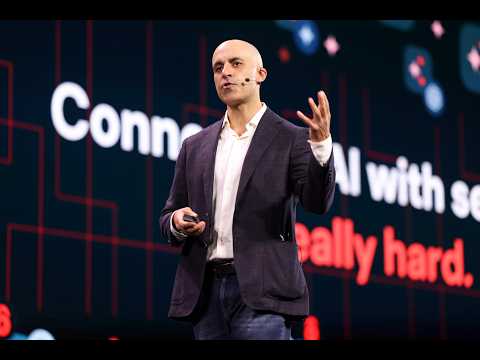
Talk by Ali Ghodsi, Co-Founder and CEO, Databricks
Databricks Co-founder and CEO Ali Ghodsi opens Data + AI Summit 2026 and outlines how the Databricks platform solves the biggest challenges to AI adoption: context, cost, governance, and choice.
Watch the full keynote on demand: https://www.databricks.com/dataaisummit
Databricks product launches from Data + AI Summit 2026:
• CustomerLake
• Genie One
• Genie Agents
• Genie App Builder
• Genie ZeroOps
• Lakehouse//RT
• LTAP (Transactional/Analytical Processing)
• OpenSharing SecureConnect
Chapters
0:00Welcome and community impact6:06The vision for enterprise AI14:26Data layer and open standards20:29Data warehousing and lakebase26:52Governance and cost control34:58Genie and enterprise context47:39The future of the software stack52:33New security and marketing apps
FAQs
What are the four biggest obstacles to enterprise AI adoption?
According to Ghodsi's keynote, they are context (understanding data), cost (infrastructure expenses), governance (compliance and access), and choice (avoiding vendor lock-in). The Databricks Data and AI platform is designed to tackle all four.
How does Databricks unify data warehousing and lakehouse capabilities?
The platform's lakebase feature merges structured data warehousing with flexible lakehouse analytics in one system, reducing data silos and enabling faster AI development.
What new Databricks products were announced at the summit?
Major announcements include CustomerLake, Genie One, Genie Agents, Genie App Builder, Genie ZeroOps, Lakehouse//RT, LTAP (Transactional/Analytical Processing), and OpenSharing SecureConnect.
How does Genie simplify AI agent building?
Genie products—Genie One, Genie Agents, and Genie App Builder—enable organizations to build, deploy, and govern AI agents without requiring teams to be AI experts, democratizing agentic AI across enterprises.
Full transcript
0:00 Welcome and community impact
Databricks co-founder and CEO, Ali Ghodsi. >> All right, super excited to be here. Um that was awesome video. I don't know if many of you in the audience maybe identified many of those uh clips that we were showing are actually customers and their use cases that you could see in that Hopefully we play it again you can see it again. Okay, so super excited to be here. Uh we have an awesome event. This is actually the largest data and AI summit that we've ever done.
Okay? So, super cool. >> we now crossed 100,000. So, super excited about that. Um my favorite thing is actually like we have 174 countries represented, which is an insane number. Okay, this is the number of languages. So, it's truly a international global event. There's people from all over the world that actually flown in for this. So, uh super exciting. Uh and we actually have over 31 actually 30 We have the number exact down.
Okay, so 31,309 people, uh which makes it the largest data and AI conference in the world. Uh so, super cool. >> >> And this conference, as you know, is really a community event and it started in its roots with open source. We started Data and AI Summit. It was called Spark Summit back in the day in 2013 and we started with the open source project Spark, which now actually has over 3 billion downloads a year. Uh but we've been adding open source projects over the years.
So, you know, Delta Lake, Iceberg, MLflow, Unity Catalog that we open sourced. Uh but we've also added really Postgres. We've really embraced the Postgres open source project. So, you'll see much more about that uh throughout this conference. Um in fact, a post grace just Data Bricks is really embracing it. We have 1/7 of the governors of the project actually work for us, and over 6% of the committers of the project.
We're excited about the post grace project. We think that's the future of databases. Uh and this weekend, my co-founder Matei open sourced a project called Omnigent. Okay? So, it's a meta harness. Uh so, check it out. Um I'll talk more about it, and you also hear from him uh talking about it. Okay. So, that's the community. We also have a lot of people from the community that are speaking at this conference. I'm very excited about that.
Uh we're going to hear from the co-founder and CTO of Open AI, Greg Brockman, Satya Nadella, many other leaders and CEOs uh and co-founders of various companies, AI companies like Entropic, Cognition, Glean, Decagon, Agno, Lama Index, Crew AI. So, all of those are here. Super exciting program. And they're all part of a bigger ecosystem that's gathered here this week. Uh ecosystem includes system integrators, people who built on top of Data Bricks, or data sharing and AI partners that we have.
Um this is super exciting, and I want to give a special thank you to all of our partners that made this event possible. So, let's give them a round of applause. >> previous slide, are in the expo hall. They have a lot of interesting innovations. So, go check those out. Um and this conference would not be possible without all of our customers. They're the ones that are actually doing the doing the truly amazing things on top of the platform.
All those use cases that we talk about, that's really where it's happening. It's all of you that are actually implementing all these use cases, and actually driving the data and AI change in the world that's happening. Um so, very excited about those. I want to highlight just three of them cuz I think they're inspirational. Uh number one is Insulet. So, Insulet has a product called Omnipod. And what the Omnipod does is that it helps people with diabetes.
Um it collects actually has a glucose monitor. And the glucose monitor just measures the level of glucose in the blood. And then of course, leveraging lots of data and AI, they can actually personalize exactly what's happening with your um glucose level and release insulin so you can manage your diabetes. So, game-changing for all the folks that have uh diabetes in the world. Uh so, that's just one of the main many 20,000 impacts that you know, we've talked about here.
Another uh favorite example of mine and actually many of the early Databricks employees have one of these devices uh is a Tonal device, okay? So, this is a really cool device. It's just that big and you put it on the wall, but then you can do all your workouts on it and it just creates this uh crazy resistance so you can do the workout uh on the device. Um but what's really cool about it is that they're collecting 100 billion seconds every year of workout data and they're personalizing it for you so that you get actually a personalized workout just like your personal PT uh with diet uh advice and all of that of course possible thanks to leveraging data and AI on the platform.
So, super awesome. Okay. And then the final one I'm really excited about this one is Merck. Merck actually trained a transformer-based uh language model. So, it's called. stands for transformer-enabled drug discovery. Okay? So, it's one of those uh transformer models. It's like an LLM, you know, next token predictor. Um it was trained on Databricks actually with the Databricks research team, but it's not a language model.
It doesn't predict the next word. It predicts uh gene regulatory networks. So, it can predict which genes in the body are actually causal for diseases. So, it can predict, "Okay, if you change this cell, then this will happen with the next cell. This cell is just a causal cell. This cell is, you know, just a reactive cell. So, this helps speed up drug development significantly. So, over 100 million cells that it's been trained on.
Uh so, it's super super cool. So, uh truly inspiring AI use case. Uh so, AI is top of mind for all of us. We're here at the Data and AI Summit. Uh so, uh I want to have a little bit of audience participation here today. Okay? Um so, is AGI here yet today? So, that's a question I have for the audience. I want to ask everybody, raise your hands if you think AGI is already here, that we already have AGI. So, let's see, raise your hands.
6:06 The vision for enterprise AI
Okay, I'm going to do like a statistical estimation here. Uh I'm going to say 5% at least in this area. I I can't see all the way down there, okay? Uh are raising their hands saying that AGI is here. Okay, so I would say like 90 to 95% of you say that AGI is not here. Okay. So, I have a question for you then. Okay, which one of you can solve this? So, the question is, compute the reduced 12-dimensional spin bordism of the classifying space of the Lie group G2.
Okay, so audience participation. You can just shout it out if you know the answer. Okay, actually you can come up here and just share the answer with us if you know the answer. Okay? How many know the answer? Can we see? Raise your hands. Oh, there's like one person. Okay. I should get them on stage. Okay. All the frontier agents and AIs today can solve this. Okay? So, this is like a simple question. This is not a hard question.
It's a hard question for us, uh but for the frontier agents, this is trivial. It's part of actually um uh humanity's last exam, which is a benchmark that they're all uh really focused on. That benchmark has 2,500 questions. Uh they look kind of like that, but in all kinds of categories, you know, it could be like image recognition or various kinds. And today, all of them pretty much can solve half of those questions.
So, we believe that AGI is already here. Okay? So, artificial general intelligence has already arrived. Um in fact, I came to the United States to do research at UC at the lab called the AMP Lab where the A was for algorithms and AI. It was the largest AI lab at this time, 2009. And actually this conference came out of software that we built at that lab. And the definition of AGI that we had back then, we've already satisfied that by leaps and bounds.
In fact, when back and I asked many of the people that were in the lab, "What do you think? Do Do we have Have you passed AGI or not the way we defined it back then in 2009?" And everybody says, "Yeah, of course. Of course we do it the way it was back then, but you know, goalposts are changing and so on." So, AGI is already here. Okay? It's plenty smart. Uh we don't need it to be more intelligent. Um AI does not have an intelligence problem right now.
These are not the kind of problems that we need inside of our organizations. The problem we have is that AGI is not really um per- completely um permeating our organizations. So, inside of your companies, you don't have each hundreds of agents working for you doing autonomous work, collaborating with each other, coming up with proposals, negotiating, and then we're just managing agents. Most of us are just using chatbots and asking them or maybe we're using coding tools and they're writing code for us and we're using it agentically like that.
Um but we're not actually sort of fully realized that vision that everybody's talking about. And that's my why maybe many of you didn't raise your hand when I said is AGI here. Uh so, the question is, how do we actually enable this at work? So, that's what the next couple days will be about. We want to figure out how do we enable all of you uh to sort of lead this revolution. It's basically our jobs here to figure out how can we actually make this AI work?
That's what you all are doing. So, that's what we're focused on. So, in a nutshell, what we want to do is we have all these AIs, they've been released by many of the vendors. There's open source, there's frontier models. How do we figure out to take all the data, all the processes in your organization, everything that you have in your head, and provide it as context to the AI? If we can do that, we think that the AI can already solve many of the tasks that we wanted it to solve.
Okay? So, if we just give the context to these very smart models that can solve those super hard problems, they'll be able to do amazing things inside of our companies. You know, most of the tasks we're doing is not about solving 12-dimensional spin boardisms. They're about, you know, getting the information out of Salesforce, summarizing it, putting it in another place, going through it, preparing it, and those kind of tasks.
So, you just need to get all that context. So, it's as simple as that. But, getting this context into the AI is harder than one could imagine. Um it's actually really, really difficult. And getting the perfect enterprise context is elusive. So, this is the problem we've been focused on, and we're really focused on this problem at Databricks. Um so, context is actually itself many other things. It's not just saying context, how do we give it to the AI?
Context means how do we get all the data that you have in your organization, and actually connect it to the AI? Okay? Data could be what are all the meeting notes? So, every meeting that happens in the organization should be recorded, and we should get the transcripts of that. And we need to reorganize our processes so that we can do that. And actually Databricks, we have forward deployed engineers that come and help reorganize things like that.
But, it also means connecting to data silos that you have, or data that's sitting tucked away, and you don't have any access to it because maybe security has not approved it. So, this is step number one. How do we get your data AI ready so that we can actually give it to the agents? Okay, but let's say we figured this out, and we figure out how to get access to all the data, then we're still not done. The context problem isn't solved because we could just take open claw and just unleash it on all of your data.
Okay? When open claw was released over 10% of the skills in it were actually malicious. Okay? control? Okay? So, the first is context. Now, how do we do this with control? So, that's really really important. If we're going to have agents roaming around doing various things, we have to make sure that they are satisfying our security policies, that we can audit them, and that they don't do something that we don't want them to do.
Okay, let's say we solve this as well. It's still really hard. If we just have agents running around for looping, live checking through all of the data, then this going to become extremely costly. So, we have to also solve the cost problem. Okay? This is sort of just shooting up at most of our customers. We're seeing the cost just completely run away. Uber CEO said that in one quarter they blew through the whole year's annual AI budget.
Okay? If this continues, it's completely unsustainable for most organizations out there. You cannot have your costs completely outrun your revenue. You will go bankrupt. Okay? And your companies will not allow that. So, they'll just shut it down or stop it. Okay? So, it's just infeasible. So, we have to also solve the cost problem. But even if we solve all of these things including the cost, we get to the most important thing in my opinion, which is how do we make sure that we can do that without lock-in?
How can we do that in a way where you have choice? Okay? This is super important. This is the hardest one because some of you are representing organizations that are less than 10 years old. So, this maybe doesn't apply to you, but most of the organizations in the room, over 90% of you represent companies who have a long history. They've been around for 20, 30, 50, 100 years, some of them. And the thing I've seen in the last 20 13 years is that the stack that you have at your companies is just very complicated.
Over the years, you keep buying new software, you keep software in your stack, so it's hard to rip it out. So, how do we do this without getting locked in both to the data, the context, but most importantly also now to the AI? We don't want to get locked in just to one particular AI, we want to have choice when it comes to the AI. So, that's what we focused on today. My whole keynote is just focused on how do we solve these four.
Okay? Uh so, I hope I can convince you uh today that we're making some steps towards solving these four. Uh I'm not going to say we've completely solved it, context is solved, but uh at least we're making uh some big leaps towards solving these four things. So, the four things we're focused on is we want you to have choice and not get locked in. Uh we want to be able to get the security and the control and the cost control, as well as the context, and then get that to the AI, and that way we can have more impact together.
Okay. So, how do we do that? So, let's start with choice, okay? It started with your data, as I mentioned. So, you have all the data, and we want to get that data in an AI-ready form. So, step number one is we've actually made huge progress just in the last year to get that data and move it into an open lakehouse. So, open infrastructure on top of any of the clouds, and we get your data ready there. That's what LakeFlow does.
14:26 Data layer and open standards
So, LakeFlow has actually been developing a lot of connectors over the last year. So, 2 years ago when I was here, we barely had any connectors, and today we now have over 100 connectors. So, LakeFlow can now connect to all these different systems that you have. It's not just Salesforce, Workday, NetSuite, it can pull data from Meta or Google Analytics or from any of your docs or any of the corpus, and if there's any data source that you do not have, please let us know and we can help you get those into the open uh lake.
Okay. And it's not just getting the data in there, We can do it in many different modalities. So, three things that I would like to highlight. One is we released Zero Bus last year. It is now GA then actually we've added a lot of capabilities to it. So, what does Zero Bus do? So, as the name implies, you don't need a bus anymore for the data infrastructure. So, instead of using something like Apache Kafka, you can just hit this API of Zero Bus and you can give it data as it comes in.
It could be bursty, it could be tiny rows. You don't need to worry about having millions of files or any buffering or anything like that. Zero Bus just takes care of taking all those entries that you hit it with at very high rate and it just makes sure that those appear in your open lake in a way that you can probe it later. Okay? Scalable, manageable. Okay, so that's great. Um and then last year we announced Spark real-time mode.
Spark real-time mode or RTM as we call it is an open-source framework that lets us actually get down to tens of milliseconds. So, this is really amazing. Uh so, we can do now operations super fast. Historically, Spark was great for everything but you couldn't really get down to 10 milliseconds. Okay? So, the real-time streaming would always take this micro batch of 1 second or so. But with real-time mode, we can now really make that super fast.
So, many of you for your streaming infrastructure, you might have Apache Flink. That was the only option that uh many of you would pick. But now you can actually do a lot of those workloads directly in Apache Spark with real-time mode which is open source. Okay. And the final one is Lake Flow Designer. Uh I personally actually really like doing all of my data engineering and data movement using Lake Flow Designer. So, the way Lake Flow Designer works is that it kind of looks like Alteryx.
Um it's visual. You don't need to see any code but you speak to the AI which is Genie and you tell it, "Hey, I want to do this transformation. I want to join these two tables." and it just visually shows you what that looks like and then you approve it. But under the hood, it's all just Spark, open source Spark, and you can actually inspect the code. You can version control it. You can make it production ready. Uh so, that's super awesome.
Okay. So, those are three things. They're all GA'd. Um So, you can now get all this data, use any of these modalities, all these connectors from these different systems, and you can get them into, you know, well, which format should you pick? Should you pick Delta Lake or should you pick Apache Iceberg? Okay. So, that's a big question. And actually, I want to welcome to stage the original creator of Apache Iceberg, Ryan Blue, who was the CEO co-founder of Tabular that we acquired last year.
So, let's welcome him on stage. >> Hey Ryan, how are you? >> Good. How are you? >> Good. I want to embarrass you with a video from a bunch of years ago. So, this video actually had a very interesting title. Uh it said >> you guys about >> why you shouldn't care about Apache Iceberg. Let me listen to it. >> Um and I I sincerely mean that. Um you shouldn't care about Apache Iceberg. >> Okay. We shouldn't care about Apache Iceberg.
Actually, I agree. I think we shouldn't also care about Delta Lake. But why did you say that? >> No one should have to care about formats. You You should be able to use whatever tools you want with all of your data. Uh use the right tool for the job, which is why we built both formats in the beginning. >> Yeah. In fact, it's super funny. Last a few years ago, you know, I would get to customer meetings and they would get into the nitty-gritties of how Iceberg was implemented versus Delta.
And they would ask us like, "Yeah, but can you do this, you know, deletion vectors this way and that way?" And I was like, "This is not where the industry should be going." Uh so, how are we doing? Where are we? What's What's going on with the versions and all of that? >> Well, we just just did the GA release of uh Iceberg V3 support, managed Iceberg tables in DBR. Uh that is going really well. We're following that up later this year with the unified metadata layer that is going to be built into Delta 5 and Iceberg V4.
So we are very close to the full unification vision. >> So what's special about V3? >> V3 is the unified data layer. So you no longer have to rewrite any data files to share them across Delta and Iceberg tables. >> That's awesome. So basically the data that's laid out, whether it's Iceberg or Delta looks like identical the big data now, right? >> Exactly. Yes. >> Awesome. And then with V4 just a little bit of metadata that's left and hopefully when do we get that? >> We're aiming for later this year.
I don't want to make too many promises, but I think that we should finish the spec you know sometime in maybe Q4. >> Awesome. Super excited about this. Great job by and the whole community, Iceberg community, Delta community. You shouldn't have to care about this. Can we stop talking about this now? >> Yeah. I got work to do if if we're done. >> All right. >> Thank you. >> All right. So it doesn't really matter. Actually if you're using Databricks it doesn't matter if it's in Delta or Iceberg.
We don't care. It's actually the same now thanks to V3. It's the same data format that's on the disk. Okay, perfect. So that's that. So now we're done with how you can actually get your data into this open format. It's really seamless. Just one way of doing it. It's all Spark based under the hood. So let's move on and look at how we actually then start doing analytics on that data. So the data warehouse that we announced about 4-5 years ago, we call it Lakehouse.
20:29 Data warehousing and lakebase
In fact our tagline was the best data warehouse is a Lakehouse because it's open so you control the data yourself and it works with machine learning workloads and we made huge progress on our Lakehouse in the last year since last data and AI summit. We've added over 110 features that legacy data warehouses have so that we can more easily migrate those over. We also release a lot of AI functions. This is the main thing that people want with Lakehouse.
So there are all these AI functions you can just call. So you have your data, maybe they're in tables. That's the kind of thing you work with in data warehousing. But now you can just in your SQL queries call this SQL AI functions and you can say "Can you do sentiment analysis? Tell me for each of these cells, what do people think?" Or you can tell, "Hey, for each of these cells, can you extract from me the company names that you see in it?"
Or can you do a prediction of what this number is going to be? And it can just do that at really high scale. So this is the most popular thing that people do actually on Lakehouse. And we've taken Lake Bridge, which is an automated converter that lets you migrate from existing data warehouses that you might have on prem or elsewhere in the cloud, and we can do that now really, really well. So very excited about that.
And actually, you all are using this. So it's we've over doubled the consumption of our data warehouse just in the last year. So we're very excited about this. But what I'm really excited about is my co-founder getting on stage and talking about the new engine. Okay, so we have a new engine. He's going to talk about it. It's called Raiden. And what's really cool about Raiden is that it's the world's fastest engine that we've ever seen.
We've benchmarked it against anything else. We've gotten the latency of it down to just tens of milliseconds. So far faster than anything we had done before. So it's very, very exciting for us. So we'll have him in a couple of talks in the keynote today talking about this. Okay, so that's our data warehouse. That's the Lakehouse. What about transaction processing? So I mentioned in the beginning, we really love Postgres.
We really embraced Postgres. We think AI's today really prefer Postgres. If you ask any of the AI's today, "What kind of database should I pick?" They will say open source Postgres. Okay? But we're excited about what we call Lake Base, uh, which is a way in which you take Postgres and you separate it out so that you have all of its storage just sit on cheap lakes. Okay, so now we're talking lake base, so this is OLTP, right?
It's like MySQL, Oracle, transaction processing. And once you have that data sitting on the lake, you can now start doing amazing things on top. So, what can we do on top? Well, we have a little animation here. If you look, you can get serverless auto scaling. So, you can scale up and down Postgres. And this is really fast. So, you can do it in less than a second, you can scale it even down to zero. That's really awesome cuz if nobody's using it in the middle of the night, you don't have to pay for it.
You just pay for cheap storage that's sitting in the lake, okay? This was not possible before. You know, others had specialized storage, but this is just sitting in open source format on your lake. So, why do you care about that? Why should your company care about that? Because it significantly cut cuts the cost of running databases down. So, you get significant reduction in TCO uh, by doing this kind of auto scaling.
So, that's a game changer. But, that's actually not even the coolest feature of lake base Postgres. The best thing about lake base Postgres is that it has this feature that agents really love. And that feature is called branching. So, it kind of looks like that. I don't know, that's that's our attempt to animate and visualize that. But, what that means is that you can take a gigantic database, petabytes, and you can say, "Hey, can you make a clone of this for me?"
And it will in less than a second say, "Done." What it's doing is not actually copying the whole database, it's just keeping track. The data is anyway sitting on the lake. We'll just say, "Okay, we have two copies." But, it's actually just one copy. And then when you make a change to one, it'll just keep track of like, "Okay, this change is in this copy. This other change doesn't exist in the first copy." So, what's called uh, copy-on-write.
So, it actually does that for you. Why does that matter? Well, it matters because it actually completely changes the way you organize databases inside of an enterprise. Most of enterprises have thousands of thousands of database instances that they're running. And we have DBAs that are running around trying to manage all of these. And the way you do that, the reason you have thousands of these and you pay for all these thousands of copies of the data that are siloed inside of the enterprise is because you need to have a user acceptance testing database.
You need to have production database one, production database number two. You need to have staging database, R&D database. So, you have all these copies, okay? But, branching what it enables us to just have one instance. And then you just have different branches of it, and that's just lower TCO, easier to manage, and agents love that. Cuz agents love to just branch out and just experiment with the data, try something out, and they want to do it quickly.
So, that 1-second latency is very important for them. They don't want to wait 10 minutes on a database to come up. And then, finally, if they if something goes wrong, they want to be able to go back to an earlier snapshot. If the data gets corrupted or the agents did something by mistake, they should be able to go back to an earlier version. So, this is really awesome. Um so, please try this out. If you're doing any development going forward, please use LakeBase Postgres.
Um in the last in the next 12 months, we're going to see more software be written than ever in the history of mankind. Okay? Uh all that software that your organizations are going to write using LLMs and coding tools need a database behind the scenes. Let's make sure it's just open source LakeBase Postgres with low cost. That's what these agents love. But today, we have another talk that I'm really excited about, and I'm not going to talk too much about it here, but going to come back, and he's going to talk about something we call ELT.
Okay? Lake base and lake house unification. So, it's like a breakthrough that actually the industry been working on for 40 years. We think we finally pulled it off. Uh so, he's going to come and talk about that as well. Okay. So, we talked about LakeFlow to get the data in. We talked about lake house, which is a data warehouse to do analytics. We talked about lake base, which is transaction processing and uh the talks that we're going to have on that.
So, hopefully, we now have the choice the data layer at the bottom ready for the AI. Okay? So, that it can be consumed fast by the agents, and it's seamless for them, and they can experiment with the data. So, this is really important. We got to get that data layer right. But, as I mentioned, we also need to figure out control. Okay? So, we can't just unleash the agents on all of the data like that. We need to make sure that we're controlling what they're doing.
26:52 Governance and cost control
So, that's why we started the Unity Catalog project a bunch of years ago. When we started that project, what the industry was doing is that they were having catalogs for structured tables. So, they were having tables, we're looking at structured tables, rows and columns, and they were saying, "Okay, well, this column is somebody's salary information. So, can we hide that?" So, that's what this was about. Access control on structured data like that.
But, we called it Unity because we think you shouldn't just do control on structured data, you should do it on all the data assets that you have in an organization, any data and AI assets. Okay? So, you could have unstructured files, PDFs, you might have AI models, uh and 50 other asset types that we added over the years. We want to be able to do it with all of these. Okay? So, that's idea number one for Unity Catalog.
Number two, you don't want to just do access control. You can lock everything down, and you're done. You want to also be able to discovery and democratize the data in the organization. You want to also be able to track the lineage of the different data sets. Where does this data come from? And visualize that graph. You want to be able to do cost controls on everything that's being done cuz otherwise the cost just will run out.
Um you want to be able to look at the data quality of everything you have in your organization. So, these are all the things that are part of Unity Catalog, and it's extremely important. That's why we never actually charge for Unity Catalog. Unity Catalog is just free, and we actually open sourced it a few years ago, and we're doubling down on open sourcing more. In the last month, we added more people that are open sourcing pieces of it.
Uh so, it's moving very, very fast. We're excited about that. And also, we announced that you want to be able to share data. So, this was really important for us. Um the rest of the industry, they were doing this kind of locked-in sharing, where they were saying, "Buy my software, and then if you want to share it with someone else, they should buy also my software and they can share data sets between it. That's why we open sourced Delta Sharing a bunch of years ago as part of the Delta Lake project.
And now you can take any data assets and you can share it with anyone in the ecosystem. It's actually a great growth, lots of partners in that. But what we're very excited about this year is that we're actually open sourcing a new project that's a super set of Delta Sharing. We call it Open Sharing. And what this enables you to do is share not just with Delta, but also with Iceberg because they're now the same format, but also not just share data assets, but also AI assets.
Okay? So, now you can share your agents, your skills, and your models, and you can do that also on premise. Okay? So, we're very excited about that. This is very cool. >> >> Okay. So, we got all these different things you can do in Unity Catalog. We have Open Sharing. But in the last year, what has happened is that uh governance, which always has been AI governance has always been part of Unity Catalog, is becoming very complicated in most organizations.
Okay? So, we're seeing that organizations now have uh lots of agents. You're all building agents, maybe using Llama Index, maybe using LangChain. Um the SaaS providers are now each providing you an agent that they want you to use. They have agent builders that they want you to use. They have their own MCP servers that the SaaS vendors are saying, "Please use our MCP servers. Here are the skills you can use with those."
Your organizations, your developers are themselves developing MCP servers. They're themselves developing skills files. They're um all these models that are being developed now by different tier vendors. There's many different versions of them. They all have different capabilities, you know, they exist, they don't exist. Um there's coding tools out there, um vibe coding things, and then now we're starting to see more and more co-work like agents in the organization.
So, it's kind of a quagmire. It's a complete mess. Okay? So, what is the problem with this? >> skyrocketing and no one has visibility. Is it someone's agents, which model is it, what were they doing? So, all this token maxing is happening and there's no way to actually set limits on everything holistically or rate limit it. So, that's problem number one. Problem number two is that there's no way to control what the agents are doing.
How do we make sure that the agents actually have access to the appropriate data, that we can audit them, that we have guardrails for their inputs and outputs, and how do we manage their identities? Who are they acting on behalf of? How do we track this? And then finally, and this is the most important one as I said earlier, how do we do this with choice without lock-in? Because the state of the art models now have a lifespan of 1 month.
November last year we were super excited about Gemini came out from Google and it was like the best model and we all were switching over to it and we said, "Okay, that's that's it. This is the best model ever." Then February time frame, January February time frame it was like clearly Opus is the best ever. And then OpenAI came out with GPT-5. 5 and it was the greatest model ever. And then last week uh we had Mythos or Fable and it was out and we were all going to switch to it, but now they canceled it and then, you know, it's back and forth.
So, uh how do we make sure that we can actually have flexibility uh so that we can pick any of them and that uh we will have choice here, okay? Uh so, those are three problems that are really important. That's why we're super excited to announce as part of Unity Catalog uh we are breaking out one place where you can manage and control all of your agents, all of your AI spend. We call it Unity AI Gateway. Okay? So, excited about this? >> and there you can actually have your one entry point for all of your agents, for all of your AI, for everything that happens, any of the harnesses that you're using can go through this.
Again, uh this is part of the Unity Catalog, which we open sourced. We don't charge for this. And also, the AI Gateway is part of MLflow, so it's also open sourced. Um but, one of the most important things that we do that not maybe everyone in the room knows is that we will actually provide you capacity uh for the frontier models. So, let's say you committed to pay $100,000 to Databricks. You might use Lakeflow for that to consume things, you might use our Lakehouse, but you can also just use tokens for that $100,000 directly from us on OpenAI's models or Anthropic's models or Gemini.
And you can do this on any cloud, whether you're on Azure, GCP, or AWS, you can just use this. So, this is available on the platform. Uh so, we actually offer that. Two, you can actually get perfect uh observability on all of the spend inside the organization with dashboards that give you the observability of how that spend is happening, and you can set limits. You can set budgets. You can set budgets on different groups, subgroups, all the way down to the individual level.
And when someone exhausts that budget, uh you will get an alert. Uh or you can actually just stop it and rate limit it so that you uh you can make sure that nobody's spending too much or that they every day get an email saying how much they've spent. So, this is super important. And then finally, we can enforce safety, compliance, auditing, and identity management of all your AI. Okay, this includes harnesses, this includes models and agents.
So, very excited about this. So, that's um what Unity AI Gateway is, and now you can manage all these asset types, MCP tools, models, agent skills that you have in the organization. And I just want to emphasize, this is not just MCP or the tools that you have in Databricks. These are any MCPs that you have in the organization by any vendor. You register them in Unity AI Gateway, and you will track all the usage, and you will see how it's going.
And in fact, it has a really awesome capability where you just authenticate once for the MCPs, and it'll will it for all of them, so you don't have to authenticate again and again and again. So, this is really awesome. Check this out. Okay. So, now we have uh also control, and we have cost. So, now we've dealt with how do we get your data ready? So, hopefully we have a data ready in an open format that's fast for the agents.
Um we figured out how to do control, so we can do governance, and how do we do cost management with Unity AI Gateway. Okay. So, that brings us uh to the context layer. So, as I said, AIs are plenty smart. AI does not have an intelligence problem, it has a context problem. So, how do we actually get that context into the AI? So, this is the most important thing. Um so, what do I mean here? So, let me give you an example of how it works today.
34:58 Genie and enterprise context
Today, you're using these agents. You might be using a coding agent. And if you look at the best agents out there, they kind of work like this. There's a big graph of all the documents and everything that everyone is doing inside of your organization, and what they're doing is there in this red dot you can see the goal. When you ask a question, for instance, say, "How is my product revenue um last 2 weeks in Europe?"
It goes and it looks at one document. And then it reads that document, and it says, "Okay, is there anything interesting?" And then oh, there's a link. And then it goes, opens up an MCP server to another document. It reads that document. And it's sort of for looping live through your corpus to get the data. Okay? But there's a big problem with this approach that all the agents today are using, all the frontier ones. Uh problem number one is that it's very time-consuming.
This live loop of going searching for your data live uh is just going to get very long time, okay? And we all see it. Like you ask a question, even a simple question, and it takes it to 10 minutes, 15 minutes to just come back with an answer, because it's live going through the MCP servers. It doesn't know where to search. It's just trying live to do this. It doesn't have the context. Number two, the costs are super high.
The joke is, you tell it, "Please rename this file for me," and it 10 minutes and it charges you five bucks. Okay? So, that's kind of how it works because it's again, it's going through and it's doing the search and it's using up a lot of tokens to construct all of this. But, these two are not even the biggest problem. This This gives you a really bad user experience and it's expensive. The biggest problem is that the quality suffers.
The reason that is is that all of the documents and all the data assets in your organization is gigantic, okay? So, you're really just doing a small random walk of a small subset to get to the answer. It's remarkable the answers it gives you. It's game-changing. We're all excited about it and we all were using a bunch of it and the costs were going up. Uh but, actually if you look at the accuracy, it's uh quite problematic.
Okay? So, um how do we solve this? Uh so, we are very excited to announce, and this is one of the most important things I'm going to announce, Genie ontology, okay? >> >> So, what's Genie ontology? So, let me explain. So, Genie ontology, what it does is that it actually connects with all the data that you have in an organization. And in the background, so this is not when you're asking a question. This is happening in the background, uh it's constructing a graph of the most important knowledge that you have inside of your organization, and it's making it ready so that we can give that context to any of the agents, okay?
And one thing that's really important is that it's not just everything that you have in the lakehouse and everything you have in Databricks. It also connects to your Google Drive. It connects to your uh SharePoint. It connects to your email, Google Calendar, anything that you set up and it can actually branch out and access all of these things that you have there. And the research team developed an algorithm uh called OntoRank, okay?
I know it's a bad name, but, you know, it's the research team came up with it. And it's like ontology rank. Um but, what what is OntoRank? So, what OntoRank does, it's it's kind of like PageRank for those of you who remember. So, PageRank was how Google uh 25 years ago or 30 years ago figured out how to take the whole web and create an index for what are the most important sites. Before Google, AltaVista, Yahoo, these sites, um they were just looking how many times is this word mentioned on a site.
It led to these SEO uh search engine optimization where people adding the same word 1,000 times on a web page to get higher ranking. But PageRank, it could just figure out from the graph itself what's important, okay? So, OntoRank does a similar thing on all of the assets that you have in an organization, but it's not PageRank. This problem is harder because it's not just web pages with links. It's all the assets that you have, but they're actually different asset types.
Uh so, it needs to identify, you know, source code is different from a Google Doc. Uh also, here we have users. And users inside of your organization, they're part of an org chart, and it actually matters how often they access things. So, we have this information as well. So, we take all of these different asset types, all the people in the organization, and we construct this ontology graph that then helps us actually um do amazing things with this for the agent.
So, this is the context that we're going to feed. Now, you might say, "Hey, I already put together uh context. I already built semantic layers at my company. I already have a business glossary that I built over the years." Um Genie can take that from any of the sources. So, you can actually bring your own uh semantics as well. So, as part of your new catalog, we have something called Genie Catalog Semantics where you can bring from our partners, whether it's from Atlan or AtScale or from um uh existing BI tools that have semantics or any business glossary that you already have.
You can have humans curate that. It'll happily take that and it'll help it get smarter. So, depending on whichever camp you're in, do you think this should be completely auto autonomic and happen by itself? Genie Ontology does that. If you want to have lots of manual curation, you can do that with model semantics. They both work well together. Then this These are fed into our agents. So, we'll talk about the agents that we have, and we'll give you demos, but there's three categories of agents that are important.
I'll talk about them. Genie 1, Genie agents, and Genie code, and they all are fed this context, which makes them faster, it makes them much more cost-effective, and it makes them much higher quality. Okay, so you can much faster get the quality answers you want without paying too much. Okay, so that's what this is. Um if you're using other agents, you want to use other agents, they can use Genie as an MCP server, and it can just connect to it that agent, Genie, and they can actually get the semantics from Genie, so you can also do that this way.
You can bring any client, any agent you want, you can connect to this ontology that you have there, uh so that you can get that semantics and the context into any existing AI that you have. Um so, this is what it looks like in the product. You can actually click on the graph and you can sort of explore it. In this particular graph that we're exploring here, this is just one instance of Databricks for ourselves. This is our own Databricks that we have for Databricks employees.
It has over 4. 5 million ontology data snippets that it has collected and constructed. So, obviously nothing you could do live. Like it would be infeasible for any of these agents to live go one by one and look through 4. 5 million ontology snippets, uh but it's done that and it's constructed this so that you can actually have this. Okay. So, um that's super awesome. So, this is now fed to our agents. Uh the most important agent that I'm excited about is Genie 1.
Okay? So, let me tell you about Genie 1. Some of you might already be using Genie at Databricks for the last uh 3 years. Genie has been part of the platform. This is not that Genie. This is Genie 1. So, it's the one place you go to access all of the data assets in your organization. Okay? So, Genie that we had previously that we're using, it's still there, um but that's confined to a certain domain, and you have say marketing people asking just marketing questions in a Genie uh space or room.
Genie 1 is just one place any of your business users in your organization can log into. So, you should just enable automatic identity management for all of the employees. If you have 100,000 employees, they then log in, they just get Genie One, they don't get the data warehouses, they they don't get all the rest of the Data Bricks infrastructure. You know, they're not going to be able to go and spend spin up data warehouses and spend a lot of money.
They're just getting a simple interface that looks like this. And they just ask their questions there. So, it looks like any other agent that you might have. Uh but there's some differences here. First of all, it now can get data from any of the sources that you have at the bottom of the screen. So, whether it's Google Drive or SharePoint or whatever it is. It of course has all the goodies that other agents have, like you can have skills, you can schedule tasks, and you can do co-work uh um uh activities for you.
Uh but the key thing is it has access to this Genie ontology. Okay? And that changes everything. So, we're excited about Genie One. Uh please enable your organization to have it and also use it. Uh my favorite way of using it is on the phone. Most of us use it on the phone, on our iPhone or on uh Android. Uh and you can see it's visual, you see all the graphs, and it's integrated with our dashboards, AIBI. So, it's basically like a BI tool or a dashboard.
Okay. So, that's Genie One. Uh we're also announcing uh Genie agents. So, what's Genie agents? You can take any conversation that you had with Genie One, and you can say, "Hey, turn it into an agent." You can take that agent, you can now make it available to the whole company. So, for instance, you can say, "Hey, here is all my HR documents." And create that agent, have a conversation, make sure that it can answer questions about your HR documents.
Now you can make that available to the whole organization. Anyone can ask any HR questions they have from that agent. You can put it in Slack, you can put it in Teams, any modality they want. Um but it also can do more. It can actually completely do uh autonomous work for you. It can go uh every day fetch information from say Salesforce, prepare it, put it in Workday, uh send you a report, uh work with other agents. Uh so, we're excited about Genie agents.
And then we have Genie Code. Genie Code is special because um Genie code is similar to other coding agents that are there, but it's really good at two things, okay? It's really good at data engineering. So, you know, 13 years of data engineering on the platform, we really made it really good at writing pipelines for you, writing code for you, doing data engineering. So, that's super awesome. Uh it's also really, really good at machine learning and data science, okay?
So, it can go and build you a machine learning model, it can train it on GPUs, it can test that the accuracy of those machine learning models really high, and it can really democratize access to machine learning inside of your organization. So, that's really, really important. Uh so, these are two skills that it's, you know, uniquely capable of on the platform. So, check out Genie code. And uh we also are launching something I'm really excited about.
I think this agent actually is going to be the big biggest transform transformative agent for most of your organizations. We call it Genie zero ops. So, zero ops, as the name implies, what it does for you is it runs in the background, it looks at all your data pipelines, or if you have data science machine learning models, and it sees that, okay, this pipeline is down at 2:00 a. m. It will then go investigate, why is this pipeline down?
Oh, the pipeline is down because it's there's an error. It's saying that, you know, this data I'm I'm not familiar with it. There seems to be a new column in this data. They'll go see, okay, what's the name of that column? Can I add that column? It'll actually experiment with writing the code in a separate environment without affecting your production pipeline. And then once it's ready, it'll prepare it for you, and you'll send you a notification on your phone, and you can see and you can review it, and if it looks good, you can just click accept, and it'll fix your pipeline, okay?
So, there's still a human in the loop. Of course, you can just click do it automatically, but I would not recommend that. Yes, people are excited. >> pipeline broke. Why did it break? Oh, you have to go investigate, and you can spend, you know, 2 hours in the middle of the morning, and everybody's yelling. Uh this is the world of data engineering. Uh so with zero ops, we're really excited that you can actually make this much simpler.
And then finally, we'll talk about apps, building your own apps to democratize access to data and AI inside of your organization. Um but now we make that really simple to write code your own apps. You can of course use our partners, you know, you can use lovable, replate, resell, any of these, but we also now give you uh on Genie, Genie app builder, uh which is which can do that for you. Okay, that's Genie. Uh and key thing here is Genie ontology that we automatically construct for you.
That's really the secret sauce. Um but the core work in accessing the data outside of the lakehouse is also really important. A lot of people think of Databricks as, "Okay, this is the data I have in my lakehouse." No, this is any of the data you have in your organization. But, what about developers who want to do low-level coding? They want to do coding agents. They want to write software. Um you know, they want to use different harnesses.
Maybe they're using Cloud Code. Maybe they're using Codex. Maybe they're using Open Code or Pi or something else. So, that's where Agent Bricks comes in. So, this is for developers who are doing development work. And uh we've expanded that developer platform so that we now have sandboxes so that you can run your agents in really fast sandboxes that come up and isolate them. We have agent memory. Uh and we announced this weekend meta harness called Omnigent.
So, Matei announced that, and he'll be giving a talk on this and explain what that is and how that works. But, it's a harness of harnesses. So, it can leverage all the existing harnesses, and it can actually have them play against each other. It can have Cloud Code fight uh Codex and actually get a much better result than either of them. So, he will give a talk on that as well today, so I'm very excited about that. Okay.
So, uh that's what it looks like. So, hopefully uh I've shown you how we can now take all the data that you have in your organization. Okay, so this is the first half of my talk. How do we take the data, make it ready for AI, uh how do we actually make sure that we have cost and governance control and security uh figured out, and then how do we get with Genie ontology this context into the agents? Um so that's great.
47:39 The future of the software stack
But I think actually something more profound is happening in the industry. Something is happening with software, okay? And people are talking about it. Uh so what is that? So what is the classic software as a service SaaS stack look like over the last two or three decades? So it kind of looked like this. You had a system of record, which was a database. Um that's you had this most important golden records about your HR data or your CRM data, whatever it was.
And you had some custom workflows uh inside of that, uh somewhat rigid, but you could customize them if you brought in contractors that would augment that for you. It would take a little while. And there was a UI. It was customizable. No one really loved those UIs, but most of us learned them and then once we learned them we didn't want to switch to a new one. And we had one of these for each of the domains inside of the organization.
So you have one for sales. You have one for ops. You have one for finance. So there's one of these for each. But what's happened in the last two years is that each of these vendors are now providing you an agent of their own. So they're saying, "Hey, we have an agent for this. Here's use my agent to access my system of record data here. You know, we're headless. You can just access it with the agent." But the problem is when you go to these agents and you start asking questions, you never have just questions about the data in that system of record.
Your question spans things and you need to access data that's elsewhere. So it needs to go and access systems that are elsewhere, okay? And this gets quickly very complicated and most of these vendors don't want to play well together anyway competing with each other. So it's sort of very messy inside of the enterprise right now and it's very confusing. How do you make that actually work and go across these different systems?
So the big question is what does the future of software stack look like, you know, or the SaaS software or the apps of the future? Uh what do they look like? What are they going to look like, okay? And we don't know, but we think it should look something like this, right? You have all your agents and they should just access um agent system of record or agentic system of record. They should just be there and you should be able to access that seamlessly.
Should be very fast. You shouldn't have to go through lots of other agents. You shouldn't have to try to go to a production database. That's too risky. You should just be able to have it at your fingertips and let these agents do that really fast, quickly, cost-efficiently, securely. So, what would the agent system of record look like in the future? What do we think that's going to look like? Well, we think it probably looks something like this.
You have all your data and you can access it all in one place in an open format. Okay, you see where this is headed. Okay. So, I can just click through the next few slides. On top of that, you want to have unified governance, right? So, you want to be able to have control. You want to be able to do cost management on top of that. And of course, you don't want these agents to go and go one doc at the time and spin up tokens and not know what they're doing.
You want them to have the enterprise context so they can quickly do that. And the context should span all of these different organizations. Okay. So, we think that the new system of record is actually the data and AI platform that we've been talking about all along. We think that the world will look more like this. Whether it's Databricks or someone else, but this is going to be the structure of the agentic system of record of the future.
That way, you can get the choice. You get choice of running this on any cloud, any SaaS vendor, any of the AI models. You can do the cost controls. You can do the governance control. And of course, you should have the context for this. So, that's what we think the future looks like. So, let's augment the stack with that as well. So, this is what I already presented to you, those three layers. But now, on top of that, we also get agentic apps.
So, Databricks apps is very exciting. We'll have a whole talk dedicated to this. Databricks apps is how you democratize access to data and AI inside of organization to hundreds of thousands of people. And it could be custom apps that you've built. Maybe you've live coded these. There's a huge proliferation of this. This is the fastest-growing actually product for us. So, that's what apps look like. And we actually now introduce a marketplace where you can actually get these apps.
So anyone can go and access these apps and one of the things that we're also excited about that we're announcing is that you can actually transact and pay for these apps so that you can buy them from those vendors that are actually offering those. Of course, you can have your own, your company can build your own, but all of these that also been listed here exist as apps that you can actually get access to or work with.
So that's a very exciting development. Okay, so that's what that look like. Um but there's a few apps that we're really excited about them and we want to build ourselves that we think that we uniquely have a point of view in where we can really add value. Where we think it's really data intensive and it's kind of our really forte. So the first one is security. And we announced two months ago that we're launching a SIM.
It's called Lake Watch. It's an agentic SIM. We call it the security lakehouse. It looks kind of like this. Let me explain what this is. It's built on the agent system of record that I mentioned earlier. So you collect all of your security data in a lakehouse. We have to do it that way. The current approach of taking data and injecting it into these proprietary SIMs is super expensive. So people can't afford and the data is exploding.
52:33 New security and marketing apps
So you don't want to actually ingest all these expensive data into these classic legacy SIMs. So a lot of people what they're doing is they're filtering out the data before to make sure that, you know, only the most important data is in there. Well, this is not going to work cuz we're getting now massive attacks from automated agents. In the last six months, the best hacker in the world is agentic system called X Bow.
You can look it up on the Hacker One um top list. Um people are finding exploits using things like Mythos and even before Mythos and actually after Mythos, we're going to see lots and lots of exploits. So we need all of the data. It needs to be very cheap. It can't be skyrocketing cost and we should just store it all in any means we have in an open secure lakehouse. And then on top of that, we've built agents in Lake Watch.
Those agents, what do they do? They automatically make sure that they create detections. They when you wake up and there's like 100 alerts of what's going on with your data, they go and triage it for you automatically. Very similar to the zero ops, but this is really for the sock. Sock is security operations center. So, the sock analysts uh wake up and can do that. Um and then finally, it can do threat hunting for you.
It can actually find out that there's a new zero-day attack and it'll add the pipeline to it and automatically do all that work. So, we're very excited about Lake Watch. Uh so, I should check that out. And we are very excited to announce the piece of news, uh which is that Databricks has agreed to acquire Panther Labs. So, yes. >> >> So, Panther is a really amazing um ahead of its time SIM that's based on Python. Okay?
So, what and team that we're very excited to welcome to Databricks, and you'll actually see him on stage here tomorrow. Um they had really bet on everything should be Pythonic. So, they were way ahead of their time, actually. I remember meeting him 5 years ago and he came from Airbnb. He was a sock analyst himself and he said that, you know, we can't have these complicated drag-and-drop UIs. It needs to be Python-based, which turns out to be really prescient because today um all the AIs want to speak Python.
So, that's really awesome and it has hundreds of connectors that they've already built that we're all adding. Uh so, now we have all these connectors and we have all these Pythonic detections. Uh so, we're very excited about this and they have really marquee customers. So, Entropic is using them, uh Coinbase is using them, Plaid is using them. So, we're very excited to welcome that to the family. Um so, that's the genetic SIM.
Okay. There's one more space that we want to we're excited to get into, which is the marketing stack. So, um what is that? So, we're very excited to announce what we call Customer Lake. Okay? Yeah, so what's >> or customer 360 if you will, uh built on the lakehouse. Uh it looks like this. And so of course you can get now all of your data into a lakehouse, um but it's unique. So it has in two agents that are really special.
One agent, which is a profile agent, what it can do is it can automatically do all of the identity dedupe that these uh frameworks in the past have done, but it can do that uh using LLMs. So it's really accurate. It also has a campaign agent, which implements what we call a new concept called infinity campaigns. And infinity campaigns basically to tell your personalize every interaction that you have. So in the past what people would do is they would say the whole world, let's split it up into 100 different audiences, and then let's market to each of the 100 audiences.
But now we can really personalize with really cheap small uh distilled LLMs one-to-one uh continuous campaigns. So we're very excited about customer lake as well. And we've developed this uh in partnership uh with all the vendors that you see down here, and you can see at the top uh the logos of our development partners uh that are helping us actually develop this. So very excited about this. There'll be a talk by Tasso on this as well.
Okay, so that brings me to the end of my keynote. Uh we have an exciting program. This is what I kind of showed you. So let's simplify this a little bit and zoom out what I told you today. So basically said that we have this data, we have all these processes. If we can just capture all of that and make it AI-ready, we can get the context and we can give it to the AI, um then we can have huge impact in the organization.
So really it's about how do we get choice so that you're not locked in? How do we get governance? How do we get cost control? And how do we get context? Okay? So the first one is really about any data, any model, and any cloud without lock-in. The second one is really one place where you can do all of your governance and all of your cost controls. And the final one is about how we get enterprise context to your agents.
So, that concludes my talk. I hope I've shown you that Databricks data and AI platform will help you do that. Thank you so much. >>
Learn more about the Databricks Data and AI platform.
The information provided herein is for general informational purposes only and may not reflect the most current product capabilities or configurations.