AI: Intention Is All You Need - Naveen Rao Keynote at MWC25
Summary
- AI adoption barriers: Naveen Rao, Chief AI Officer at Databricks, discusses how removing friction is critical to driving GenAI adoption and broader AI application.
- Jevons Paradox economics: As AI technology improves and costs decrease, new use cases become economically viable, driving expanded consumption and application across organizations.
- Governance and security: The keynote addresses how proper governance, security infrastructure, and user-friendly interfaces enable safe, compliant enterprise AI deployment.
AI: Intention Is All You Need - Naveen Rao Keynote at MWC25
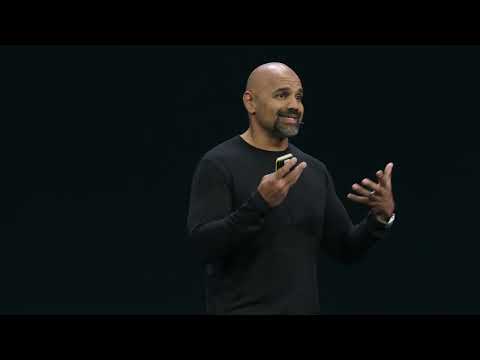
In his keynote at Mobile World Congress 2025, Naveen Rao, Chief AI Officer at Databricks, discusses how removing friction is critical to driving AI adoption. He walks through the barriers enterprises run into with generative AI, the economics of falling costs under Jevons' Law, why the user interface matters as much as the model itself, what it takes to move from chatbots to systems that take action, and the governance and security foundations underneath it all.
Chapters
0:00Introduction to AI challenges1:47Economics of AI and Jevons Law3:51The importance of user interface7:51From chatbots to action9:19Databricks data intelligence12:40AI governance and security14:01Cloud, edge, and future outlook
FAQs
What is Jevons Paradox and how does it apply to AI?
Jevons Paradox states that improved efficiency of technology leads to higher consumption. As AI becomes cheaper and easier to use, organizations apply it to new use cases previously deemed too expensive.
Why is user interface critical for AI adoption?
User interface directly impacts friction. Simple, intuitive interfaces lower adoption barriers and enable broader use of AI tools across business users, not just data scientists.
what is generative ai
Generative AI refers to systems that take intention and convert it to action by removing friction. Unlike traditional chatbots that only provide answers, generative AI systems are moving toward autonomous action—using LLMs to understand context, make decisions, and take actions. The key to enterprise adoption isn't just model cost (which drops 400% annually per Mosaic's Law) but the user interface that makes these capabilities accessible to non-technical users. This video explores how generative AI represents a fundamental shift toward action-driven automation.
How does Databricks address AI governance?
The platform provides governance frameworks and security infrastructure enabling organizations to deploy AI safely and compliantly, building trust and enabling enterprise-scale adoption.
What is the difference between chatbots and action-oriented AI?
Chatbots provide answers; action-oriented AI systems make decisions and take actions. The transition from chatbots to autonomous action represents the next evolution in enterprise AI capability.
Full transcript
0:00 Introduction to AI challenges
Please welcome Chief AI officer of data everyone um navine raal I'm the uh head of AI at data bricks and uh you know pleasure to be here at uh Mobile World Congress 20125 it's uh it's not a typical con conference for us to attend at data bricks because we are a data Tech technology we primarily work in the cloud and uh and do modernization of your data stack and uh and and providing all the Technologies therein so I want to talk a little bit about what we see from our customers and maybe some of the barriers to adoption for generative AI I mean we've talked a lot about you know the uh the future that's going to come but let's talk about some of the problems that we have today and some of the things that we're addressing as a company so intention is all you need the reason I say that is it's a it's a play on a paper that was actually core to the generative AI Revolution and you know actually it's very important to why people use generative AI uh in general and I will get there in a moment I was previously the CEO of a company called Mosaic ml which was acquired by data bricks in 2023 and we used memes to communicate quite a lot inside the company in fact memes I think are very interesting it's a way to uh uh communicate in very compact ways so you know we've been hearing why generative AI is awesome it's everywhere right maybe it's not yet why is it not yet and uh let's talk about this and kind of think about think through the economics of uh of delivering these Solutions and why and when it'll actually start to uh proliferate into many different applications so let's take a step back to a point in time of the Industrial Revolution there was an observation called gon's Paradox where increased efficiency of a technology call it disruption in current parand uh led to higher consumption of a technology what I mean by this is this actually observed when I decreased the price of delivering electricity like decreased it by a factor of two you actually increase the consumption by more than 2x you actually spend more money on something even though it became cheaper to deliver it it turns out when you improve technology you actually increase its applicability because it's half the price you now apply that technology to something new that you didn't before it was too expensive ensive that was the barrier and then now you actually can apply it to that so this is actually kind of a fundamental concept here in the generative AI space so at mosaic we actually observed and this is in 2021 it was before the chat GPT moment but in the academic world we we knew large language models were coming we knew scale was very important and cost of training was actually uh a big problem and serving and we observe that a model of a particular capability will be approximately 1/4 the price to train and serve in one year so we call this mosaics law and it's actually kind of held up uh through all of the different transitions 400% per year is quite amazing I mean if we look at something like Moors law which is another big exponential on which the technology world was built um that's something like 40% per year it's 2x every two years this is 10 times that so you can imagine this causes all kinds of weird disruptions and distortions in the economics of delivering these Solutions you know talked a little bit about be deep seek earlier um you know that kind of took the World by storm just recently because the cost was shown to be so much cheaper but we're seeing this across every model um model provider out there is that the cost of delivering the models drops precipitously the applicability of a model and its performance is you know on the order of months not years so why haven't these cheap models caused this massive disruption where we see generative AI everywhere simple answer is that we the decrease in cost is actually not all that's required so I'm going to modify the shon's Paradox in the current current Viewpoint of the world and actually say it's decreased friction that actually leads to this this disruption and we think we can think about generative AI as removing friction from taking intention to action this is what we've been talking about with agents and things like this so what are some of those points of friction today that maybe we haven't been considering it's not just about cost one of the big ones is actually user interface so today we think about generative AI in a chatbot chat GPT kind of took the to you know made d drove an awareness to everyone about these Technologies but the user interface actually is is quite important to delivering um these capabilities in in a form that's that's actually consumable by many users having broad applicability requires a UI so what is a UI UI is really a way to describe intent so if you go back to like when uh cars started to come on the scene in the late in the early 1900s um the dominant uh Transportation was a horse and carriage how did you drive a horse and carriage the UI was were two rains you actually described your intention to the horse and tell it which way where you want to go how fast you want to go if you want to break that sort of thing turns out we had to rethink that UI if you ask people then what they wanted they actually wanted to control a motor vehicle that wasn't sufficient for something that had more power and was faster and things like this so we had to invent the steering wheel that seems like a simple Innovation but actually is quite hard it took a lot of iterations to come to the simple uh interface of a steering wheel and two pedals or three pedals so I think these kind of Innovations allow us to consume that technology now we can we can have Motorcars and you know in the hands of many people so uis are actually kind of complicated it's not just one UI is going to solve everything it's actually there's a there's a trade-off between vagueness of the UI and um kind of accessibility when something is very precise it's actually quite hard so even in English if I were or any human language there's very precise language like legal language and jargon or there's very imprecise language the way we talk to each other turns out we actually communicate in precise ways but we use tons of context so getting that UI right for the application you care about really the name of the game right now so one of the big innovations that happened in the mobile world was the swipe on a phone like swipe pinch and zoom these kinds of things are are huge UI Innovations which basically made consuming that technology so much easier and frictionless so the way I like to think about a UI is expressing intent and letting the computer or the machine carry out the execution so in a rubbe Goldberg machine which many of you I'm sure have heard of it's It's Complicated set of steps to go and do something simple at the end but really it all gets kicked off by something simple like in this case setting a particular time on the clock that's my intent that's saying I want the machine to go and the rest of it's all execution and this is not a New Concept computers have taken many many years to iterate and come up with a UI that allowed us to consume that new technology so if you if anyone is around that remembers uh you know in the ' 80s and '90s it was actually very esoteric to deal with a computer you had to write code or or some sort of very specific uh precise language over time we built these uis and the internet came about and mobile Computing and really that allowed us to consume these capabilities it's really the same kind of machine we've been building for 50 years it's just gotten a lot easier to use and now everybody can use it you don't need to be an expert it became something very simple so with this UI Innovation it drastically increased accessibility so let's come back to the current moment in generative AI we need more than chatbots chat Bots are a general way to express intent in human language I can express actually any intent however it's very cumbersome I can actually write code to express intent in precise ways or write legal language all of that accomplishes the goal of a UI but it's very slow I don't want to have to tell a computer hey this is what I want to do I want to point and cck and do you know kind of other sorts of actions I wanted to understand the context in which I'm coming from you know if I'm asking for or um uh you know where's a local restaurant and it's 6:00 p.
7:51 From chatbots to action
M. maybe I want dinner you know these kind of uh contextualized responses actually start becoming very very important and really we need the proper uis on top of these capabilities to make that happen so gen converts intent into action some UI are super intuitive like if I'm a dog and I weigh out a bunch of biscuits here can anyone figure out what that dog wants I think its intention is is pretty clear so if we can build machines to basically take that intent and translate it into the desired action that's really the goal of gender thei that's the disruption that's going to come come ahead of us is just making this execution part of the world much much more frictional as decreased cost and just accessible to many more people so really the innovation of generative AI plus UI is a democratization of capabilities so let me talk a little bit about what we do with data bricks so uh data bricks is a is a is a data platform that traditionally is sold to data Engineers these are the people who are tasked with um organizing data in a company building a data foundation in a company and SQL is one of the main tools SQL is one of the main tools that uh uh data Engineers use in a in a data warehouse and so this is a a block of SQL code here so you may not think of code as being you know a particularly useful or accessible UI but it actually turns out apis are exactly that designing a very good API for usage in code is actually quite hard takes a lot of iteration and this is something that we've seen a lot of uptake on recently is this simple thing where it says AI query AI query is a way to do what we call batch inference I can take a whole bunch of columns and rows in a table so I have a bunch of data in that table and just say summarize it putting that into a SQL function that's super easy to use I can specify the model I can specify the data and doing it in line actually unlocks a huge amount of use usage it's just a kind of interesting phenomenon we had many different iterations of this when we got it right all of a sudden people can use it and they get tons of value out of it another such Innovation is actually um data engineers and data bricks code within a uh within a notebook you can write python or SQL code Within These notebooks and uh if anyone's written code you know oftentimes you'll have some sort of error maybe you have a syntax error where you you know didn't have a uh you had an extra space or you spelled something wrong and finding those errors can actually be you know a fair bit of work in fact it probably takes as much time to debug something as it does to write it or even more so what we built now is an interface where you click run there there's a runtime error and actually there's a there's an AI that says I'm diagnosing the error for you and I'm providing a fix and I'm doing it right there in the UI itself so again that allows you to consume that capability you don't have to take the code and paste it into a chat bot or something like that it's right there where you need it when you need it so it's about getting the right information to the right user at the right time so this idea of uh of bringing customized capabilities built upon your data is something we call at data bricks data intelligence this is the idea that my data becomes um a mo it becomes something that is a unique differentiator and advantage to me as a company and inside of data breaks we allow you to take that data and actually customize the use of AI customizing and contextualizing AI is really what we're all about the data platform the the modern data architecture where there's a single source of Truth for everything is kind of the new way of building a company the old way was really using lots of vertical SAS apps that all had their own uh you know sort of data storage and data Foundation now we're unifying that into one data platform and what that allows you to do is contextualize responses across many different applications from all kinds of different data you don't need to have your marketing and sh and supply chain data in different places you want them in one place in one format so you can use that to contextualize all of your generative AI so what's what else is an impediment to to scaling up well I look at this almost like a a concept from psychology we call maso's hierarchy so really this this States if I want to get to self-actualization or you know some sort of a contentment State as a human being I actually need to have other parts of my life figured out like my basic physiological needs I need to have food I need to have shelter um other other things that allow us to build up to that there's a very similar Concept in uh in AI where I have to have a set of um uh Basic Essentials before I can actually build those world changing outcomes and uh and I think this is something it's not really talked about we talk about the outcome but we actually need to build all of this stuff here and so part of that is security and governance inside of data breaks we've built uh the most Unified platform for doing full end to-end governance lineage tracking monitoring um you know Security on top of your data again this is essential for building uh building customized AI data intelligence that contextualizes the responses so reality as an industry what we've observed across our 12,000 customers in the Enterprise is that we're really at this point we're just now understanding how to move from that security secured governed layer of data onto the UI and actually deliver these insights which gener of AI so you know within the um uh mobile and you know kind of edge sphere we talk a lot about like using technology because it's there if I have a fatter pipe of data I want to use that if I have more compute on device I want to use that but really the UI should be dictating these these requirements so if something is a very latency sensitive or privacy sensitive application I want to I want to move that to device if something requires higher quality or access to new data I want to have that in the cloud and really real application is a mix of these things all of this is possible when you have this unified modern data architecture now you can start to think about okay this is where that data lives this is where this lives and you can start to to contextualize the responses on the device for the application in the right way because you put everything into into a unified format so really the UI and cost will unlock the consumption of AI capabilities we're seeing things climb pretty fast it's not as fast as a lot of people anticipated in terms of uptake of UI and really this is the thing it's really gon's Paradox at play so if you're interested on how we approach the problem of modern data architectures and contextualizing your generative AI please come and talk with us scan this code we're here and we're uh we're very excited to work in the Telo space thank you for your time and attention
Learn more about the Databricks Data and AI platform.
The information provided herein is for general informational purposes only and may not reflect the most current product capabilities or configurations.