AI, Code Fixes & the Future of Enterprise Engineering | Data Brew | Episode 43
Summary
- AI application challenges in enterprise: Deploying AI in production environments requires bridging gaps between research innovations and operational constraints, reliability demands, and integration complexity.
- Research-to-deployment tools: Databricks is developing tools that translate cutting-edge AI research into enterprise-ready solutions with reliability, observability, and integration support.
- Enterprise AI engineering practices: This video explores methodologies for building robust AI systems that handle real-world constraints while maintaining research quality.
AI, Code Fixes & the Future of Enterprise Engineering | Data Brew | Episode 43
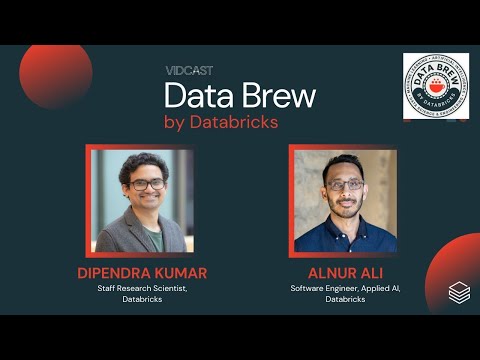
In this episode, Dipendra Kumar, Staff Research Scientist, and Alnur Ali, Staff Software Engineer at Databricks, discuss the challenges of applying AI in enterprise environments and the tools being developed to bridge the gap between research and real-world deployment.
Highlights include:
- The challenges of real-world AI—messy data, security, and scalability.
- Why enterprises need high-accuracy, fine-tuned models over generic AI APIs.
- How QuickFix learns from user edits to improve AI-driven coding assistance.
- The collaboration between research & engineering in building AI-powered tools.
- The evolving role of developers in the age of generative AI.
Connect with Dipendra Kumar & Alnur Ali
Chapters
0:00Introduction to Data Brew0:39Academia vs Enterprise AI3:01Bridging Theory and Practice5:13The Realities of AI Systems8:44Quick Fix and User Edits13:32Engineering Challenges17:51The Limits of Off-the-Shelf AI20:28Small vs Large Models25:08Collaboration and Tension31:28Working at Databricks34:19The Future of Programming
FAQs
What's the main challenge in applying AI research to enterprise?
Enterprise AI requires reliability, observability, governance, and integration with legacy systems—research focuses on accuracy but doesn't address operational constraints and risk management.
How do tools bridge the research-to-production gap?
Tools provide observability into model behavior, automated testing frameworks, governance guardrails, and deployment patterns that help translate research prototypes into production systems.
What is enterprise engineering for AI systems?
Enterprise AI engineering combines ML with software engineering practices (testing, deployment, monitoring, rollback) to build reliable, maintainable, auditable AI systems at scale.
What's Databricks' role in enterprise AI engineering?
Databricks provides the infrastructure, governance, and tools needed to apply AI research responsibly—including observability, evaluation frameworks, and deployment automation.
Full transcript
0:00 Introduction to Data Brew
Welcome to data Brew by data bricks with denian this series allows us to explore various topics in the data and AI community and whether we're talking about data engineering or data science we'll interview subject Mana experts to dive deeper into these topics while we're enjoining our morning Brew uh I'm a principal developer Advocate at data bricks and one half of data brew and hello winig director of our machine learning practice at datab bricks and the other half of datab brew and today I'm thrilled to introduce dependra mistra staff research scientist at datab bricks as well as allner s at data breaks and today we're really going to focus on Enterprise Ai and how you can better be approaching these tasks and so would' love to kick it off with given your experience in Academia how do Enterprise use cases differ from Academia and perhaps dependra you could start with this one uh thanks and yeah nice to be here um so I would say the Enterprise use cases differ from Academia in couple of ways in one case is that um the Enterprise users typically tend to have much higher expectation of the AI system than the uh Academia so for example like um you are given a problem and if a llm can zero shot solve it and get like maybe 80% accuracy that's really impressive but in Academia in Enterprise like you may need like 99.
0:39 Academia vs Enterprise AI
999% accuracy before it's really used use ful otherwise it's really frustrating for people you know who are paying a lot of money to use these applications which still have a pretty high error rate uh I mean an analogous example would be like you know driverless cars so we know that driverless cars are quite good like impressively good but to for them to be like truly used in real world everywhere they have to have like really really high accuracy because you know like killing people with like 0.
1% probability is just like not good enough you know we need like really really low error rate and that's uh one of the high Precision requirement is one way in which Enterprise use cases uh differ quite a bit um another one is that the Enterprise examples tend to be a lot more messier than Academia problem in academic problems like um like you typically are studying like one aspect of the problem so let's say you care about like well I'm going to look at LMS and see if they can process really long documents so you are studying that side challenge but the other challenges have been somewhat controlled or you know simplified but in Enterprise uh use case you will see like examples with all sort of nuances which may not even be very easy to describe you may have examples of missing data like you may have like uh you know spelling mistakes and typos you may have person who asked a question and then went back and essentially kind of want to restart and ask another question so you might see like all kind of complications uh the queries might be much more complex uh than what you would uh see in academic problems so yeah so those are those are the two ways in which um entreprise examples differ and ener given that you work on the engineering side how do you combine the best of both approaches how do you combine Academia with Enterprise yeah I mean I think in general just a plus one uh everything depender said uh I I do think the maybe the starting point is yeah I think one of the problems with Academia is that we make there's a lot of simplifying assumptions that are made right I mean that there's good things and there's maybe not as good things about Academia but one of things we could do better at is we make a lot of simplifying assumptions so for example uh as depender said when someone asks like say two questions of some product in Academia we we would assume generally that these two questions have nothing to do with each other just that's a simplifying assumption it makes our lives easier but that's just never true in practice so I guess where I'm going with all this is that's not a bad simplifying assumptions are not a bad starting point I think acade the kind of tools and techniques we have in Academia generally are a pretty reasonable starting point but from there it's a lot about rolling back or addressing some of the uh kind of considerations that arise in the real world that AC Academia doesn't even usually touch right so I think generally I think an approach that works well is look to Academia but start as simple as possible that might mean going back like a decade two decades three further and just start with the simplest possible approach get rolling with that and then think really hard about how to make that approach actually work in the application at hand so that's kind of kind of vague advice and happy to be a little bit more specific if that would be helpful but actually let let's Dive Right into that in fact so for example you talk about going vague before you go more precise let me go even more fundamental here which is you know when I run my AI system right um to get it to work work in the real world that is right can't I just like make an API call can I just just go ahead and just say hey here's my information make an API call and boom magically everything works and you're of course going to tell me how wrong that is but like describe clarify that context yeah so let's okay let's instantiate this whole thing a little bit um please and let's take as a maybe as a running example well you said Enterprise data so I think without necessarily putting our fingers on a particular product The General a of building a product that lets Enterprise users ask questions of their data and return answers okay that seems like a pretty reasonable product so let's let's think about what it would take to build that okay uh on you know option behind door number one is user types of question we phone some API somewhere we get an answer and then like life is amazing why would we need to do anything else okay so so we're done right so apparently right let we just cut the podcast now where we're good to go okay we're finished thank you everybody you know thanks for tuning in yeah so if we step down into the details a little bit what's going on okay so in order for this API call if we're insisting on using one to even have a sense of the data that it's supposed to answer questions of in the first place okay so we need to send we probably need to transmit some part of that data to the API and maybe it's backed by an llm the API call so the all need to see some of that data okay uh how much uh what parts of the data do you take all of it that's just obviously not going to work do you take some of it which parts uh do you kind of compress things down more than you need to because even nowadays if LMS can ingest a lot of content or context that's kind of the word that we use it doesn't mean that they can make sense of all of it okay fine so that in and of itself I mean that just took 15 seconds but that is a ton of actually technical detail that goes into making that work and then on the other end say fine everything's great we send a a request to an API we get a call back now what right I mean even if you take the limiting point of view which is that LMS will be and are as good as humans I mean humans make mistakes right I I screw things up all the time you have to account for that so what happens on the on the back side right so after you get the content back from the API call anyway hopefully that illustrate some of the issues but depend right you yeah I can I can add but um I think I agree with whater said one thing I would say is that in Academia like the focus again is like on studying like one specific problem and that's really important we have gained a lot of useful Insight like you know as I mentioned earlier like you know let's say I'm interested in studying how good do L&M do as I give them longer and longer documents to process so I'm like studying this like length phenomena over there so I want to simplify other aspects of the problem not because I don't carear about them but because in this particular study I only want to investigate this one single Factor uh and this allows me allows us to like you know get insights about oh how does a performance scale as you know LMS are working on bigger and bigger documents but you know in entreprise you you're not really like you know looking for these kind of Trends but we really just want to solve the problems that our user our our customers come with and so that's one way in which you can do you know work on academic problems and you know sometimes we we do that too uh like you know study a problem in isolation to kind of get insights but then you know we have to use those insights to then solve like our customers problem where you know all sort of challenges and nuances exist uh simultaneously yeah I think it's a very important point that you just ra to P about use cases that actually make money or help driving the Enterprise not just things that are cool uh it's like I don't know how many of us actually need to like generate rap uh style presentations but it is a cool use case right um so I know that you two work very closely together uh dependra you more on the research side all know you're Bridging the Divide between theory and practice depender I was hoping we could chat a bit more about this quick fix work that you're doing and perhaps you could start off with explaining what is Quick Fix right so quick fix is um is an AI product that we have in the database notebooks um so I'm not sure about you but you know I make a lot of mistakes when I'm coding you know I might forget like you know acation and stuff like some of these things have been removed with co-pilots but you know you know there's there's still like some tyos and stuff so what Quick Fix does is that anytime you run a cell in the notebook and there is an error then the Quick Fix will propose a fix sometimes these errors are super simple like they like a person just forgot like a closing parenthesis is uh sometimes they're a lot more complex maybe they are using a different length function than the one that exists in the language uh you know it happens if you're like constantly like hopping between programmed languages you might just not have like the right one uh under your fingertips so the Quick Fix will propose a fix for buggy code and um so that's the that's the idea and um you can imagine as a building on over that you can just give it to a gbd4 agent or a llama agent any one of these popular llms and you can go quite far uh with just that like you know it's they impressive that you can get like even like 5060 or some non-real performance but they're not perfect and there's a big leg room uh to kind of go before we can you know like be like essentially declared like Victory uh and so our work has been on how can we improve upon these base agents to uh to take better actions and um of course there are two ways in which we can address these things one is this more agentic way of doing it where oh how do we do better prompting of the agents oh if the agent makes mistakes can we detect it and then ask it in a different way or can I break the problem into smaller components and then solve them so there's a lot of impressive work that is happening in this uh space like anytime you hear words like prompting engering retrieval racks that all comes under this umbrella the other one is that can can I just improve the LM directly by fine-tuning it or like doing some clever post training such that uh you know the my llm is much more focused uh and accurate on this stas and that's also something we are looking at and uh or all I can say in this meeting is that we have pretty impressive uh gains over some of the base models that we have tried and uh we'll be talking about it at some uh in in some format in the future and so I think this ties in very nicely to a paper that you had uh co-authored about user edits could you talk about how user edits come into play with quick fix oh perfect so the user edits idea uh is that if you think about how people actually interact with an llm in many applications it comes down to the following flowchart um the user would uh is working on some kind of a platform let's say they're writing an essay or WR composing an email um at some point they would query an llm either they may you know like query it themselves or maybe the application triggers it behind the scene and then an llm agent will generate a response and the user may look at it and they're like oh this is quite good but not you know know perfect and so I'm just going to edit it uh and they're editing it because they care about you know the final thing it's not because you know we are paying them to edits they do it for their own purpose and um we can use these edits to then learn about the users uh preferences for example we may understand that oh they actually spell everything in a British format so so we should like in the future suggest suggest things to them uh in British English than American English or we may suggest that they like you know write like prefer certain things in bullet point format ra rather than like you know in small condensed paragraphs so we can learn a lot about these kind of preferences but the broader idea being is that the user edits are a very common kind of feedback mechanism that exists and uh we can use them to improve our llm agents now tring it back to the Quick Fix Pro um I would say the in quick fix example what sometimes can happen is that the user will write a code run the code and then there's an error message and maybe you know know uh 30 seconds later they fix the bug and then run the code and this time it works they have just edited their code and so you can learn how like you can learn about what kind of errors this user commonly run runs into and what how to fix those errors to make them go away so so suddenly you have this edit data and of course I'm assuming here you know we have like the uh the legal uh and like you know the compliance permission from the user side to of course use these edits but if you have that then user edits provide a natural uh mechanism for us to improve the N&M AG this is really cool so then I guess is um from that perspective owner you know following up exactly on this context of Quick Fix and user edits are those really the biggest challenges for building these you know LM or agentic projects or are there other aspects that were that are that are sort of were underneath the covers per se but as the engineer behind all this yeah no I mean I think all of that's super uh critical maybe a few things I could which I think apply to at least a handful if not most uh Enterprise facing products that kind of maybe where you want to bring techniques over from research so I guess one of the challenges that you hit when you actually want to make this stuff real is scale right so that kind of touches on the thing we were talking about say five minutes ago about okay like you pull data into the context window you throw it to an llm how much right like do you compress it down or not okay fine that's one form of scale the other is lots of requests right like ideally you build a product that is actually successful that means a lot of people are using it just kind of that is an engineering problem um and just kind of getting your hands right around that is another thing that we don't really commonly think about when we're building these products or building these uh deploying these applications in research um another issue that we hit uh when trying to make things real is security right so uh commonly at the end of the day these kind of agentic llm driven systems are hitting data in one way or the other right it could be user code as in the Quick Fix example it could be just like literally raw user data tables it could be something else um can everyone have access to all of that is that is that is that okay actually right can can an llm actually to make even the point A Little Bit Stronger what if we show the LM data for customer a and it somehow regurgitates that data in some way shape or form to customer B that's like obviously not it's not going to fly but it's I don't even think we necess I mean I don't want to say Academia doesn't think about all these but it is the vast vast minority of work uh and that's that's published in Academia is to think about these types of challenges which are it's like Step Zero when you are trying to get something out into production you cannot risk something like that because it's reputationally bad it's obviously it's bad for customer so so on and so forth um maybe I'll just make one more point before and I can pause because I don't know three three things are good um the third is uh you know I think this is a repackaging of something dependra said but robustness right so just because um you know in Academia what we like the way we often have the way we evaluate things and have for like decades is you build some machine learning model it could be an llm it could be something that we now call Old School like I don't know logistic regression linear regression something like that and we throw we throw a test case at it one test case and we say how did you do okay you did kind of okay fine move on to the next one how did you do you did a little bit better okay fine and then we just add up we average all those scores um okay uh there's a few things going on here one is we're assuming these test cases are all kind of similar two is we're assuming there's no inter relationship or serial dependencies between these test cases like sorry that actually just neither of those are true in practice right that the data that you kind of tune your model on be it an llm or something else offline it's never going to be what you see online there's actually there actually is a name for that and it's called distribution shift and that problem has seen a ton of interest in machine learning over the last few years which is no surprise because these things are are making their way in a serious way into production right so people are like okay like we need to think about that uh the other problem has a name too which we can get into to if you want but it is also just like a fundamental um problem that you hit in the real world where yeah I might you know the uh the next interaction a user has with a data driven system almost certainly has something to do with the preceding one or perhaps the one before that and kind of grappling with these short or long range dependencies is is kind of critical so I think those are maybe three things off the top my head that are that are important to come to terms with okay well so so just to follow that so you described a lot about you know scale about security and about robustness that's great uh understand that context but I guess you know what a lot of folks will just simp say why can't I just you know use an open AI why can't I just use anthropic or coh here you know just to go do that why can't I just you like let them take care of all the security or robustness or scalability behind it yeah two ansers to that number one is so think about how these models are trained right they and they are I mean there's no question just you know table Stakes is they are amazing they are you know these models collectively are just I think pushing the field uh forward but if we think about how they're trained they are trained using they're typically trained using public data right um they're not trained using your data you're a customer who wants to do who knows what I mean I was telling you I was at a cookie store the other day Okay how are my cookie sales doing right there's no way open AI has access to the cookie data right for this for this cookie store so that is going to totally change the complexion of the model right if it was ever to look at cookie data uh it's kind of funny thing to say but in any case um so I think that is one thing where I ju I I'm not 100% sure how that Gap really ever gets bridged in a meaningful way um number so so what you do you do need a solution that pays attention to that treats that data with care in a in it's secure kind of you know proper way um the other thing is uh this kind of rewinds to maybe one of the first things things we said which is it's kind of it's one thing to build I don't know let's just even take a chatot right to build and you know fine tune an llm or build you know just one llm and isolation but to get these things to actually typically work in practice these are parts of a product they're parts of a user experience right you can't it's not sufficient typically to just be like LM answered this question okay I get the resp resp and I throw it back to the user that's just not going to fly right like I think there there's a lot of you know window dressing is doing it a disservice but there's a lot of post processing that applies on top of the LM that is almost always bespoke for the application at hand and it it kind of doesn't maybe necessarily even parse to me to say let's let a kind of off-the-shelf Provider think about all those different use cases like that is that's kind of crazy and probably not what they're there for they're there for more of the horizontal play yeah anyway so would you all say that there's a shift from like this thinking of like one model to rule them all to many smaller more bespoke models um I can I can I can answer that so I think okay so a one model is going to be a lot more expensive like think about what information is contained in these like general purpose models like llama and um you know GPT and Claude like they have information about a bunch of video games they have information about all the countries their temperature history of the countries you know Middle Ages like fantasy world like uh you know uh like some some other kind of like random information translations different languages but what happens in Enterprise use case is that you are you have customers who just care about one thing which is even a document extract the names of every person in this contract and how much revenue was made they don't care about like you know Nars mythology or like you know the temperature at which the olivs are best for like you know plucking or whatever so you have like the very specific uh use cases but there's a demand for very high Precision on these specific use cases and so you can uh use a general purpose model what you will typically observe uh in my experience is that you will get a very surprisingly very good accuracy but not perfect accuracy there will still be a lot of leg room so I'm just going to make up some numbers but let's say you you want like 99.
20:28 Small vs Large Models
9% accuracy for it to be like in in an automatable stage in the sense that you just can just let it run without a human constantly monitoring the output um you might you may get there like 80% with these models but there's still like this like L 20% uh uh difference and I think there's a saying that 90% of the work is in the last 10% so there is this like you know this this Gap that you still need to do it's very surprising that you know these general purpose models which have uh never looked at your problem can get that but that doesn't is not enough for Enterprise uh customers at times to just like fully you know like like like let it run on its own and so what we have found uh useful is that you can train like smaller llms which are first of all more cost effective and on these specific task and get them to be much more accurate than these general purpose model and that's some of the directions that us uh like you know in um the on data brakes and also some other places have been exploring and I think this is going to be a lot more promising Direction uh simply because cost is something that you know people care about a lot and Enterprise because you're going to be like making like many many like queries to these models and uh you know big models are just more expensive I definitely like that new llm parto principle uh I definitely think it's more 9010 than 8020 exactly as you had said I guess is it really just cost that's the concern like what about latency uh like what what are the trade-offs you get there right so a smaller model is just going to have uh like you would be faster to do infr and so it would be much quicker that said like this uh Advantage is a lot more um hard to see and you may not even observe it at in the in the beginning because when you have a single model you can just uh you know have more replicas of it or just like you know use your uh econom your scale principles to make it really uh good and as opposed to have a single model which uh only handles a part of the problems but eventually as we have like um like fewer of these smaller models so let let me put it this way so you can go one full extreme which is that for every small difference of the uh change every small change to the task I'm going to train my own small language model for it right that's the Other Extreme that you know now now you can and this is how classic machine learning used to be that you have a task and you train a machine learning model for it and you get some numbers I think there's a nice middle ground in the middle that let's say we we we see that 80% of our customers are are always running into these five problems and in so I can now train an Enterprise focused language model that can handle these five task very well right so you are still uh in this kind of middle way where you know you are using an L llm to do many task but you're not like going per task and so this still allows you to like have a single model that you can optimize really well that you can you know put it everywhere around the world so your latency is low uh and this is a smaller language model um and so it's still cheaper so I think that's like a nice middle ground that some of us are aiming for and I think that would be a big thing going uh forward in 2025 so right now one of the things that uh that we've noticed is that this collaboration of research and Engineering right and so it seems like you're plus oneing each other where in other words you're does Tatam on agreement here now that can't be true so I'm just C you know I'm not trying to start a war here don't worry but I'm just curious like like where are the parts where you know you from a research and from an engineering perspective where you do agree but then also the parts where you may not agree as much I'm just curious and uh you know I'll start with the pendra and then and not to give owner the last word but that's the you I'm an engineer so I figed I'll get the engineer the afterward so um so one like if I just put my researcher hat on like um you know there are things that I wish that it just don't exist like oh so I just want all my data to be like consistent format so I don't have to worry about that so I can just think about you know cool research problems and that's something you just don't see you will see for example like you know the data which which is was being collected in one way but then got changed and then got changed again and then you know it's being changed every week because you know this this uh you know we don't really have a control over it and um so that's like one kind of that we uh that we run into um another problem could be that like um oh I really wish we had this extra information which would then make our life easier and this problem wouldn't exist um and no we can't get that information for one of many reasons uh we can get into so I would say those are the problems that uh like the researchers can ignore and this is why I'm I'm a big proponent of like researchers working closely with Engineers because you might solve a problem in isolation and looks like mathematically beautiful and you're like oh this is amazing P pattern batch write a good paper uh you know get it accepted at conference but then you realize that you cannot apply that method because the kind of feedback you need does just doesn't exist like nobody has it right and uh maybe to give an example like there's a field of machine learning called reinforcement learning the idea being that oh you have an agent which gets a reward for doing things and then you maximize the reward and there's a lot of impressive algorithms and uh other stuff that has been built in this uh uh space I worked in the space for many years and but the problem is that rewards almost never exist uh Direct so you almost always have to induce them from something else um and so that's kind of one misalignment that you may see in uh where you you know build your research artifact with some assumption about the world only to find that assumption is not satisfied in some cases you can you know solve it by having a missing step so in case of reinforcement learning you know people have figured that you can use preference data which is bit more natural to then learn a reward model but sometimes you know that misalignment is true and you just have to start over again makes sense how are you like from your perspective then yeah well okay disclaimer I'm going to say I'll make two points none of which apply to dependra or his group they are fantastic they are they are Beyond reproach no no Ser I mean they they so we're gonna clip it from this point onwards got it okay right yeah let's off the Record no no seriously they are they are amazing and I'm actually being serious um what I'm going to say I actually do not have dependra and his team in mind uh just general observation having been in the field for a while um so number one I I guess the way I generally look at the interaction with between product and research is as follows if you think about the projects or Investments you're going to make you can write down a little Matrix that uh trades risk against reward okay so risk could be yeah the idea may or may not pan out it could also be effort or something like that reward maybe that's kind of uh obvious and I think in general the best use of research resources is not to focus on the lowrisk stuff I think it's probably to focus on uh the medium or higher risk and you would hope therefore medium and higher reward stuff um and I think sometimes uh a consequence of that is um I mean if you if you think about okay so what happens when you're getting your PhD you're pushing the state-of-the-art right so uh and building on the shoulders of giants it's not really just a saying it's actually true and what does that usually mean it usually means you end up developing something new shiny and fancy right and I think that's typically where the incentives lie and I I was guilty of that too like I think I always wanted to do fancy cool stuff and I had two advisers uh in my career that just kind of beat that out of me and they were like no just always do the simplest thing and I'm really I didn't like it then but now I'm really grateful for it now and I guess where I'm going going with this is in practice it's almost always the simple things that are the ones that at least get you maybe 90% if not 100% of the way there and there can sometimes be a tension between hey cool look at this new thing I pulled off of archive like let's try that out versus why don't we do leas squares regression from like hundreds of years ago because that could just be as fine right so um so I think there's sometimes that tension and just kind of like that's a discussion right like I think it's a conversation that both sides need to have and kind of kind together that's one thing to watch out for um I guess a related thing is maybe goal uh alignment right so uh depending on where you are uh research I think this is less true nowadays but research can be incentivized to write papers not as much deploy product uh again I think that's less true nowadays and even still I think um for research teams that are trying to deploy products uh the maybe what I'm getting at is the closer you can actually be to the product road map and how the product team conceives of the product not just being deployed in the next year but the next five years 10 years uh the better because that just means as I said research is typically working on higher risk higher reward things it's kind of important to get those initial steps right because you're just going to be charting a trajectory that could be a little bit Divergent from where the product team actually wants to head so those are my two observations this is really cool so okay just to wrap yeah we're almost uh wrapping this things up so this is a really good Showcase of like why people should work with data BRS engineers and researchers right so this is awesome so yeah but I guess I'm asking what sure like I guess almost like 30 second Pitch on explaining why is it great to work with y'all I guess H do want to go first yeah yeah I can go first um well I think number one if you want to work on problems I don't really mean to disparage academ spent a number of years in Academia I love Academia but if you want to work on problems that you can actually maybe I wouldn't say really matter but you can see a through line to them getting out in the real world and actually impacting people's lives I think there's kind of no better place to do it uh I think if you want to see things actually kind of make a difference and think about I don't want to say left brain right brain but if you want to be cre cretive and develop algorithms but also think about some of these deployment questions and scalability and user experience I think there's really no better place to do it uh and maybe the third point I would make is data bricks in particular I think the culture here is awesome it kind of makes sense given who the founders are that they come from an academic background but to me um it is one of the they do such a good job balancing inquisitiveness and these traits that we really like in Academia with actually being practical and let's go go go and actually get things out and done so I think uh to me it's a it's a great culture too uh yeah I mean I think it's I agree with everything onler said and um I would say that has been my experience so I joined data brakes earlier this year um and it's very easy to like make an impact at data brakes at scale first of all we have a lot of customers and so any like if you make an AI product that is seen by your customer you can make a lot of impact very quickly and databas has this kind of very nice balance as I mentioned of you know we have uh Founders Who coming from Academia so there's a lot of like uh creativity but that's not creativity for creativity sake that's creativity in service of you know solving our customers problem and so you get this nice balancing where you know you can still we we we do a lot of creative research and you know like many of us do write papers but it's it's um you know in pursuit of like making impact that is tangible in the real word so I think that balance it's very hard to achieve um at other and so you know if there are other researchers who like that then I think database is a very good place for them awesome I loved how harmonious her answers are if we did not achieve in getting you two to disagree about a topic uh but I I tried to think step things up but I still couldn't do it that it wasn't coordinated either it wasn't coordinated so I guess this is a closing question for both of you with all of these advancements within gen I know one of the concerns people have is Will programmers still have a job or will people still need to learn how to program and so curious to get both of your takes on that so I would say um in the short run I mean nobody can predict five years from now right that's that's a very long uh window but in the short run I would say AI is more as a tool that you can use um a much more sophisticated and a much more powerful tools than like the ones that we had before but it is still a tool that uh someone should use so I would say like a programmer should think more like that oh instead of me uh memorizing now all these apis or having to constantly look them up on stack Overflow I can do much more high level thinking so you know my llm can take care of like you know more lowlevel like code coding and like you know writing down like the exact format and as a programmer I can free my mind to like do like much more strategic thinking about oh how my files uh should be communicating what should be the higher level structure of my code and program and it just makes you much more productive so uh maybe they comes a time where we just have to talk to an uh llm agent or some other thing and it just does everything for us but right now we are at a point where they're pretty good uh but you know you still need a human to do like the Strategic thinking like what do you first of all even send to the llm right like how do you even describe your problem right uh many there are many problems that are not easy to describe that you might just like you know want to do it to yourself or there might be problems where LMS are still pretty uh noisy so in the short run um uh with that disclaimer like I would I would encourage programmers to still learn programming uh and use uh and think about llms as more as tools to enhance their productivity than like oh they're here to like take our jobs I totally would would agree with that uh I think LMS are here to here to stay I think um I do think it's probably going to be a better together kind of thing where they can be used I think quite uh maybe profitably is not the right word but uh you know as a as as a tool can make us more productive and deliver kind of reach higher results and things like that um I mean I just think that even today if you throw an llm and maybe not the best example but an uh you know simple arithmetic task it's going to make a mistake most likely right like I think these things can do amazing things but there's still a ways to go and I think there's still room for as dep pentra said people to be a little bit more in the driver's seat especially when it comes to things about thinking about design architecture scale things like that which are not just can you pump out a simple python function for me but can you do a lot more than that right um I I do think you know uh for some very very mechanical tasks okay like maybe we will see uh some automation there but hopefully uh I think if you know as a society we we work that through we'll see people move up the value chain instead right so that's kind of how I think that's going to go and I really like how that wrapped it all together of humans can focus more on the strategy robustness scalability letting LMS do more of the L implementation and I know a great tool and somebody that's working on it called Quick Fix as part of the datab bricks assistant so you can all get started with getting some more productivity and efficiency gains thanks thanks just want to say thank you both so much for joining us today on datab brew and chatting about Enterprise Ai and all of the benefits of working on data bricks towards those goals thanks thank you for the opportunity
Learn more about the Databricks Data and AI platform.
The information provided herein is for general informational purposes only and may not reflect the most current product capabilities or configurations.